

Nanotechnology News – Latest Headlines
New research demonstrates how difficult it is to map out the health effects of nanoparticles
New research shows how carbon-based nanoparticles interact with cells. The results provided strong biophysical evidence that nanoparticles may alter cell structure and pose health risks.
November 13, 2008 Read more
Slow electron cooling in quantum dots to make solar cells more efficient
University of Chicago scientists have induced electrons in the nanocrystals of semiconductors to cool more slowly by forcing them into a smaller volume. This has the potential to improve satellite communications and the generation of solar power.
November 13, 2008 Read more
AIHA names nanotechnology as one of its top Occupational and environmental health and safety issues
The American Industrial Hygiene Association (AIHA) has announced the results of its biennial membership survey that projects the top public policy issues of concern to AIHA members and the occupational and environmental health and safety (OEHS) profession over the next two years.
November 13, 2008 Read more
NIST and NCI bring web 2.0 tools to nanotechnology standards effort
Combining efforts of materials scientists and measurement laboratories with those of biological and medical researchers, a new Internet-linked 'community of interest' will exploit Web 2.0-style social networking technologies to enable creating and sharing information, as well as deliberating over technical details of in-process standards.
November 12, 2008 Read more
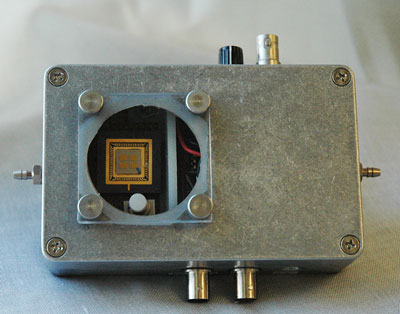
2009 RoboCup will again see nanosoccer games
The World Cup may be two years away, but soccer aficionados can get an early start at satisfying their yen for global competition when the National Institute of Standards and Technology (NIST) and the RoboCup Federation host the second-ever international nanosoccer contest next summer.
November 12, 2008 Read more
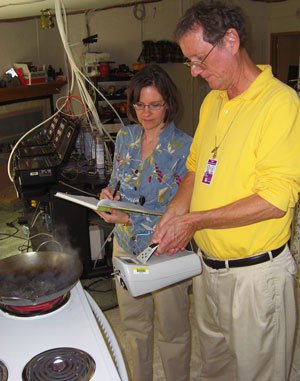
Nanoparticles in the home: More and smaller than previously detected
Extremely small nanoscale particles are released by common kitchen appliances in abundant amounts, greatly outnumbering the previously detected, larger-size nanoparticles emitted by these appliances.
November 12, 2008 Read more
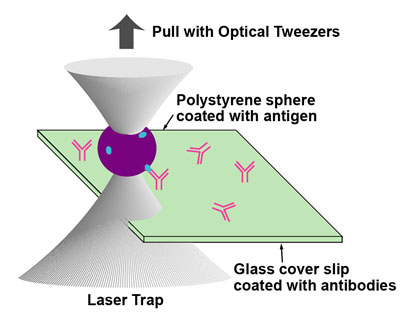
Femtomolar optical tweezers may enable sensitive blood tests
The National Institute of Standards and Technology (NIST) has licensed a patented 'optical tweezers' technique for detecting and measuring very small concentrations of a biological substance - such as a virus on a surface.
November 12, 2008 Read more
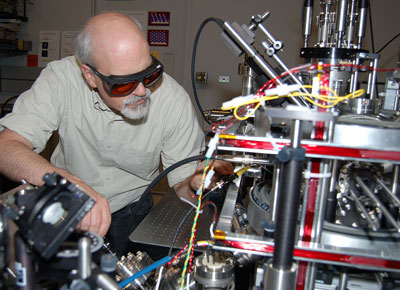
Cold atoms could replace hot gallium in focused ion beams
Scientists at the National Institute of Standards and Technology (NIST) have developed a radical new method of focusing a stream of ions into a point as small as one nanometer.
November 12, 2008 Read more

Nanosafe launches nanotechnology product registry and Nanosafe Tested mark
Nanosafe Inc. has announced the launch of its NANOSAFE TESTED Program and companion nanotechnology product registry - the NANOTECH REGISTER
November 12, 2008 Read more
Nanotechnology solar-powered boat a contender in electric boating world championship
An academic in conjunction with the Student Branch of the IEEE at the University of Southampton plans to enter a solar-powered boat in the world championship of intercollegiate solar/electric boating next year.
November 12, 2008 Read more
Novel nanofiber biomaterial may lead to scar-free healing
Researchers at the Technion-Israel Institute of Technology have developed a strong, flexible, bio-material that may be used someday to close wounds with minimal scarring and rejection by the immune system.
November 12, 2008 Read more
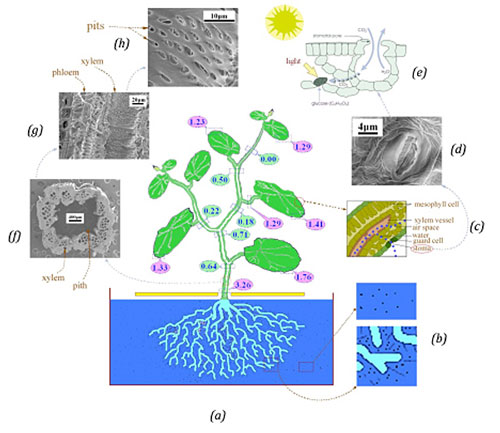
Plants can accumulate nanoparticles in tissues
Researchers at the University of Delaware have provided what is believed to be the first experimental evidence that plants can take up nanoparticles and accumulate them in their tissues.
November 12, 2008 Read more
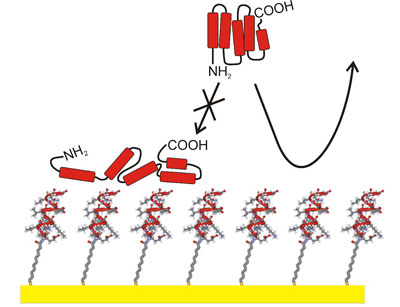
Scientists breed biomimetic surfaces from molecular coating
Scientists breed 'made-to-measure' molecular 'furs' on surfaces, with the individual 'hairs' consisting of peptides, short proteins. These peptides control the biocompatibility, i.e. which proteins adsorb.
November 12, 2008 Read more
Advanced biomaterials to make more reliable and hardwearing medical implants
The TECNALIA Technological Corporation is taking part in the Cenit Intelimplant project, the goal of which is to develop advanced biomaterials based on innovative technologies (microtechnologies, nanotechnologies, tissue and surface engineering) for the manufacture of a new generation of implants which have greater durability and reliability, need less recuperation time and that provide data on their state and progress.
November 12, 2008 Read more
'Powerhouses' from living cells power new explosives detector
Researchers in Missouri have borrowed the technology that living cells use to produce energy to develop a tiny, self-powered sensor for rapid detection of hidden explosives.
November 12, 2008 Read more
UK commission calls for urgent action on testing and regulation of nanotechnology materials
There is an urgent need for more testing, extending existing governance arrangements and creating new arrangements for the control of the rapidly developing field of nanomaterials, according to a report by the influential Royal Commission on Environmental Pollution.
November 12, 2008 Read more
 Subscribe to our Nanotechnology News feed