

Nanotechnology News – Latest Headlines
Nanofibers for the third millenium
The international summit of the world's leaders in nanofibers - Nanofibers for the 3rd Millennium - NANO FOR LIFE organized in the cooperation of Elmarco Ltd., Technical University in Liberec, North Carolina State University and Institute of Experimental Medicine AS CR, will take place on 11th and 12th March 2009 in Prague, Czech Republic.
November 12, 2008 Read more
Nanotechnology art competition NanoArt 2008 now open
The worldwide competition NanoArt 2008 is open to all artists 18 years and older. The online exhibition will open for the public on January 20, 2009.
November 12, 2008 Read more
Molecules That Matter series showcases 10 organic molecules that profoundly altered our world
The Chemical Heritage Foundation's 'Molecule that Matters' exhibition and lecture series is more than half way through its run. The exhibition showcases 10 organic molecules that profoundly altered our world: aspirin, isooctane, penicillin, polyethylene, nylon, DNA, progestin, DDT, Prozac, and buckminsterfullerene. The exhibit connects each molecule to one decade of the 20th century.
November 12, 2008 Read more
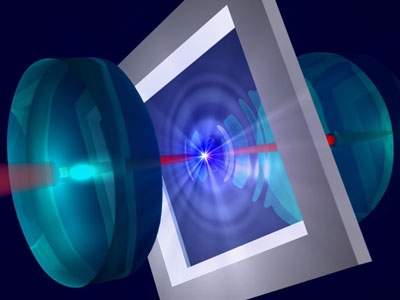
Schroedinger's drum
According to recent theoretical papers, it should soon be possible to explore the weird effects of quantum mechanics with a drum-like reflective membrane vibrating in an optical cavity.
November 12, 2008 Read more
Royal Commission on Environmental Pollution publishes nanotechnology report
Tomorrow, on November 12, 2008, the Royal Commission on Environmental Pollution (RCEP) in the UK will publish its latest report on Novel Materials in the Environment: The case of Nanotechnology.
November 11, 2008 Read more
Nanotechnology has a positive image in the German media
The analysis of nanotechnology coverage in German print media was the subject of a research project conducted by the Federal Institute for Risk Assessment (BfR). The results: In the media coverage nanotechnology is not presented as a risk technology; most articles stress the benefits of this new technology.
November 11, 2008 Read more

Scientists reproduce painting masterworks with protein patterning technique
Canadian researchers have created a new protein patterning technique that's enabled them to reproduce complex cellular environments and a miniature version of a masterpiece painting.
November 11, 2008 Read more
CIMIT's Kennedy Award goes to Cancer Advanced-Technology Team
The Cancer Advanced-Technology Team that is developing an imaging system to limit the spread and/or reccurrence of that disease has been named the winner of CIMIT?s annual Edward M. Kennedy Award for Healthcare Innovation.
November 11, 2008 Read more
Detection Technologies and nanoKAP to be live webcast tomorrow and Thursday
The Knowledge Foundation has announced that their upcoming two conferences, Detection Technologies and nanoKAP, will be live webcast from Phoenix, AZ from November 12-14, 2008.
November 11, 2008 Read more
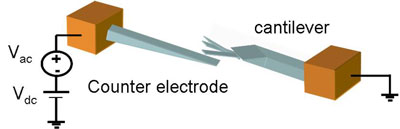
Clemson researchers advance nano-scale electromechanical sensors
Clemson physics professor Apparao Rao and his team are researching nano-scale cantilevers that have the potential to read and alert us to toxic chemicals or gases in the air. Put them into a small handheld device and the potential is there for real-time chemical alerts in battle, in industry, in health care and even at home.
November 11, 2008 Read more
International Council on Nanotechnology launches tool for EHS database analysis
Researchers can now do their own analysis of research on the risks of nanomaterials with a new tool unveiled today at the website of the International Council on Nanotechnology (ICON).
November 11, 2008 Read more
EPFL launches Center for Neuroprostheses
EPFL announces the creation of a large world-class center of neuroprostheses, in partnership with the Bertarelli Foundation and the Defitech Foundation. This Lausanne-based pioneering facility, to be inaugurated in January, 2009.
November 11, 2008 Read more
Taking data storage to the molecular level
Researchers at The University of Nottingham are exploring ways of exploiting the unique properties of carbon nanotubes to create a cheap and compact memory cell that uses little power and writes information at high speeds.
November 11, 2008 Read more
Nanoceramic membranes could be breakthrough for implantable medical devices
A team of researchers led by North Carolina State University has made a breakthrough that could lead to new dialysis devices and a host of other revolutionary medical implants.
November 11, 2008 Read more
Nanotechnology for stent coating promises improved post-op performance
A nanomatrix for stent coating designed at the University of Alabama at Birmingham (UAB) mimics natural endothelium, the substance that lines blood vessels, and promises the potential to prevent post-operative tissue scaring along the blood vessel wall, greatly reducing the possibility of future thrombosis, or blockage at the stent site.
November 10, 2008 Read more
New assassin cells detect HIV's many disguises
Researchers from the UK and US have engineered a white blood cell that is able to recognise immune-system-evading HIV-1 strains. The team's new 'assassin cells' may cripple the well-disguised virus, possibly slowing or preventing the onset of AIDS in infected individuals.
November 10, 2008 Read more
 Subscribe to our Nanotechnology News feed