

Nanotechnology News – Latest Headlines
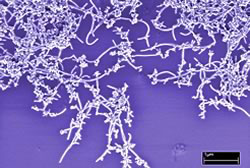
New rapid method for judging nanotube purity
A sensitive new method for rapidly assessing the quality of carbon nanotubes.
February 1, 2007 Read more
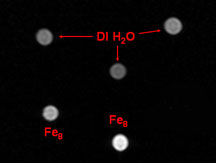
Using nano-magnets to enhance medical imaging
Nanoscale magnets in the form of iron-containing molecules might be used to improve the contrast between healthy and diseased tissue in magnetic resonance imaging.
February 1, 2007 Read more
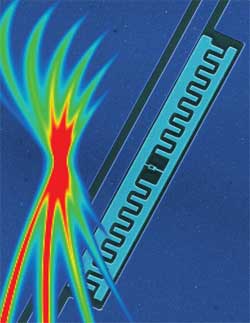
Artificial atoms make microwave photons countable
Using artificial atoms on a chip, physicists have taken the next step toward quantum computing by demonstrating that the particle nature of microwave photons can now be detected.
February 1, 2007 Read more
Report outlines vision for nanomedicine in Europe
The EU is preparing to channel some 100 million euros into nanomedicine projects annually under its Seventh Framework Programme for research.
February 1, 2007 Read more

Nanorisk nanotechnology newsletter deals with toxicity of carbon nanomaterials
The February issue of nanoRISK looks at the continued uncertainty about the toxicity of carbon-based nanomaterials.
February 1, 2007 Read more
Nanostructures are stronger than 'large' structures
Researchers prove that nanostructures are stronger than 'large' structures.
January 31, 2007 Read more
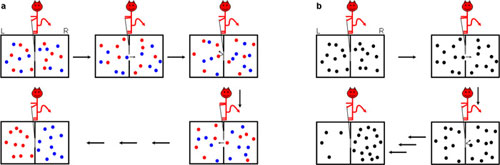
A fundamentally new type of motor-mechanism for artificial nanomachines
A molecular machine that operates via a mechanism inspired by a 140 year-old thought experiment.
January 31, 2007 Read more
Breakthrough in nanodevice synthesis revolutionizes biological sensors
A novel approach to synthesizing nanowires allows their direct integration with microelectronic systems for the first time.
January 31, 2007 Read more
MIT develops nanoparticles to battle cancer
New nanoparticles that mimic blood platelets.
January 31, 2007 Read more
Military nanotechnology: nanocomposite could replace uranium in ammunitions
Nanostructured material offers environmentally safe armor-piercing capability.
January 31, 2007 Read more
'Green' nanotechnology concrete could cut carbon dioxide emissions
MIT reports that the source of concrete's strength and durability lies in the organization of its nanoparticles. The discovery could one day lead to a major reduction in carbon dioxide emissions during manufacturing.
January 31, 2007 Read more
Researchers probe health and safety impacts of nanotechnology
A dedicated group at the University of Florida deals with nanotoxicology.
January 30, 2007 Read more
Study points way to effectively communicating nanotechnology
Study points nanotechnology researchers to strategies that help them more effectively communicate the scale, scope and "wow" of their work to non-technical audiences.
January 30, 2007 Read more
Patterned paper as platform for inexpensive, portable bioassays
Photoprinted paper supports simultaneous microscale diagnostic tests.
January 30, 2007 Read more
Liquid crystals stabilized
New stabilisation approach yields well-ordered, column-shaped aggregates that can transport charges.
January 30, 2007 Read more
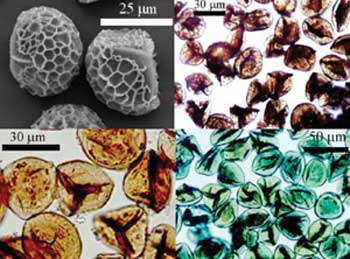
Pollen filled with nanomaterials to deliver drugs
Pollen capsules that can be filled with nanomaterials could be used for drug delivery.
January 30, 2007 Read more
 Subscribe to our Nanotechnology News feed