

Nanotechnology News – Latest Headlines
Harnessing the powers of light to operate computers
Researchers use tiny nanocavities embedded in waveguides to selectively modify short light pulses, which may help lead to ultrafast optical pulse shaping for use in new computers that operate based on light.
April 28, 2022 Read more

Ionic liquid-based reservoir computing: The key to efficient and flexible edge computing
Researchers design a tunable physical reservoir device based on the dielectric relaxation at an electrode-ionic liquid interface.
April 28, 2022 Read more

In Einstein's footsteps and beyond
An international team of physicists are re-examining the foundations of quantum physics from the perspective of momentum and exploring what happens when the momentum of light is reduced to zero.
April 28, 2022 Read more

Tangle no more, nanotubes
Scientists have developed an acid-based solvent that simplifies carbon nanotube processing in a way that's less toxic and easy to scale up for industrial applications.
April 27, 2022 Read more

New mechanism to transfer chirality between molecules
A recent study reveals a new mechanism to transfer the chirality between molecules in the nanoscale field.
April 27, 2022 Read more
Preventing infection with an improved nanosilver coating for medical devices
Scientists have tried to develop a silver coating for implantable medical devices to protect against infection, but they've had limited success. A recent study describes a new, long-acting silver-ion releasing coating that, in rats, prevents bacteria from adhering to implants and then kills them.
April 27, 2022 Read more

Introducing silicon chips into living cells as 'mechanical' drugs
Researchers have designed cell-sized mechanical devices that can be introduced into cells and prevent them from dividing.
April 27, 2022 Read more

Synthetic hydrogels for wound sealing and biointerfaces
Researchers report a synthetic hydrogel bioadhesive from a variety of polymer precursors, featuring instant formation of tough biointerface, allowing for wet and robust adhesion with highly dynamic biological tissues.
April 27, 2022 Read more

Discovery of the one-way superconductor, thought to be impossible
Researchers have discovered one-way superconductivity without magnetic fields, something that was thought to be impossible ever since its discovery in 1911. The discovery makes use of 2D quantum materials and paves the way towards superconducting computing.
April 27, 2022 Read more

Electronic skin anticipates and perceives touch from different directions for the first time (w/video)
Scientists develop a new approach for miniaturization of soft ultra-compact and highly integrated sensor units for directional tactile sensitivity in e-skin systems
April 27, 2022 Read more
Glimpse inside a graphene sandwich
In the search for novel types of superconductors scientists are investigating materials that consist of multiple layers. Physicists have studied in detail the properties of a system of three twisted graphene layers and gained important insights into its properties.
April 27, 2022 Read more

Decoding the lifecycle of photogenerated charges
Monitoring photo-excited electrons in real time with nanometer sensitivity reveals strengths and weaknesses in a common light-harvesting material.
April 27, 2022 Read more
Researchers develop a paper-thin loudspeaker (w/video)
The flexible, thin-film device has the potential to make any surface into a low-power, high-quality audio source.
April 26, 2022 Read more

Electronics can grow on trees thanks to nanocellulose paper semiconductors
Researchers report wood-derived semiconductors that can be tuned for use in a range of sustainable electronic devices.
April 26, 2022 Read more
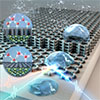
Measuring the wettability of graphene and other 2D materials
Microscopic understanding of wettability can be achieved at the molecular level using 'vibrational sum-frequency generation spectroscopy'.
April 26, 2022 Read more
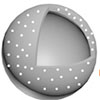
New strategy to synthesize single-hole hollow carbon nanospheres helps further reveal void-confinement effects
Hollow structured nanomaterials are promising in the fields of adsorption, catalysis, energy storage and drug delivery/controlled release, owing to their high porosity, large surface area and abundant inner void space. Researchers have developed a new strategy to synthesize single-hole hollow carbon nanospheres.
April 26, 2022 Read more
 Subscribe to our Nanotechnology News feed