

Space Exploration News – Latest Headlines
 Subscribe to our Space Exploration News feed
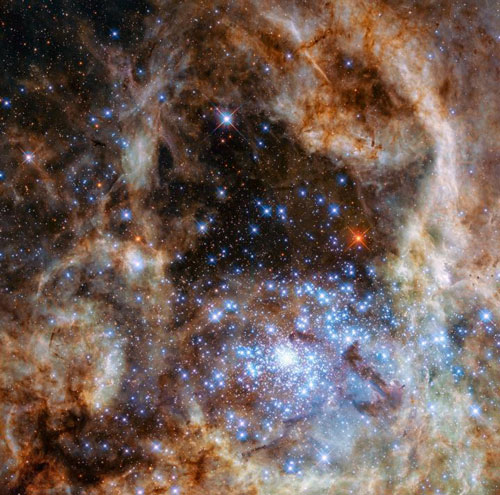
Hubble unveils monster stars
An international team of scientists using the NASA/ESA Hubble Space Telescope has combined images taken with the Wide Field Camera 3 with the unprecedented ultraviolet spatial resolution of the Space Telescope Imaging Spectrograph to successfully dissect the young star cluster R136 in the ultraviolet for the first time.
March 18, 2016 Read more
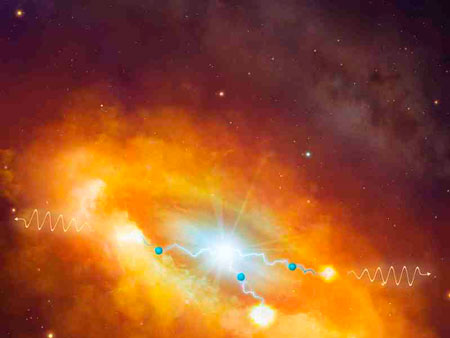
Extreme energy source at heart of the Milky Way
H.E.S.S telescopes observe cosmic rays accelerated by giant black hole.
March 17, 2016 Read more
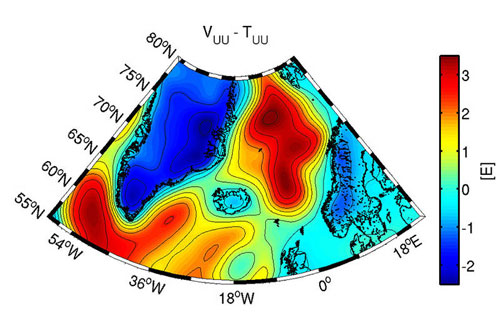
Gravity glasses offer a view of the Earth's interior
How does the ice on the polar caps change? And which are the geological characteristics of the Earth's crust beneath? What is the structure of the boundary between the Earth's crust and mantle? Geophysicists will be able to answer these questions in the future using gravity field measurements from ESA's GOCE gravity satellite.
March 14, 2016 Read more
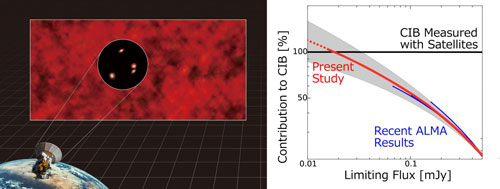
Mysterious infrared light from space resolved perfectly
A research team using the Atacama Large Millimeter/submillimeter Array (ALMA) has detected the faintest millimeter-wave source ever observed. By accumulating millimeter-waves from faint objects like this throughout the Universe, the team finally determined that such objects are 100% responsible for the enigmatic infrared background light filling the Universe.
March 10, 2016 Read more
Clocking the rotation rate of a supermassive black hole
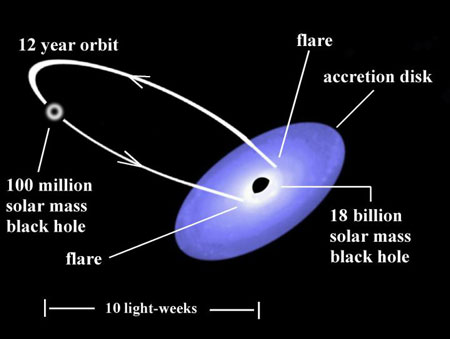
A recent observational campaign involving more than two dozen optical telescopes and NASA's space based SWIFT X-ray telescope allowed a team of astronomers to measure very accurately the rotational rate of one of the most massive black holes in the universe.
March 10, 2016 Read more
Dark matter satellites trigger massive birth of stars
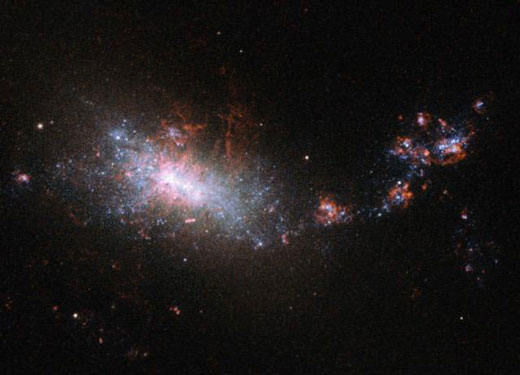
Astronomers use computer simulations based on theoretical models to explain massive star formation observed in dwarf galaxies.
March 10, 2016 Read more
High-energy cosmic rays: Galactic or extragalactic?
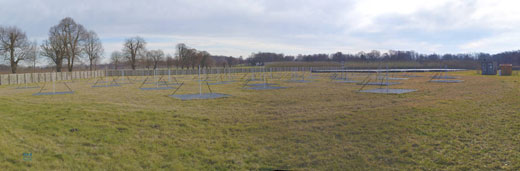
It appears that radio-wave measurements have discovered a new component of the Galactic cosmic ray population.
March 4, 2016 Read more
Hubble team breaks cosmic distance record
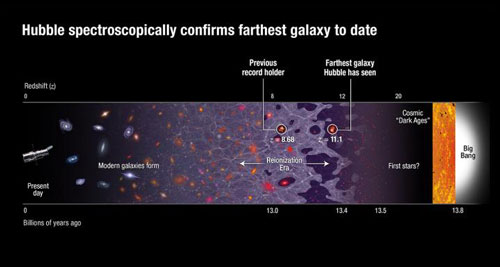
By pushing NASA's Hubble Space Telescope to its limits, an international team of astronomers has shattered the cosmic distance record by measuring the farthest galaxy ever seen in the universe. This surprisingly bright infant galaxy, named GN-z11, is seen as it was 13.4 billion years in the past, just 400 million years after the Big Bang.
March 3, 2016 Read more
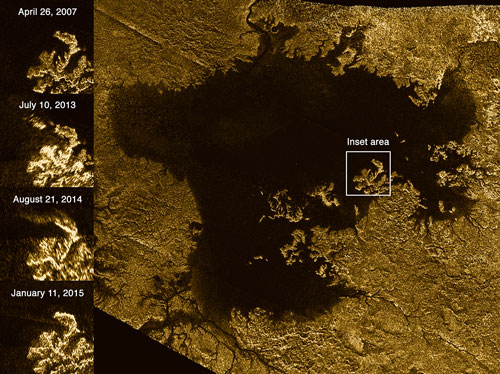
Surf's up on Saturn's geologically active moon Titan
In the shadow of Saturn's hulking planetary mass, Titan's liquid hydrocarbon seas seem a bit choppy, astronomers say.
March 2, 2016 Read more
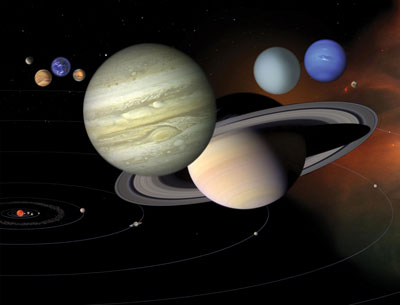
Celestial bodies born like cracking paint
Volumes under internal tension crack hierarchically, revealing how gravity created the universe's wide variety of body sizes.
March 2, 2016 Read more
Why celestial bodies come in different sizes
Researchers find that a universe that contains some big objects and many small objects relieves gravitational tension faster than a uniform universe.
March 1, 2016 Read more
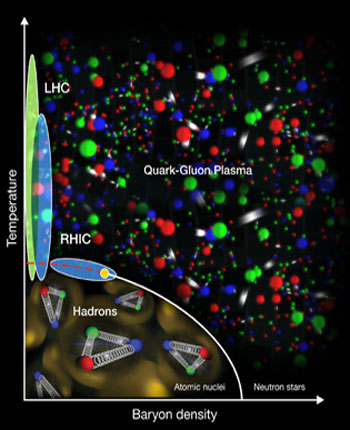
The origins of the universe
An in-depth look at the origins of matter and the environmental conditions that helped shape the universe today.
March 1, 2016 Read more
What if extraterrestrial observers called, but nobody heard?
Researchers say the best chance for finding a signal from beyond Earth is to presume extraterrestrial observers are using the same methods to search for us that we are using to search for life beyond Earth.
March 1, 2016 Read more
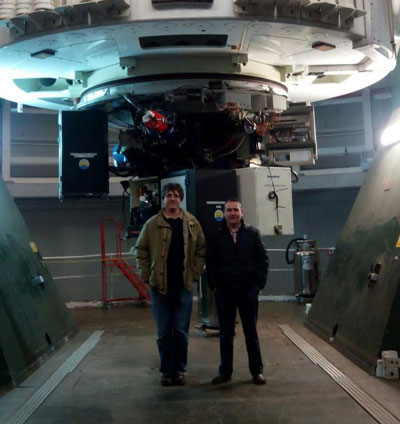
Object located around a black hole 5 billion light-years from Earth has been measured
A team of researchers has accurately detected a structure in the innermost region of a quasar (small, very far objects that emit huge amounts of energy, comparable to that emitted by a whole galaxy) at a distance of more than five billion light-years from Earth.
February 25, 2016 Read more
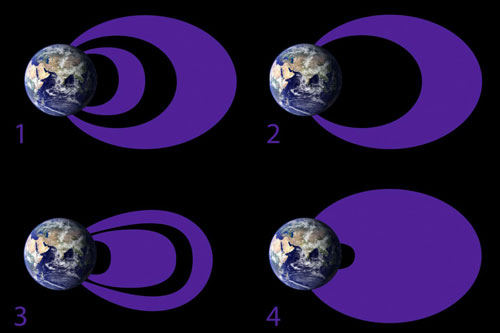
Study finds surprising variability in shape of Van Allen Belts
The shape of the two electron swarms 600 miles to more than 25,000 miles from the Earth's surface, known as the Van Allen Belts, could be quite different than has been believed for decades, according to a new study of data from NASA's Van Allen Probes.
February 24, 2016 Read more
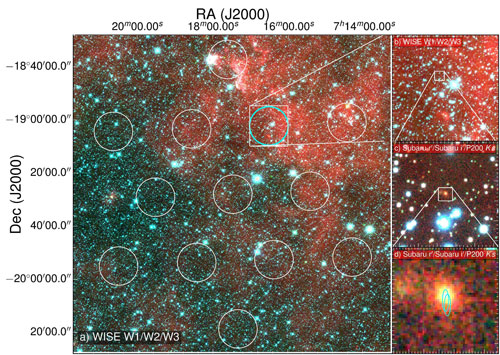
Putting the universe on the scales
Researchers used a combination of radio and optical telescopes to identify the precise location of a fast radio burst in a distant galaxy, allowing them to conduct a unique census of the Universe's matter content.
February 24, 2016 Read more
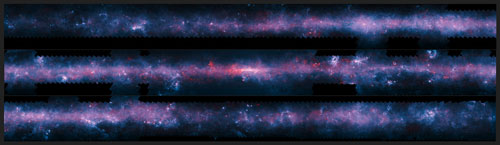
ATLASGAL survey of Milky Way completed
A spectacular image of the Milky Way has been released to mark the completion of the APEX Telescope Large Area Survey of the Galaxy (ATLASGAL). The APEX telescope has mapped the full area of the Galactic Plane visible from the southern hemisphere for the first time at submillimeter wavelengths and in finer detail than space-based surveys.
February 24, 2016 Read more
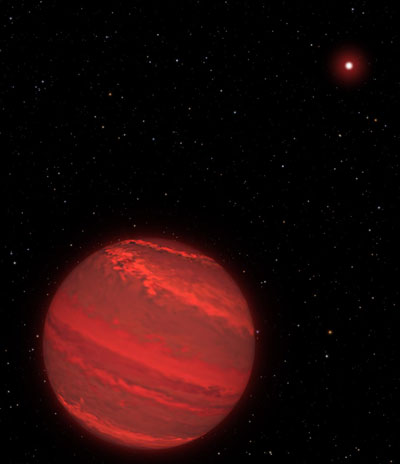
Hubble directly measures rotation of cloudy 'super-Jupiter'
Astronomers using NASA's Hubble Space Telescope have measured the rotation rate of an extreme exoplanet by observing the varied brightness in its atmosphere. This is the first measurement of the rotation of a massive exoplanet using direct imaging.
February 18, 2016 Read more