| Dec 15, 2025 |
Acid-treated carbon nanotubes boost efficiency and stability of flexible perovskite solar modulesStudy shows acid treated carbon nanotube electrodes enable scalable flexible perovskite solar modules over 20% efficient and resilient to stress.(Nanowerk News) Flexible perovskite solar modules (f-PSMs) are a key innovation in current renewable energy technology, offering a pathway toward sustainable and efficient energy solutions. However, ensuring long-term operational stability without compromising efficiency or increasing material costs remains a critical challenge. |
| In a new study published in Joule ("Integrating SWCNT to bridge the stability divide in scalable and manufacturable flexible perovskite solar modules"), a joint research team from the Institute of Metal Research (IMR) of the Chinese Academy of Sciences and Zhengzhou University has achieved power conversion efficiency (PCE) surpassing 20% in flexible modules capable of withstanding a range of external stresses. The study highlights the use of single-walled carbon nanotubes (SWCNTs) as window electrodes for scalable f-PSMs. |
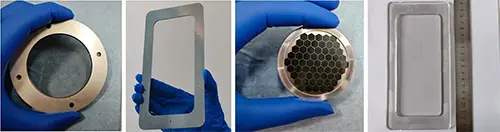 |
| SWCNT films suspended on different substrates. (Image by Institute of Metal Research) |
| SWCNT films exhibit excellent hydrophobicity, resisting moisture-induced degradation while enhancing device stability. Their flexibility and affordability further position SWCNT-based electrodes as a practical option for sustainable energy systems, providing an ideal opportunity for buildings and infrastructure to incorporate their own power sources in support of a net-zero carbon emissions future. |
| A key advance of this study comes from treating the SWCNT network with H₂SO₄. The researchers discovered that H₂SO₄ not only enhances the conductivity of the SWCNT films but also interacts with NiOx to form a compact NiSO₄–NiOx layer. This interaction further promotes charge transfer between perovskite and the hole transport material, enabling ITO-free perovskite solar cells (PSCs) to reach over 24% PCE, with flexible versions maintaining roughly 23%. These devices maintained over 95% of their original PCEs under various external stresses, including high temperatures, high humidity, and continuous solar irradiation for one month. |
| The researchers also demonstrated that their straightforward, scalable fabrication method enabled flexible, module-scale, ITO-free devices to achieve over 20% PCE, accompanied by markedly enhanced stability and bendability. |
| Moreover, SWCNT films can be produced on a meter scale using a CVD-integrated roll-to-roll process, providing a feasible approach to scaling up SWCNT-based modules. |
| Overall, these findings highlight the performance benefits of SWCNT electrodes treated using conventional acidic methods. |
| Source: Chinese Academy of Sciences (Note: Content may be edited for style and length) |