Reference terms from Wikipedia, the free encyclopedia
 

Classical liberalism

Classical liberalism is a political ideology and a branch of liberalism that advocates free market, civil liberties under the rule of law with an emphasis on minarchism, economic freedom and cultural liberalism. It was developed in the early 19th century, building on ideas from the previous century as a response to urbanization and to the Industrial Revolution in Europe and North America.

Notable liberal individuals whose ideas contributed to classical liberalism include John Locke, Jean-Baptiste Say, Thomas Robert Malthus and David Ricardo. It drew on classical economics, especially the economic ideas as espoused by Adam Smith in Book One of The Wealth of Nations and on a belief in natural law, progress and utilitarianism.

Until the Great Depression and the rise of Social Liberalism, it was used under the name of economic liberalism. As a term, classical liberalism was applied in retrospect to distinguish earlier 19th-century liberalism from social liberalism.

 
Note:   The above text is excerpted from the Wikipedia article Classical liberalism, which has been released under the GNU Free Documentation License.
 

Check out these latest Nanowerk News:

 

One‑step process generates high entropy alloy nanoparticles in milliseconds

A rapid synthesis method could speed discovery of cheaper, multi-metal catalysts for fuel cells, batteries, and other clean energy uses.

Nanotubes and nanosheets boost fast energy storage

Hybrid nanotube–nanosheet electrodes speed ion flow, boost charge storage, and keep supercapacitors stable through 10,000 cycles.

New review explores perovskite solar cells for space, underwater, and other extreme environments

Advances in perovskite solar cell design may enable reliable power generation in some of the world's harshest environments.

AI platform turns catalyst data into a discovery engine

A new AI-ready data framework could accelerate catalyst discovery, supporting cleaner energy and more sustainable chemical processes.

Machine learning points scientists to new superconductors- and possibly thousands more

Machine learning helped identify new superconductors and a process that could speed the discovery of thousands more energy-saving materials.

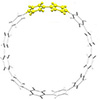
Lithium-doped carbon nanorings promise better optical devices

Simulations show that adding lithium to carbon nanorings greatly boosts nonlinear optical response, guiding designs for future photonic and optical devices.

Roll-to-roll lithography boosts flexible electronics production

A roll-to-roll digital lithography system compensates for substrate distortion in real time, enabling faster mass production of flexible electronics.

Identifying proteins, molecule by molecule

A nanopore detection method can rapidly identify individual proteins, aiding disease research, drug development, and biomarker discovery.

Switching spin states in manganese ions with light

Scientists developed a manganese-based molecular data storage material that works at about -132 C, warmer than earlier iron-based versions.

Shape-shifting surface adds touch to displays

A soft magnetic metasurface can morph into thousands of shapes, sense deformation, and show LED feedback, pointing to tactile interfaces, wearables, soft robotics, and AR/VR.