Only the good shall pass: Battery with a built-in bouncer
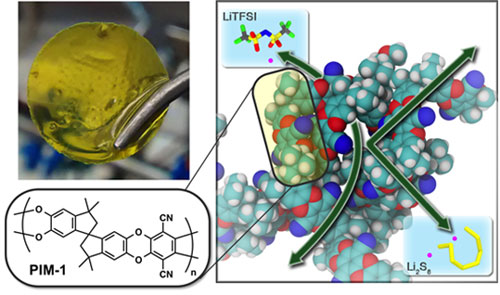 Microporous polymer separator prevents specific molecules from crossing battery and causing degradation and shorter lifetimes.
Jul 28th, 2016
Read more
Microporous polymer separator prevents specific molecules from crossing battery and causing degradation and shorter lifetimes.
Jul 28th, 2016
Read moreWhile investigating perovskite crystals, scientists made an observation that could make perovskite solar cells more efficient.
Jul 28th, 2016
Read more Researchers use graphene to synthesize a scaffold to treat damaged muscles.
Jul 28th, 2016
Read more Trees that are removed during forest restoration projects could find their way into car bumpers and fenders.
Jul 27th, 2016
Read more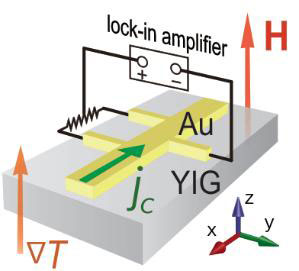 Gold had long been considered a non-magnetic metal. But researchers recently discovered that gold can in fact be magnetized by applying heat.
Jul 27th, 2016
Read more Perovskite solar cells are usually exposed to ambient air for several hours after fabrication. This procedure increases their efficiency, even if the reason behind the phenomenon was unclear.
Jul 27th, 2016
Read more Implanted helium ions 'tuned' complex behaviors - enabling design of new materials for efficient electricity storage and testing theories.
Jul 27th, 2016
Read more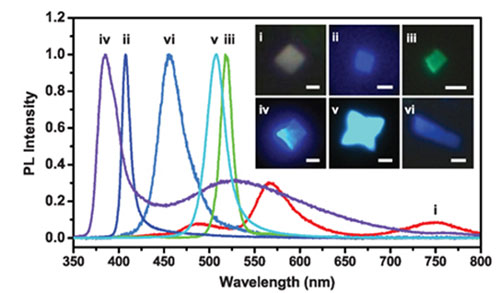 First atomically thin, halide perovskite sheets could be an alternative to graphene for future electronics.
Jul 27th, 2016
Read more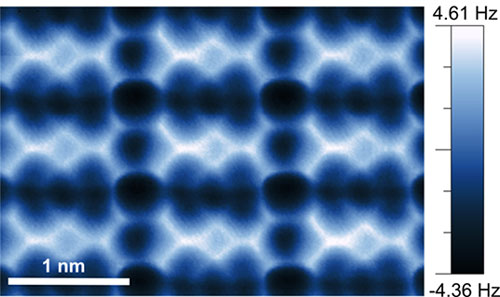 In what could prove to be a significant advance in fabricating new technologies, scientists discovered a new self-assembly mechanism that surprisingly drives negatively charged molecules to clump together to form islands when graphene is supported by an electrical insulator.
Jul 27th, 2016
Read more Atomistic simulation of quantum transport in nanoelectronic devices shows how, using NanoDsim.
Jul 27th, 2016
Read more New technique can reveal subcellular details and long-range connections.
Jul 27th, 2016
Read more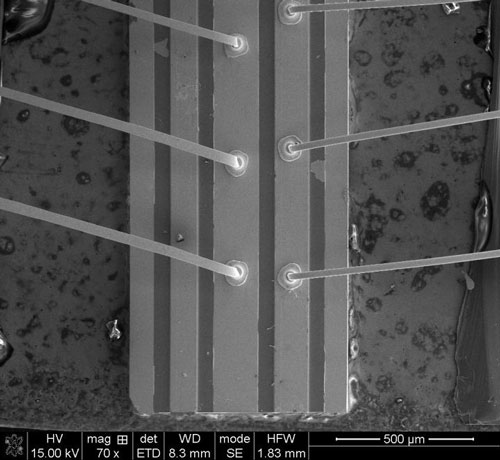 Researchers nearly double the continuous output power of a type of terahertz laser, opening up applications in spectroscopy, imaging, remote sensing and more.
Jul 27th, 2016
Read moreThanks to the ordering effects of two-faced magnetic beads, they can be turned into useful tools controlled by a changing external magnetic field.
Jul 27th, 2016
Read more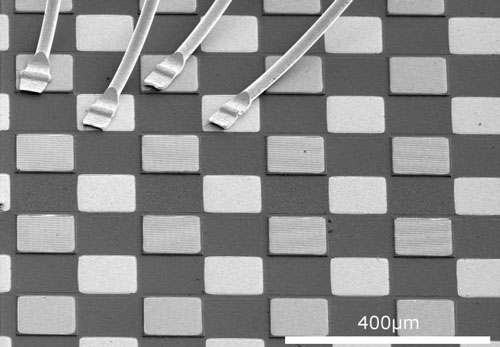 Researchers have developed a new 'cooler' sensing instrument thereby increasing energy-efficiency and enhancing mobility for diagnostic testing.
Jul 27th, 2016
Read more Engineers discover highly conductive materials for more efficient electronics.
Jul 27th, 2016
Read more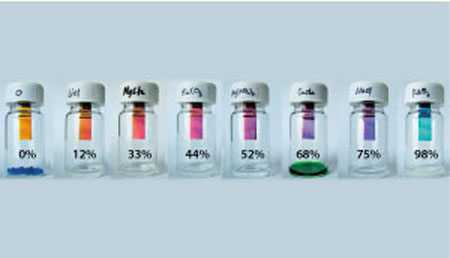 Disposable and ultrafast optical humidity sensors provide better moisture control for manufacturing and storage.
Jul 27th, 2016
Read more Subscribe to our Nanotechnology News feed