

Biotechnology News – Latest Headlines
 Subscribe to our Biotechnology News feed
How an artificial protein rescues dying cells
A new study has revealed how a synthetic protein revives E. coli cells that lack a life-sustaining gene, offering insight into how life can adapt to survive and potentially be reinvented.
March 8, 2016 Read more
Scientists discover a natural adhesive with biomedical applications
Chemists created a nonpermanent adhesive from a natural chemical reaction that can be used in the biomedical field. This discovery may benefit tissue repair or drug delivery.
March 8, 2016 Read more
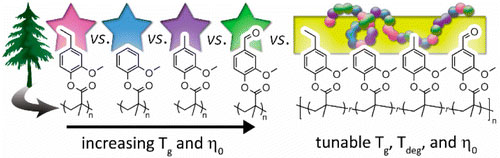
Research team documents design of wood-based polymers
Researchers recently demonstrated the design of softwood lignin-based polymers with potential application as alternatives to petroleum-based polystyrene. These softwood materials can be obtained from sources such as pine, cedar, spruce, and cypress trees.
March 8, 2016 Read more
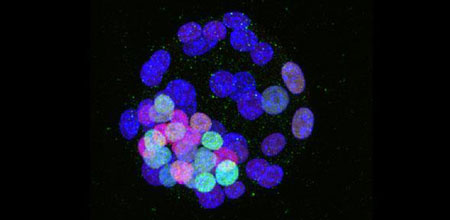
Scientists develop very early stage human stem cell lines for first time
Scientists have for the first time shown that it is possible to derive from a human embryo so-called 'naïve' pluripotent stem cells - one of the most flexible types of stem cell, which can develop into all human tissue other than the placenta.
March 4, 2016 Read more
Engineered hydrogel scaffolds enable growth of functioning human breast tissue
Researchers have created a hydrogel scaffold replicating the environment found within the human breast. The scaffold supports the growth of human mammary tissue from patient-derived cells and can be used to study normal breast development as well as breast cancer initiation and progression.
March 2, 2016 Read more
New discovery opens doors to manipulating fat production in the body
New research suggests that combining bone marrow or stem cell transplant technology with genetic engineering could result in tailor made fat storing cells with desirable functions.
March 2, 2016 Read more

Improving biorefineries with bubbles
Researchers in Japan are developing methods to improve the efficiency of biorefinery systems.
March 1, 2016 Read more
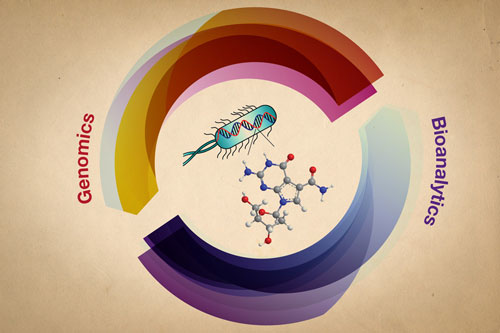
A new way to discover DNA modifications
Researchers systematically find molecules that help regulate and protect DNA.
March 1, 2016 Read more
Engineered swarmbots rely on peers for survival (w/video)
Bioengineers have engineered microbes that can't run away from home; those that do will quickly die without protective proteins produced by their peers.
February 29, 2016 Read more

Making better enzymes and protein drugs
Researchers have shown that there is an anti-correlation between the number of aggregation prone regions (APRs) in a protein's sequence and its solubility, suggesting that mutational suppression of APRs could provide a simple strategy to increase protein solubility.
February 29, 2016 Read more

Mammalian fertilization, caught on tape
Using a new microfluidic device called the 'IVF chip', scientists obtain the first images with both high spatial and temporal resolution of the initial steps of fertilization.
February 29, 2016 Read more
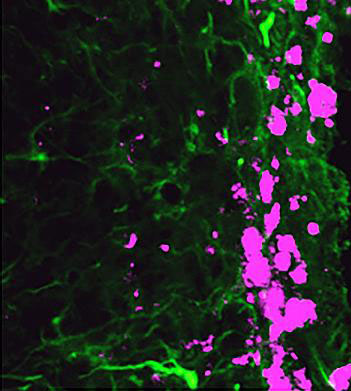
Researchers make groundbreaking discovery, use skin cells to kill cancer
Skin cells turned cancer-killing stem cells hunt down and destroy the deadly remnants inevitably left behind when a brain tumor is surgically removed.
February 24, 2016 Read more
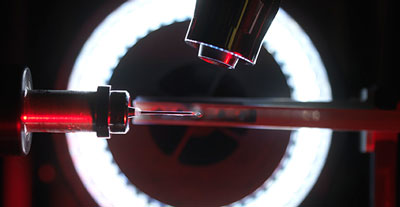
Scientists pave way for new generation of superbug drugs
New research reveals the mechanism by which drug-resistant bacterial cells maintain a defensive barrier.
February 23, 2016 Read more
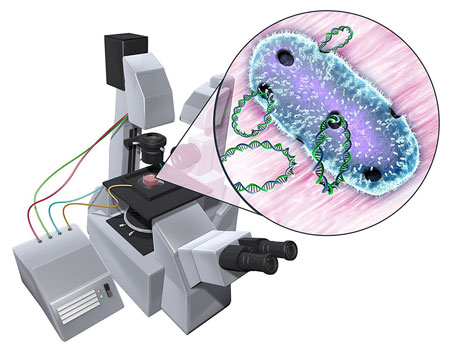
Breaking through the bacteria barrier
New microfluidic device may speed up DNA insertion in bacteria, the first step in genetic engineering.
February 19, 2016 Read more
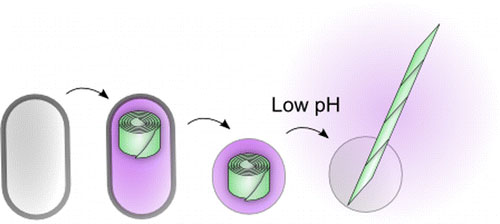
Punchy proteins could help advance drug delivery, MEMS devices (w/video)
Some bacteria that live inside paramecia, which are tiny aquatic organisms, use a coiled protein ribbon that unfurls like a Chinese paper yo-yo to deliver a toxin to threatening organisms. The protein packs a punch, bursting through membranes of the paramecia's competitors as it elongates.
February 17, 2016 Read more
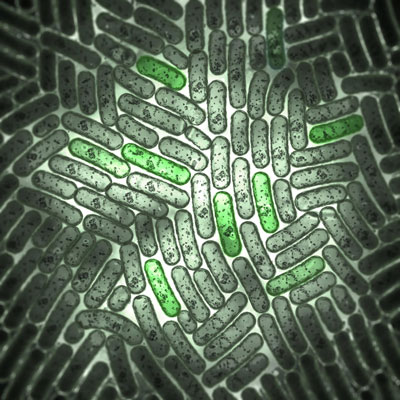
Fluorescent biosensors light up high-throughput metabolic engineering
Genetically encoded fluorescent biosensors allow researchers to see how products form in real time in microorganisms, and to test billions of candidates at a time.
February 17, 2016 Read more
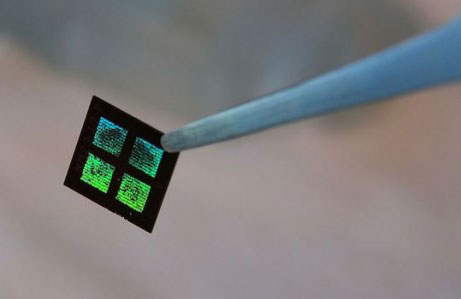
Using a microchip to build a first-ever artificial kidney
A researcher is making major progress on a first-of-its kind device to free kidney patients from dialysis. He is building an implantable artificial kidney with microchip filters and living kidney cells that will be powered by a patient's own heart.
February 15, 2016 Read more
Scientists prove feasibility of 'printing' replacement tissue
Using a sophisticated, custom-designed 3D printer, regenerative medicine scientists have proved that it is feasible to print living tissue structures to replace injured or diseased tissue in patients.
February 15, 2016 Read more