

Biotechnology News – Latest Headlines
 Subscribe to our Biotechnology News feed
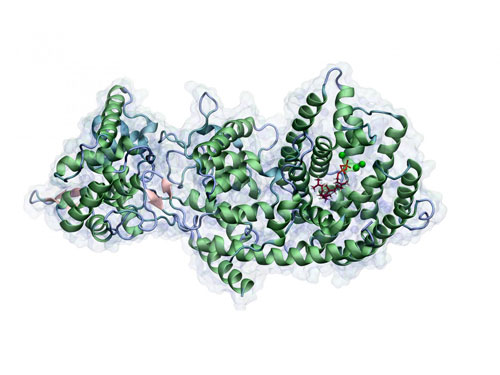
A new molecular toolkit for the de-novo design of bioactive agents
Synthetic biotechnology enables sustainable production of bioactive natural substances.
June 7, 2016 Read more
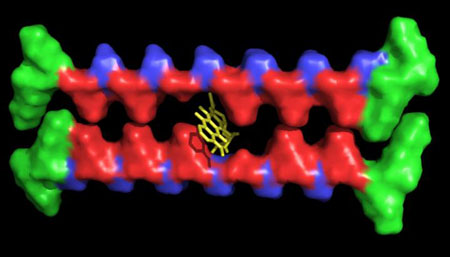
'Missing tooth' hydrogels handle hard-to-deliver drugs
A gap-toothed peptide created by bioengineers may be an efficient way to deliver insoluble drugs to precise locations in the body.
June 7, 2016 Read more
Engineered E. coli vesicles act as vaccine deliverers
A multi-institution effort has resulted in a paper that details how antigen-coated membrane vesicles derived from the surface of E. coli cells protected mice from a deadly pathogen, and how that system could work against other pathogens, as well.
June 6, 2016 Read more
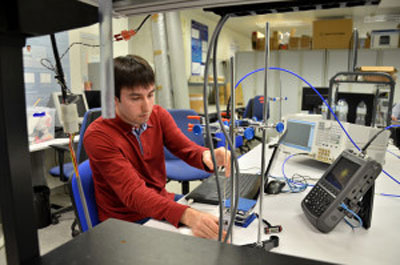
New synthetic models with the electromagnetic properties of human tissues
Known as phantoms, these models may be of interest for the development of new technologies for use in medical screening, as well as for the evaluation of 5G mobile communication devices.
June 6, 2016 Read more
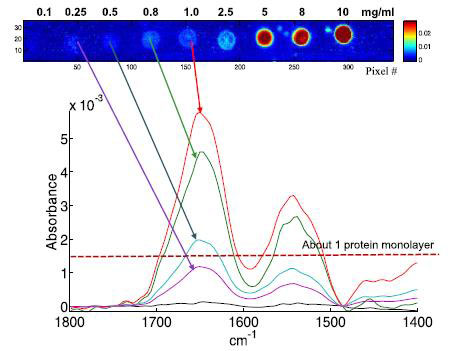
FTIR and microarrays: Enabling more information from less sample
By using Fourier Transform Infrared Spectroscopy (FTIR), researchers can greatly increase the amount of information that can be extracted from a protein microarray. They show how high-quality spectra can be obtained from spots of protein no larger than the diameter of a human hair.
June 3, 2016 Read more
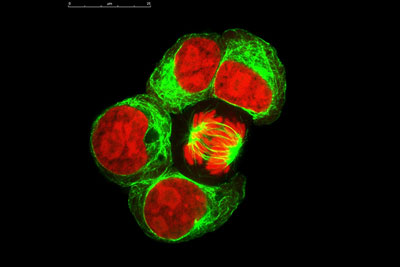
Gene circuits in live cells can perform complex computations
Technique combines analogue and digital processes in engineered cells.
June 3, 2016 Read more
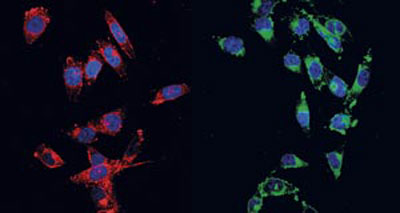
Red for go, green for done
A molecular probe has been developed that emits light at critical stages while destroying tumor cells.
June 2, 2016 Read more
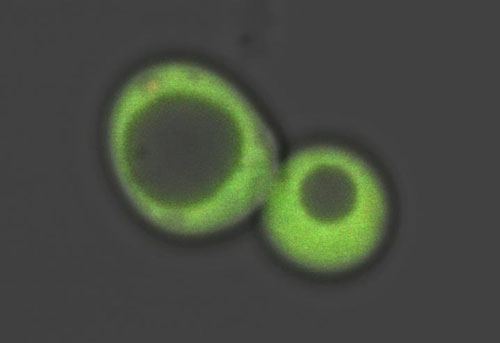
Heme, a poisonous nutrient, tracked by 'Green Lantern' sensor
Labile heme's movements illuminated for the first known time thanks to ratiometric sensor.
May 31, 2016 Read more

Fluid self-organizes into structure that controls cell growth and health
Researchers have discovered how the nucleolus, an organelle with the consistency of honey, maintains a complex internal structure.
May 20, 2016 Read more
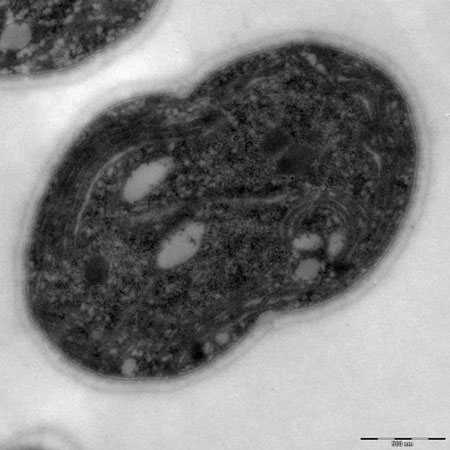
Modified microalgae converts sunlight into valuable medicine
Scientists have modified a microalgae so it will soon be able to produce valuable chemicals such as cancer treatment drugs and much more just by harnessing energy from the sun.
May 20, 2016 Read more
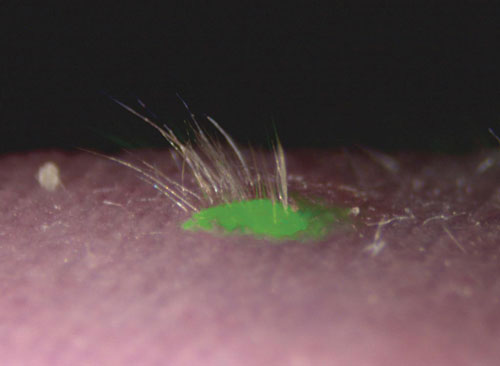
Growing a thick skin
Lab-grown skin sprouts hair and grows glands, paving the way for burn, scar and hair-loss therapies.
May 20, 2016 Read more
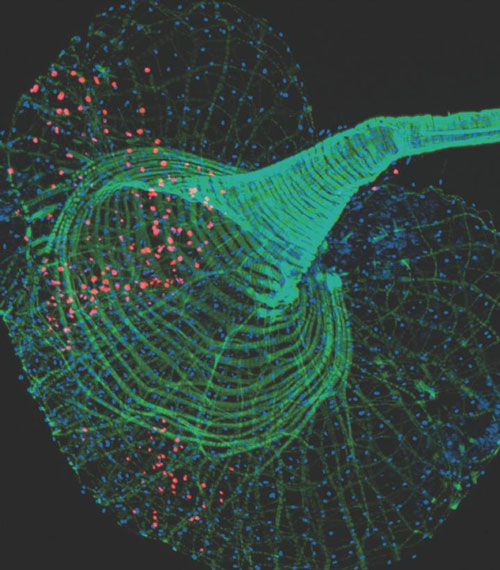
Luminous proteins offer new method to discover viral infections
Scientists have developed a new method to directly follow viral infections in living organisms. This method can make infected cells produce fluorescent proteins, which means that they light up and become easier to identify.
May 18, 2016 Read more
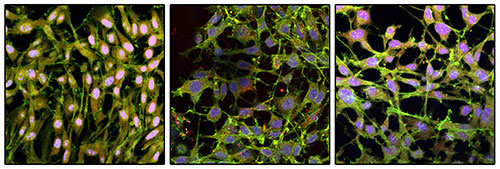
Harnessing engineered slippery surfaces for tissue repair (w/video)
A new method could facilitate the transfer of intact regenerating cell sheets from the culture dish to damaged tissues in patients.
May 18, 2016 Read more
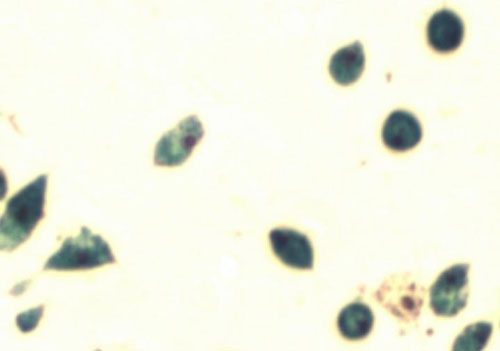
Scientists develop bio-mimicry method for preparing and labeling stem cells
Method allows researchers to prepare mesenchymal stem cells and monitor them using MRI.
May 18, 2016 Read more
Researchers show that four-stranded DNA is formed and unfolded
Researchers have discovered that specific DNA sequences that are rich in the DNA building block guanine in the yeast species, Schizosaccharomyces pombe, can form four-stranded DNA.
May 16, 2016 Read more
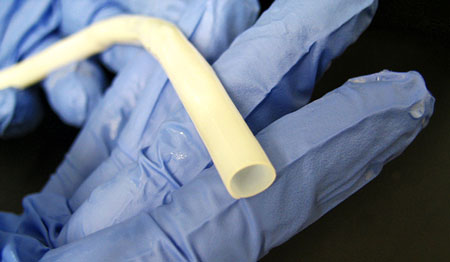
Bioengineered blood vessel is safe for dialysis patients, study finds
The man-made vessels appeared to be both safe and more durable than commonly used synthetic versions, said the investigators.
May 13, 2016 Read more
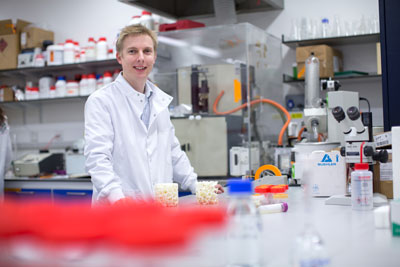
New bio-glass could make it possible to re-grow or replace cartilage
Scientists have developed a material that can mimic cartilage and potentially encourage it to re-grow.
May 12, 2016 Read more
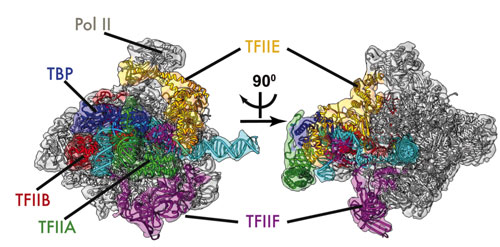
Researchers unveil new, detailed images of initial stages of DNA transcription
Cryo-electron microscopy (cryo-EM), a technique that studies samples at cryogenic temperatures, combined with state-of-the-art computational modeling, allowed researchers to visualize large transcription pre-initiation complexes (PIC) at near-atomic resolution.
May 11, 2016 Read more