

Nanotechnology News – Latest Headlines
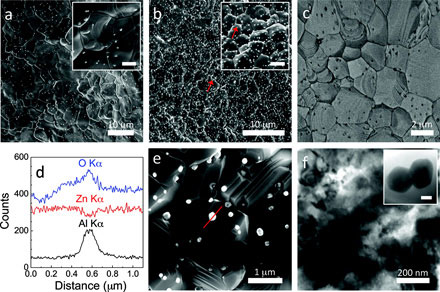
Engineers cook promising new thermoelectric nanomaterials in microwave oven
Scientists have demonstrated a new way to decrease zinc oxide's thermal conductivity without reducing its electrical conductivity. The innovation involves adding minute amounts of aluminum to zinc oxide, and processing the materials in a microwave oven.
September 29, 2011 Read more
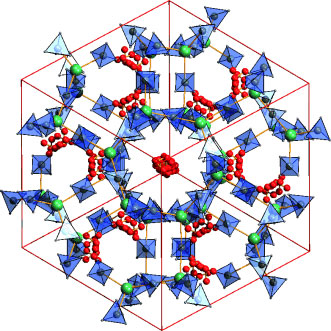
Full to the brim with hydrogen
Porous form of magnesium borohydride can store hydrogen.
September 29, 2011 Read more
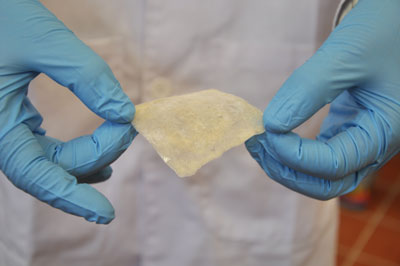
Researchers devise world's first energy-storage membrane
A team from the National University of Singapore's Nanoscience and Nanotechnology Initiative (NUSNNI), led by principle investigator Dr Xie Xian Ning, has developed the world's first energy-storage membrane.
September 29, 2011 Read more
Peers honor top materials scientists, engineers
ASM International will bestow its most prestigious honors upon 15 leaders in materials science and engineering at MS+T 2011, the Materials Science and Technology conference in Columbus, Ohio, on Oct. 18. The awards recognize lifetime achievement or breakthroughs in understanding and use of materials such as metals, ceramics, polymers and nanomaterials.
September 29, 2011 Read more

Mimicking cells with transistors
Analog - rather than digital - circuits could enable models of biological systems that are more efficient, more accurate and easier to build.
September 29, 2011 Read more
New research promises better collection of prostate cancer cells
microTAS 2011 conference, the premier international event for reporting research in microfluidics, nanotechnology and detection technologies for life science and chemistry, University of Cincinnati researchers will present a simple, low-cost, method for separating and safely collecting concentrated volumes of fragile prostate cancer cells.
September 28, 2011 Read more

Physicists find strong bonds between rare-earth metals and graphene
Physicists at the U.S. Department of Energy's Ames Laboratory are studying the interaction of materials that are promising for use in nanoscale electronics: graphene and different types of metals. The team has discovered the rare-earth metals dysprosium and gadolinium react strongly with graphene, while lead does not.
September 28, 2011 Read more
Eine unverzichtbare Nanotechnologie: Nicht-rostender Stahl
Rostfreie Staehle sind aus unserer modernen Industriegesellschaft nicht mehr wegzudenken.
September 28, 2011 Read more
Top award recognises Irish researcher's contribution to nanoscience
Professor Michael Coey receives RDS/Intel Prize for Science Research and Communication
September 28, 2011 Read more
IBM and Intel lead group to invest $4.4bn in next-generation chip technology in New York
Governor Andrew M. Cuomo today announced that New York State has entered into agreements providing for investments valued at a total of $4.4 billion over the next five years from five leading international companies to create the next generation of computer chip technology.
September 28, 2011 Read more
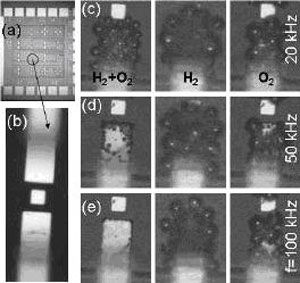
Spontaneous combustion in nanobubbles
Nanometer-sized bubbles containing the gases hydrogen and oxygen can apparently combust spontaneously, although nothing happens in larger bubbles. For the first time, researchers have demonstrated this spontaneous combustion.
September 28, 2011 Read more
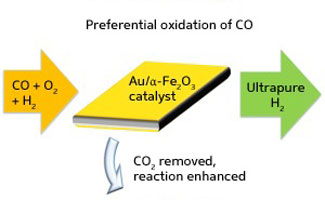
Soaking up the atmosphere with gold nanoparticles
Combining carbon dioxide sorbents with gold nanoparticle catalysts makes manufacturing ultrapure hydrogen gas easier than ever.
September 28, 2011 Read more
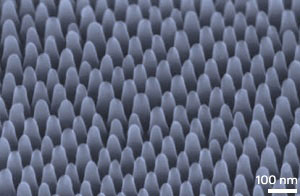
Patterning nanopillars onto a silicon surface
Advanced electronics beckon thanks to self-assembling templates that allow the creation of nanoscale features on silicon wafers.
September 28, 2011 Read more
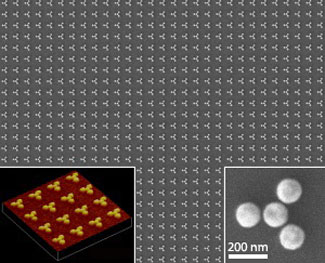
Photonics: Golden atoms
Similarities between the electronic states of molecules and the optical properties of gold nanostructures aid the development of new photonic devices.
September 28, 2011 Read more
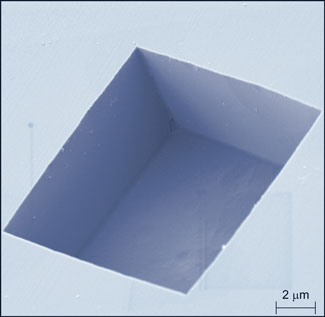
NIST polishes method for creating tiny diamond machines
Diamonds may be best known as a symbol of long-lasting love. But semiconductor makers are also hoping they'll pan out as key components of long-lasting micromachines if a new method developed at the National Institute of Standards and Technology (NIST) for carving these tough, capable crystals proves its worth.
September 27, 2011 Read more
Carbon nanotubes make solar cells affordable, flexible
Researchers from Northwestern University have developed a carbon-based material that could revolutionize the way solar power is harvested. The new solar cell material - a transparent conductor made of carbon nanotubes - provides an alternative to current technology, which is mechanically brittle and reliant on a relatively rare mineral.
September 27, 2011 Read more
 Subscribe to our Nanotechnology News feed