

Nanotechnology News – Latest Headlines
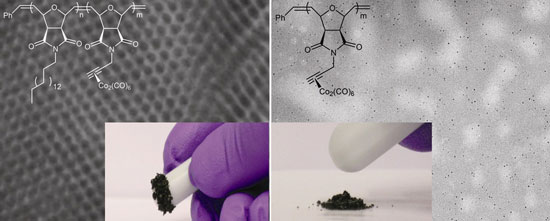
Nanotechnology allows for simplified process to manufacture magnetic materials
Scientists at the University of Massachusetts Amherst report that for the first time they have designed a much simpler method of preparing ordered magnetic materials than ever before, by coupling magnetic properties to nanostructure formation at low temperatures.
September 27, 2011 Read more
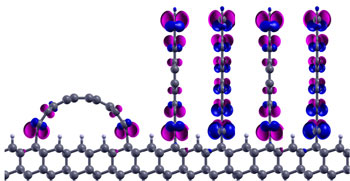
100 trillion graphene wall field-effect transistors could fit on a single chip
A new paper by collaborators at Rice University and Hong Kong Polytechnic University demonstrates the possibility that tiny strips of graphene can stand tall on a substrate with a little support. This leads to the possibility that arrays of graphene walls could become ultrahigh density components of electronic or spintronic devices.
September 27, 2011 Read more
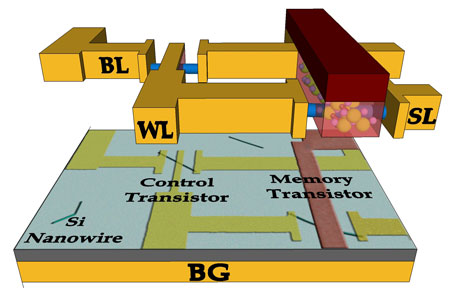
New 'FeTRAM' is promising computer memory technology
Researchers are developing a new type of computer memory that could be faster than the existing commercial memory and use far less power than flash memory devices. The technology combines silicon nanowires with a "ferroelectric" polymer, a material that switches polarity when electric fields are applied, making possible a new type of ferroelectric transistor.
September 27, 2011 Read more
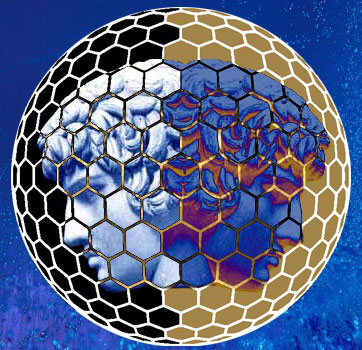
New technique maps twin faces of smallest Janus nanoparticles
Researchers have developed the first method that can rapidly and accurately map the chemical properties of the smallest of these Janus nanoparticles.
September 27, 2011 Read more
Two UCSB faculty members will receive US presidential science awards
President Obama today named two UC Santa Barbara faculty members as recipients of the Presidential Early Career Award for Scientists and Engineers (PECASE). The award is the highest honor the nation can bestow on a scientist or engineer at the beginning of his or her career. Benjamin Mazin, assistant professor in the Department of Physics, and Sumita Pennathur, assistant professor in the department of mechanical engineering, are among 94 individuals across the country to receive the early career awards.
September 27, 2011 Read more
Bold approach could change electronics industry
Professors receive $1.5 million to study new idea that could drastically reduce power consumption and increase speed in the next generation of computers.
September 26, 2011 Read more
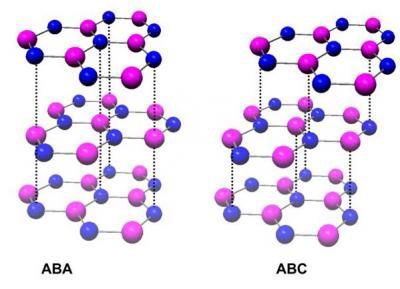
Accidental discovery provides a unique route for tuning graphene's electrical properties
An accidental discovery in a physicist's laboratory at the University of California, Riverside provides a unique route for tuning the electrical properties of graphene, nature's thinnest elastic material. This route holds great promise for replacing silicon with graphene in the microchip industry.
September 26, 2011 Read more
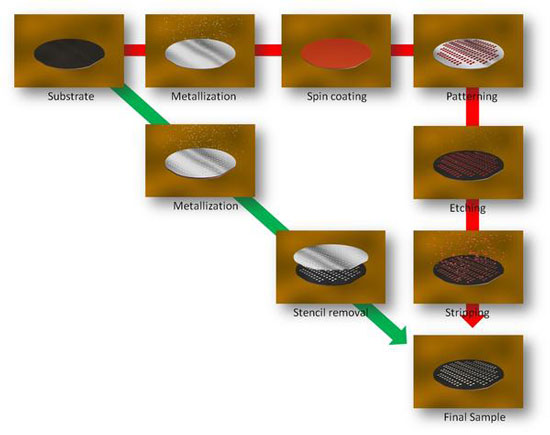
A faster, cheaper method for making transistors and chips (w/videos)
It may soon be possible manufacture the miniscule structures that make up transistors and silicon chips rapidly and inexpensively. EPFL scientists are currently investigating the use of dynamic stencil lithography, a recent but not yet perfected method, for creating nanostructures.
September 26, 2011 Read more
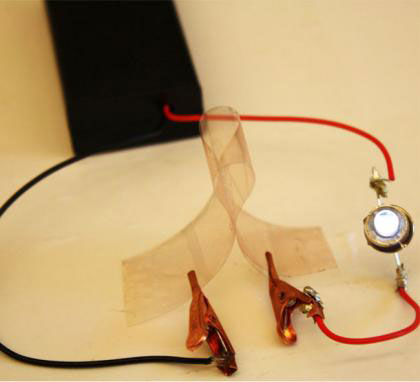
Copper nanowires may be coming to a little screen near you
Nanowires of copper could eliminate busted cell phone screens and make solar cells more competitive with fossil fuels.
September 26, 2011 Read more
Cheap and efficient solar cell made possible by linked nanoparticles
Researchers of the Chemical Engineering department and the Kavli institute of the TU DElft have demonstrated that electrons can move freely in layers of linked semiconductor nanoparticles under the influence of light. This new knowledge will be very useful for the development of cheap and efficient quantum dot solar cells.
September 26, 2011 Read more
E-textiles get fashion upgrade with memory-storing fiber
Researchers have developed a new flexible memory fabric woven together from interlocking strands of copper and copper-oxide wires. At each juncture, or stitch along the fabric, a nanoscale dab of platinum is placed between the fibers.
September 26, 2011 Read more
NanoCode Project newsletter no. 2 now available
The second issue of the NanoCode newsletter has been published. It provides information on the NanoCode project.
September 26, 2011 Read more
SEEC microscopy reveals unexpected labelled lipid behavior on solid surface
A research group from the Karlsruhe Institute of Technology in Germany reports in Langmuir how Surface Enhanced Ellipsometric Contrast (SEEC) microscopy can be used to provide a plausible scenario as to the behavior of labelled lipids at a surface.
September 26, 2011 Read more
Next-generation optical tweezers trap tightly without overheating
Improved device eliminates a barrier to handling nanoscale particles.
September 26, 2011 Read more
Deadline for International Science and Engineering Visualization Challenge is this Friday
To illustrate is to enlighten. The National Science Foundation and the journal Science created the International Science and Engineering Visualization Challenge to celebrate that grand tradition - and to encourage its continued growth.
September 26, 2011 Read more

FachDialoge Nanotechnologien
Die NanoKommission wurde 2006 im Rahmen des Nano Aktionsplans der deutschen Bundesregierung als zentrale, nationale Dialogplattform geschaffen. Die NanoKommission arbeitete in zwei Dialogphasen (2006-2008 und 2009-2011) und schloss diese jeweils mit einem Abschlussbericht und Empfehlungen an die Bundesregierung ab.
September 26, 2011 Read more
 Subscribe to our Nanotechnology News feed