

Nanotechnology News – Latest Headlines
Scientists image magnetic semiconductors on the nanoscale
In a first-of-its-kind achievement, scientists have directly imaged the magnetic interactions between two magnetic atoms less than one nanometer apart and embedded in a semiconductor chip.
July 26, 2006 Read more
Carbon nanotubes you can live with
A team of researchers have developed a means of making CNTs biocompatible.
July 26, 2006 Read more
Helium atoms deliver a new view
A newly devised nozzle fitted with a pinhole-sized capillary has allowed researchers to distribute helium atoms with X-ray-like waves on randomly shaped surfaces.
July 26, 2006 Read more
Flexible nanonetworks
In the future, you might be reading this on foldable electronic paper, according to an American scientist.
July 26, 2006 Read more
Something in the air: nanoparticles and ...?
A new analyser measures the volatile and hygroscopic (water absorbing) properties of nanoparticles emitted from vehicles.
July 26, 2006 Read more
Carbon nanotubes enlisted to reduce waste in cleanup of toxic chemicals
Researchers at Pacific Northwest National Laboratory have demonstrated a new, environmentally friendly process for treating water contaminated by perchlorate, a toxic chemical that has been found in drinking water in 35 states.
July 25, 2006 Read more
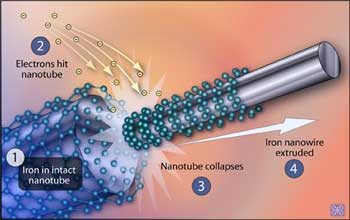
Researchers explore using nanotubes as minuscule metalworking tools
Bombarding a carbon nanotube with electrons causes it to collapse with such incredible force that it can squeeze out even the hardest of materials, much like a tube of toothpaste, according to an international team of scientists.
July 25, 2006 Read more
Nanotechnology makes use of biotechnology
New research in the field of microelectronics facilitates the manufacture of nanodevices at the molecular level based on the use of genetic material.
July 25, 2006 Read more
Bonding and de-bonding on command
Adhesives are supposed to harden quickly and reliably - and connection should be debondable without difficulty once they have done their job. Fraunhofer researchers have developed the first adhesive to reconcile these contradictory requirements.
July 25, 2006 Read more
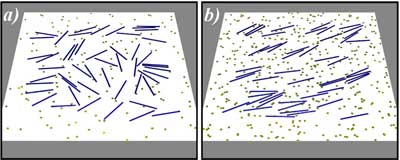
Order by motion
Max Planck scientists have shown that molecular motors can induce orientational order in an isotropic liquid of filaments.
July 25, 2006 Read more
Nano probe may open new window into cell behavior
Georgia Tech invention captures cell properties and biochemical signals in action
July 24, 2006 Read more
New nano approaches to in vivo and cell-based imaging
A new report illustrates the versatility and promise of nanoscale imaging agents.
July 24, 2006 Read more
Antibody targeting boosts nanoparticle uptake by tumor cells
New data shows that antibody targeting actually causes cancer cells to take up the attached nanoparticles, increasing the amount of drug inside tumor cells.
July 24, 2006 Read more
Fullerenes yield stable, powerful MR imaging agent
Researchers have developed a new imaging agent that is 40 times more potent at boosting magnetic resonance imaging signals than agents currently approved for human clinical use.
July 24, 2006 Read more
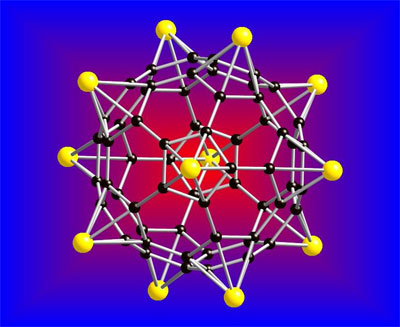
Developing alternatives to fossil fuel
A novel approach: Lithium-coated buckyballs to store hydrogen molecules in large quantities and operate under moderate temperatures and pressures.
July 24, 2006 Read more
Twin friction-tricks grease nano-wheels
Two tricks that could eliminate friction on the nanoscale have been revealed by physicists in Canada, Switzerland and the US.
July 24, 2006 Read more
 Subscribe to our Nanotechnology News feed