

Nanotechnology News – Latest Headlines

Buckyballs make room for gilded cages
Scientists have uncovered a class of gold atom clusters that are the first known metallic hollow equivalents of the famous hollow carbon fullerenes known as buckyballs.
May 15, 2006 Read more
Smell of success for nanobiosensors
Modern-day doctors may soon start using smell to detect the early warning signs of different illnesses thanks to technology that replicates - and improves upon - the human olfactory system thanks to tiny bioelectronic sensors.
May 15, 2006 Read more
Organizing dumbbells for nanotechnology devices
Researchers have devised a method that could allow them to organize tiny molecular machines on a surface and so build devices that pack in thousands of times as many switching units, for instance, than is possible with a conventional silicon chip.
May 12, 2006 Read more
Scientists create the first synthetic nanoscale fractal molecule
From snowflakes to the leaves on a tree, objects in nature are made of irregular molecules called fractals. Scientists now have created and captured an image of the largest man-made fractal molecule at the nanoscale.
May 11, 2006 Read more
Biological motors sort molecules one by one on a chip
Researchers from the Delft University of Technology Kavli Institute of Nanoscience have discovered how to use the motors of biological cells in extremely small channels on a chip. Based on this, they built a transport system that uses electrical charges to direct the molecules individually.
May 11, 2006 Read more
Call for interest: European Space Agency is seeking a Commercial Agent Network
The European Space Agency (ESA) is seeking a Commercial Agent Network to market and sell the use of ESA s facilities on the International Space Station (ISS) and related resources and services within the Materials and Processes industrial community.
May 11, 2006 Read more
Corking nano test tubes
Scientists have found a way to cork nanoscale test tubes. The goal is a better way to deliver drugs, for example, for cancer treatment. Scientists want to fill the teeny tubes with drugs and inject them into the body, where they will seek diseased or cancerous cells, uncork and spill their therapeutic contents in the right place.
May 10, 2006 Read more
Nanotechnology shows early promise to treat cardiovascular disease
A new tactic in the battle against cardiovascular disease ? employing nanoengineered molecules called nanolipoblockers as frontline infantry against harmful cholesterol ? is showing promise in early laboratory studies at Rutgers, The State University of New Jersey.
May 10, 2006 Read more
Advancements in printable solar cell research using carbon nanotubes
Eikos Inc. and the National Renewable Energy Laboratory (NREL) have achieved competitive efficiency in two types of solar cells using carbon nanotube conductive coatings, in a significant step toward developing fully printable solar cells.
May 10, 2006 Read more
Coated gadolinium nanoparticles hold promise as imaging agents
Gadolinium ions are a popular component of agents used to improve magnetic resonance image (MRI) quality.
May 10, 2006 Read more
Silica-coated iron oxide yield versatile nanoparticles for biomedicine
By melding magnetic and luminescent properties with an easily modified surface, a team of investigators at the National Research Council of Canada have created what could prove to be a highly versatile nanoparticle system for imaging and delivering drugs to tumors.
May 9, 2006 Read more
Nanoparticles improve ultrasound sensitivity for cancer detection
Targeted nanoparticles may eventually help physicians detect the very earliest stages of cancer using readily available ultrasound equipment.
May 9, 2006 Read more
Engineers discover predictor of mobility for fluids at nano-scale
Chemical engineers at The University of Texas at Austin have discovered a new way to predict the mobility of confined fluids at nanometer scales.
May 8, 2006 Read more
Europe in danger of missing the boat on commercial returns In nanotechnology
A new report by law firm Marks and Clerk warns that high public expenditure in Europe is not being converted into commercial prospects due to a lack of patent applications.
May 8, 2006 Read more
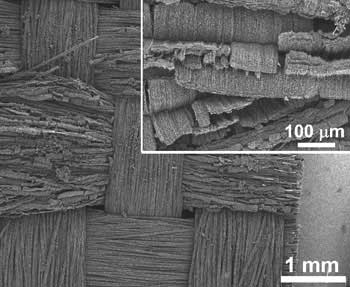
Nanotube sandwiches could lead to better composite materials
By stacking layers of ceramic cloth with interlocking nanotubes in between, a team of researchers has created new composites with significantly improved properties compared to traditional materials.
May 8, 2006 Read more
Nanotubes used for first time to send signals to nerve cells
Texas scientists have added one more trick to the amazing repertoire of carbon nanotubes ? the ability to carry electrical signals to nerve cells.
May 8, 2006 Read more
 Subscribe to our Nanotechnology News feed