

Nanotechnology News – Latest Headlines
Biomimetic ceramics for medical implants
University of Seville researchers apply biomorphic silicon carbide, one of its patented materials, to the field of medical implants.
April 24, 2006 Read more
Microfluidic device enables protein analysis in single cancer cells
A microfluidic device designed to slow the movement of specific subsets of cells has shown potential for use in characterizing the multiple types of cells found within human tumors.
April 24, 2006 Read more
Targeted nanoparticles destroy prostate tumors
Biodegradable polymer nanoparticles, linked to a protein-binding nucleic acid known as an aptamer and loaded with the anticancer agent docetaxel, can target and kill prostate tumors growing in mice. Using this targeted nanoparticle to deliver docetaxel appears to reduce the toxic side effects associated with this drug.
April 24, 2006 Read more
Researchers develop detailed design rules for nanoimprint lithography processing
Using a combination of experimental data and simulations, researchers have identified key parameters that predict the outcome of nanoimprint lithography, a fabrication technique that offers an alternative to traditional lithography in patterning integrated circuits and other small-scale structures into polymers.
April 24, 2006 Read more
Nano machine switches between biological and silicon worlds
Scientists have created a molecular switch that could play a key role in thousands of nanotech applications. The Mol-Switch project successfully developed a demonstrator to prove the principle, despite deep scepticism from specialist colleagues in biotechnology and biophysics.
April 24, 2006 Read more
Artificial fibers with nanometer-sized features can be used to grow cells and tissue structures
These fibrous scaffolds have been imbued with features of the natural extracellular matrix, the ground substance in which cells are embedded and a vital component in the engineering of human tissues.
April 21, 2006 Read more
A slice of carbon could work wonders with chips
University of Manchester researchers have shown that graphene can be fashioned into a device called a spin valve, which discriminates between mobile electrons according to their spin.
April 21, 2006 Read more
Journal considers nanotech from social science perspective
Nanotechnology news generally is made by scientists and engineers tinkering with miniscule bits of matter in novel ways. But a new issue of a niche anthropology journal urges social scientists and society to jump into the nano-fray.
April 20, 2006 Read more
Scientists reveal how a novel ceramic achieves directional conduction
An international team of scientists has unravelled the properties of a novel ceramic material that could help pave the way for new designs of electronic devices and applications.
April 19, 2006 Read more
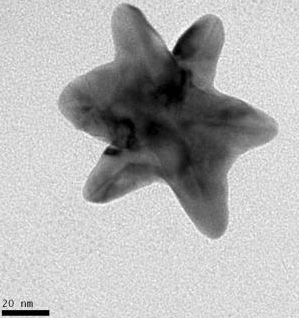
Gold nanostars could be ultra-sensitive chemical sensors
New optics research from Rice University's Laboratory for Nanophotonics suggests that tiny gold particles called nanostars could become powerful chemical sensors.
April 18, 2006 Read more
Light triggers nanoparticle drug release in cell nucleus
New work from the University of Massachusetts shows how light-activated gold nanoparticles can deliver and release DNA into the cell nucleus
April 17, 2006 Read more
Dip-pen lithography creates active protein nanoarrays
Arrays of proteins attached to solid surfaces have become important tools in drug discovery and cancer diagnostics, but in general, the immobilized proteins themselves are inactivated by the processes used to create these arrays. Now, however, researchers at Northwestern University have used dip-pen nanolithography to create arrays of antibodies that retain their ability to bind to their biological substrates.
April 17, 2006 Read more
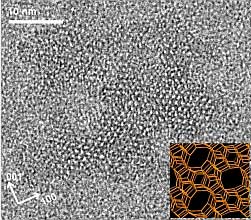
Crystal sieves, born anew
The porous, sieve-like minerals known as zeolites have been used for decades in purifiers, filters and other devices. Yet creating and refining a new type of zeolite is still a matter of sophisticated trial and error: no one has been able to figure out exactly how the crystals form, even in the laboratory.
April 17, 2006 Read more
Using a beam of light to trap protein molecules and make them dance in space
This new technique is useful for separating, concentrating and analyzing proteins quickly with high sensitivity and selectivity.
April 17, 2006 Read more
Paint-on laser could rescue computer chip industry
Researchers at the University of Toronto have created a laser that could help save the $200-billion dollar computer chip industry from a looming crisis dubbed the interconnect bottleneck.
April 17, 2006 Read more
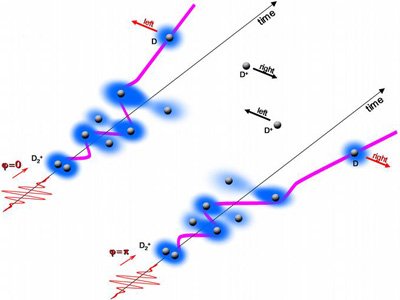
Laser wave drives electrons in chemical bonds
Researchers have demonstrated that the detailed shape of the electric field inside a short light pulse can be used to control the motion of electrons involved in chemical bonding and to change the outcome of a simple chemical reaction.
April 13, 2006 Read more
 Subscribe to our Nanotechnology News feed