

Nanotechnology News – Latest Headlines
Nanogenerators convert mechanical energy to electricity for self-powered devices
Researchers have developed a new technique for powering nanometer-scale devices without the need for bulky energy sources such as batteries.
April 13, 2006 Read more
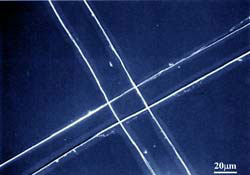
Nanofibers created in orderly fashion
Researchers have found a way to use the electric-field process to make nanofibers in a direct, continuous and controllable manner. The new technique, known as near-field electrospinning, offers the possibility of producing out of nanofibers new, specialized materials with organized patterns that can be used for such applications as wound dressings, filtrations and bio-scaffolds.
April 13, 2006 Read more
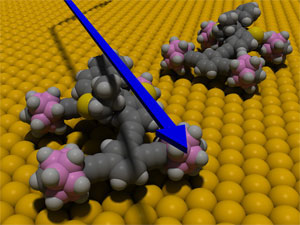
Rice scientists attach motor to single-molecule car
In follow-on work to its groundbreaking invention of the first single-molecule car, chemists at Rice University have produced the first motorized version of their tiny nanocar.
April 13, 2006 Read more
Efficient flat-panel light invented
Tired of fluorescent tubes? Imagine your ceiling - or any surface - as a giant light panel, thanks to research from University of Southern California (USC) and Princeton University.
April 12, 2006 Read more
Gases in one dimension - not your typical desk toy
Physicists at Penn State University have performed the first laboratory experiment with a system of many colliding particles whose motion never becomes chaotic.
April 12, 2006 Read more
Germany puts nanoparticles to the test
New research consortium in Germany examines possible risks with the goal of supporting small and medium-sized companies.
April 12, 2006 Read more
Nanoscience rising up to meet energy challenge
Tiny materials may bring about large-scale advances in a future hydrogen economy, Institute Professor Mildred S. Dresselhaus told audiences Wednesday, April 5, at MIT and at the Technion Israel Institute of Technology.
April 11, 2006 Read more
Nanopatches instead of syringes
Australian researchers started working on replacing syringes with nanopatches.
April 11, 2006 Read more
New environmental chamber aids nano-studies of metal oxides
A new environmental chamber constructed by Argonne National Laboratory allows researchers to watch materials as they grow step-by-step while interacting in elevated-temperature, reactive-gas environments.
April 11, 2006 Read more

Nanoparticles armed to combat cancer
Ultra-small particles loaded with medicine ? and aimed with the precision of a rifle ? are offering a promising new way to strike at cancer.
April 10, 2006 Read more
Nanoparticles effective in killing cancer with one-two punch of chemotherapeutics
Research studies, based at the University of Pennsylvania, demonstrate that biodegradable nano-particles containing two potent cancer-fighting drugs are effective in killing human breast tumors.
April 10, 2006 Read more
Site-selective modification of carbon nanotubes
Researchers have developed a technique that allows them to attach molecules to just a few specific nanotubes within an array of thousands of nanotubes. This new method could speed the development of nanosensor arrays capable of detecting multiple cancer markers in human tissue or blood samples.
April 10, 2006 Read more
CAS scientists develop a new DNA-based logical gate
Chinese researchers succeeded in developing a new type of logical gate by applying the deoxyribozyme (DNAzyme), adding a new brick to the groundwork of a DNA-based computation.
April 10, 2006 Read more
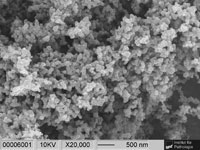
Dangerous duo - ultrafine particles aggravate allergic reactions
Exposure to ultrafine particles aggravates allergic inflammations in sensitised individuals ? especially when exposure to particles occurs before contact with the allergen.
April 10, 2006 Read more
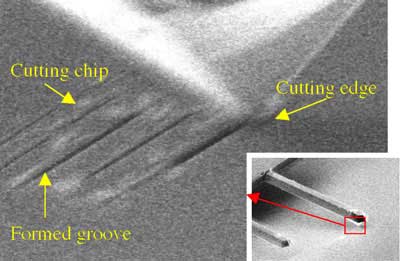
Success in real-ime observation of nanoscale cutting process
The National Institute of Advanced Industrial Science and Technology (AIST) and Toyama University in Japan have jointly developed a nano-mechanical fabrication system working in a scanning electron microscope (SEM), and thereby succeeded in real-time imaging of the nano-scale cutting process for a single crystal of silicon.
April 7, 2006 Read more
Nanopore method could revolutionize genome sequencing
A team led by physicists at the University of California, San Diego has shown the feasibility of a fast, inexpensive technique to sequence DNA as it passes through tiny pores. The advance brings personalized, genome-based medicine closer to reality.
April 6, 2006 Read more
 Subscribe to our Nanotechnology News feed