

Space Exploration News – Latest Headlines
 Subscribe to our Space Exploration News feed
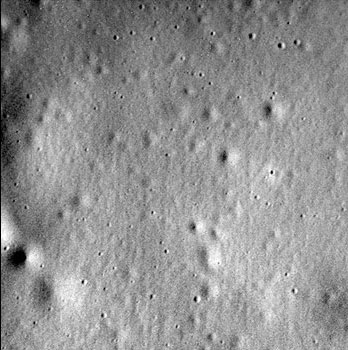
MESSENGER reveals Mercury's magnetic field secrets
New data from MESSENGER, the spacecraft that orbited Mercury for four years before crashing into the planet a week ago, reveals Mercury's magnetic field is almost four billion years old. The discovery helps scientists piece together the history of Mercury, the closest planet to the sun and one about which we knew very little before MESSENGER.
May 7, 2015 Read more
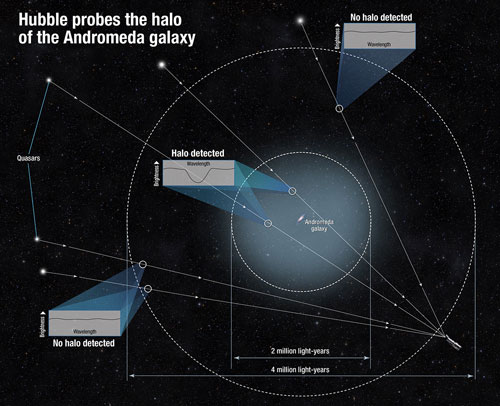
Hubble finds giant halo around the Andromeda galaxy
Scientists using NASA's Hubble Space Telescope have discovered that the immense halo of gas enveloping the Andromeda galaxy, our nearest massive galactic neighbor, is about six times larger and 1,000 times more massive than previously measured. The dark, nearly invisible halo stretches about a million light-years from its host galaxy, halfway to our own Milky Way galaxy.
May 7, 2015 Read more
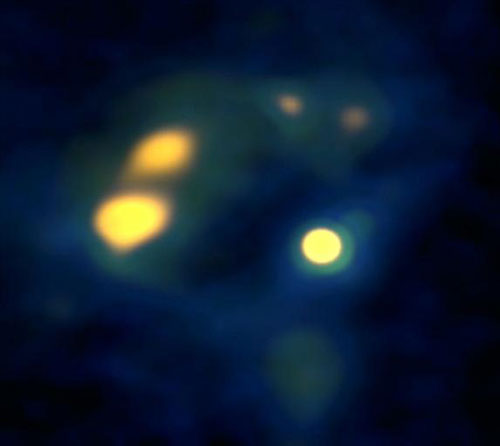
Astronomers discover proto super star cluster - a cosmic 'dinosaur egg' about to hatch
Astronomers using the Atacama Large Millimeter/submillimeter Array (ALMA) have discovered what may be the first known example of a globular cluster about to be born: an incredibly massive, extremely dense, yet star-free cloud of molecular gas.
May 7, 2015 Read more
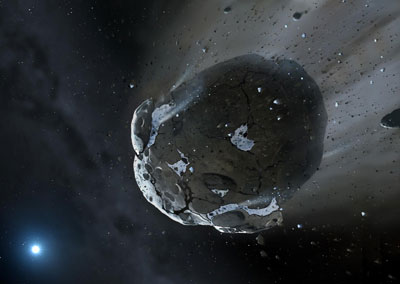
Fresh evidence for how water reached Earth found in asteroid debris
Water delivery via asteroids or comets is likely taking place in many other planetary systems, just as it happened on Earth, new research strongly suggests.
May 7, 2015 Read more
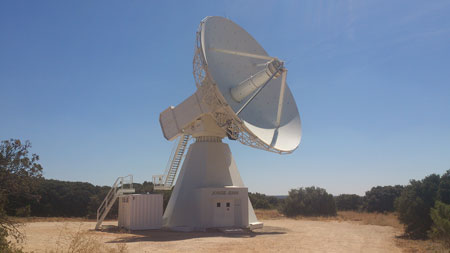
Improved detection of radio waves from space
Researchers have developed a very sensitive high frequency amplifier for radio telescopes used on Earth. The amplifier generates extremely little internal electromagnetic noise and will help measure our planet from space more precisely than ever before.
May 6, 2015 Read more
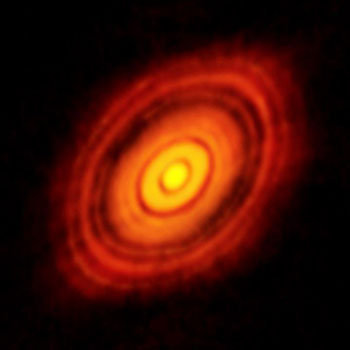
Astrophysicists offer proof that famous image shows forming planets
A recent and famous image from deep space marks the first time we've seen a forming planetary system. A team of astrophysicists found that circular gaps in a disk of dust and gas swirling around the young star HL Tau are in fact made by forming planets.
May 5, 2015 Read more
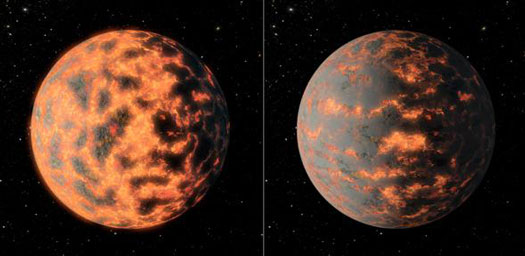
Astronomers find first evidence of changing conditions on a super Earth
Astronomers have detected wildly changing temperatures on a super Earth - the first time any atmospheric variability has been observed on a rocky planet outside the solar system - and believe it could be due to huge amounts of volcanic activity, further adding to the mystery of what had been nicknamed the 'diamond planet'.
May 5, 2015 Read more
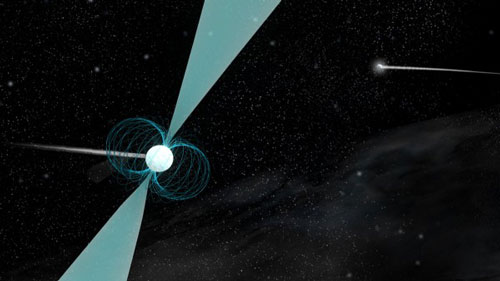
Pulsar with widest orbit ever detected
A team of highly determined high school students discovered a never-before-seen pulsar by painstakingly analyzing data from the Robert C. Byrd Green Bank Telescope (GBT). Further observations by astronomers using the GBT revealed that this pulsar has the widest orbit of any around a neutron star and is part of only a handful of double neutron star systems.
May 1, 2015 Read more
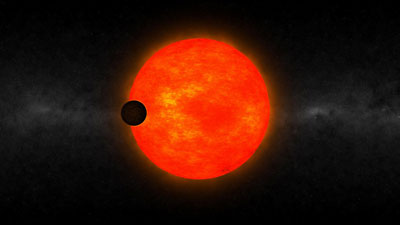
New exoplanet too big for its star
The discovery of a strange exoplanet orbiting very close to a small cool star 500 light years away is challenging ideas about how planets form.
May 1, 2015 Read more
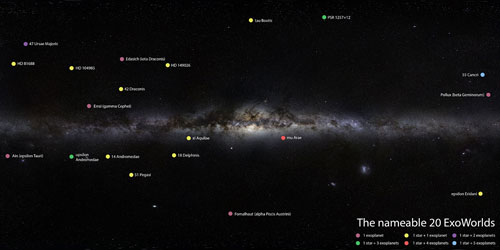
20 ExoWorlds are now available for naming proposals
The NameExoWorlds contest, organised by the IAU and Zooniverse, is now entering its next stage. The 20 most popular ExoWorlds have been made available for naming proposals from registered clubs and non-profit organisations.
April 30, 2015 Read more
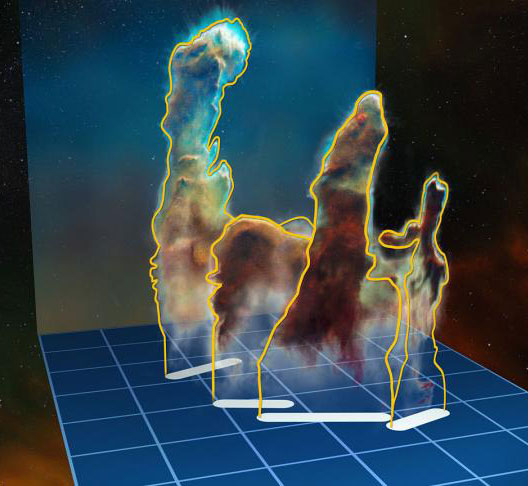
The Pillars of Creation revealed in 3D
New study suggests that iconic structures more aptly named the Pillars of Destruction.
April 30, 2015 Read more
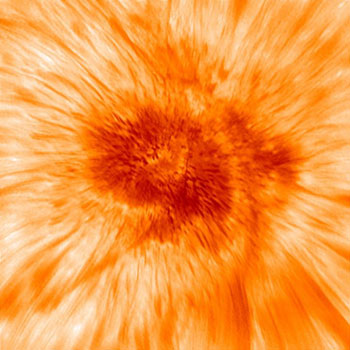
New solar telescope unveils the complex dynamics of sunspots' dark cores
Groundbreaking images of the Sun captured by scientists at Big Bear Solar Observatory (BBSO) give a first-ever detailed view of the interior structure of umbrae - the dark patches in the center of sunspots - revealing dynamic magnetic fields responsible for the plumes of plasma that emerge as bright dots interrupting their darkness.
April 29, 2015 Read more
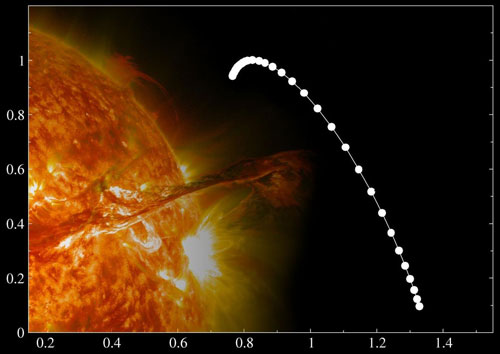
Multifractals suggest the existence of an unknown physical mechanism on the Sun
The famous sunspots on the surface of the Earth's star result from the dynamics of strong magnetic fields, and their numbers are an important indicator of the state of activity on the Sun. Researchers have been conducting multifractal analysis into the changes in the numbers of sunspots. The resulting graphs were surprisingly asymmetrical in shape, suggesting that sunspots may be involved in hitherto unknown physical processes.
April 29, 2015 Read more
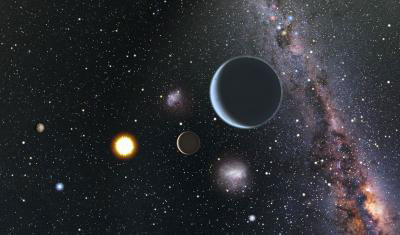
Robotically discovering Earth's nearest neighbors
A team of astronomers using ground-based telescopes in Hawaii, California, and Arizona recently discovered a planetary system orbiting a nearby star that is only 54 light-years away. All three planets orbit their star at a distance closer than Mercury orbits the sun, completing their orbits in just 5, 15, and 24 days.
April 29, 2015 Read more
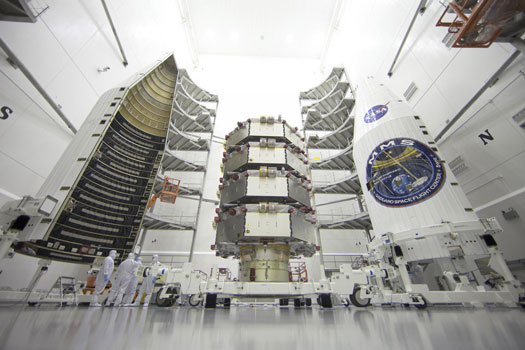
The fearsome foursome: Technologies enable ambitious MMS mission
It was unprecedented developing a mission that could fly four identically equipped spacecraft in a tight formation and take measurements 100 times faster than any previous space mission - an achievement enabled in part by four NASA-developed technologies that in some cases took nearly 10 years to mature.
April 29, 2015 Read more
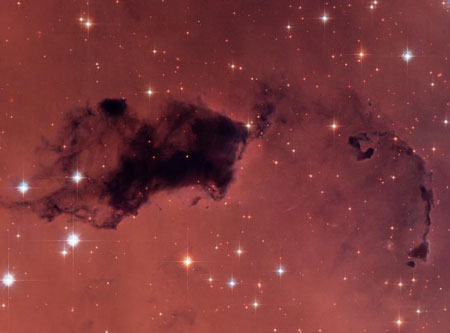
Water could have been abundant in the first billion years
How soon after the Big Bang could water have existed? Not right away, because water molecules contain oxygen and oxygen had to be formed in the first stars. Then that oxygen had to disperse and unite with hydrogen in significant amounts. New theoretical work finds that despite these complications, water vapor could have been just as abundant in pockets of space a billion years after the Big Bang as it is today.
April 28, 2015 Read more
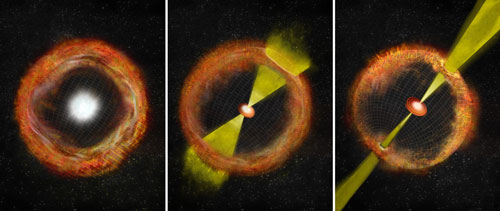
Strange supernova is 'missing link' in gamma-ray burst connection
Cosmic blast is intermediate example between 'ordinary' supernovae and ones that produce gamma-ray bursts.
April 27, 2015 Read more
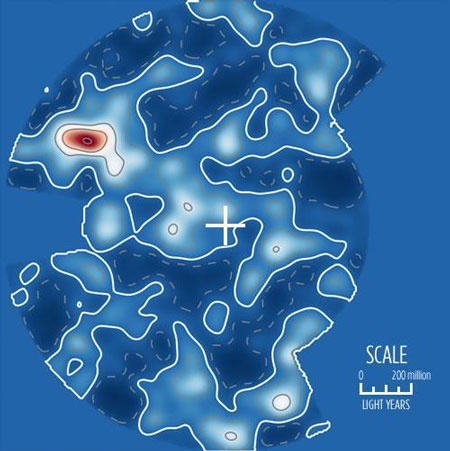
Astrophysicists draw most comprehensive map of the universe
Astrophysicists have created a 3D map of the universe that spans nearly two billion light years and is the most complete picture of our cosmic neighbourhood to date.
April 27, 2015 Read more