

Space Exploration News – Latest Headlines
 Subscribe to our Space Exploration News feed
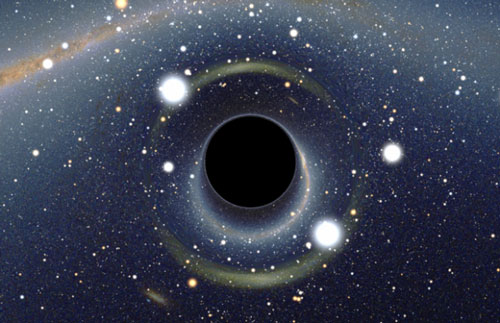
What's on the surface of a black hole?
It's not a 'firewall' - and the nature of the universe depends on it, physicist explains.
June 16, 2015 Read more
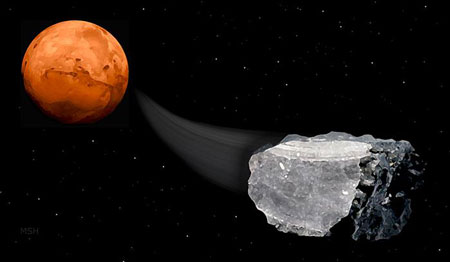
Scientists find methane in Mars meteorites
The researchers examined samples from six meteorites of volcanic rock that originated on Mars. The meteorites contain gases in the same proportion and with the same isotopic composition as the Martian atmosphere. All six samples also contained methane, which was measured by crushing the rocks and running the emerging gas through a mass spectrometer.
June 16, 2015 Read more
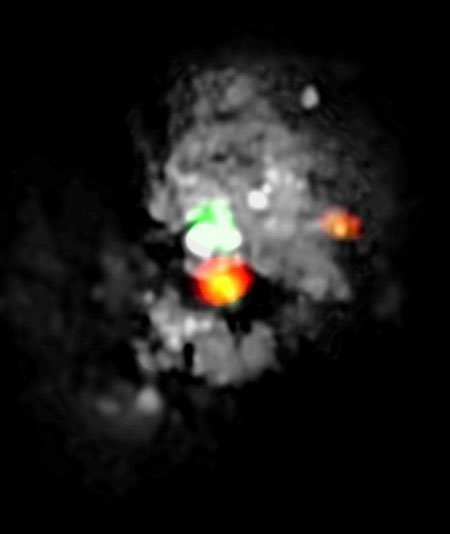
NOEMA takes a look into a distant stellar delivery room
Astronomers have succeeded in recording the first image with the most sensitive millimetre radio telescope in the northern hemisphere: The installation known as NOEMA provided a spectacular image of a previously unknown region of massive star formation in the Medusa Merger - a brightly shining pair of colliding of galaxies.
June 16, 2015 Read more
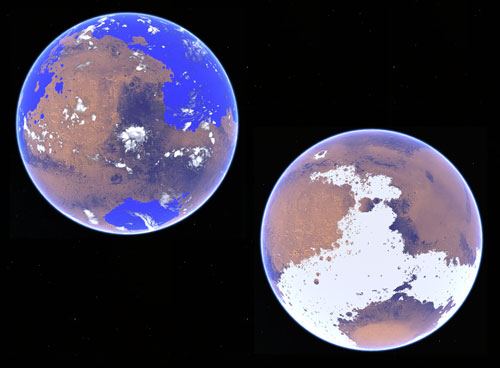
Unveiling the ancient climate of Mars
The high seas of Mars may never have existed. According to a new study that looks at two opposite climate scenarios of early Mars, a cold and icy planet billions of years ago better explains water drainage and erosion features seen on the planet today.
June 15, 2015 Read more
Astronomers create array of Earth-like planet models
To sort out the biological intricacies of Earth-like planets, astronomers have developed computer models that examine how ultraviolet radiation from other planets' nearby suns may affect those worlds, according to new research.
June 15, 2015 Read more
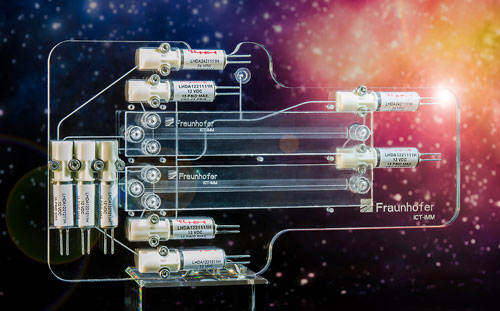
Automated ion analyzer for space missions
The German Aerospace Center is scheduled to launch its Eu:CROPIS research satellite into orbit in early 2017. Its purpose is to test a biological life-support system for future human space missions. The satellite's payload includes an ion analyzer. This compact device will automatically monitor all of the system's internal processes.
June 15, 2015 Read more
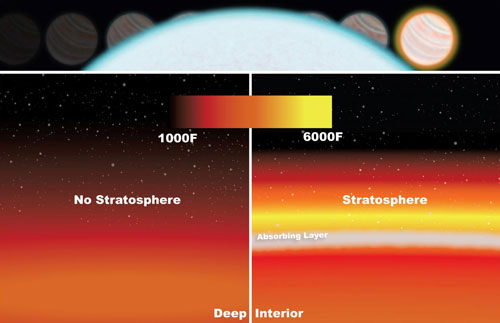
Hubble detects 'sunscreen' layer on distant planet
NASA's Hubble Space Telescope has detected a stratosphere, one of the primary layers of Earth's atmosphere, on a massive and blazing-hot exoplanet known as WASP-33b.
June 11, 2015 Read more
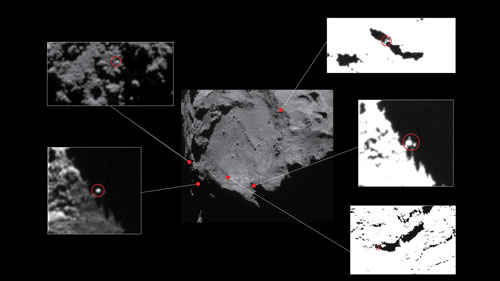
The search for Philae - like a needle in a haystack
The search for the three-legged lander is complex because even when fully illuminated by the Sun, Philae will be just a few pixels across in images acquired by the Rosetta orbiter's Optical, Spectroscopic, and Infrared Remote Imaging System (OSIRIS).
June 11, 2015 Read more
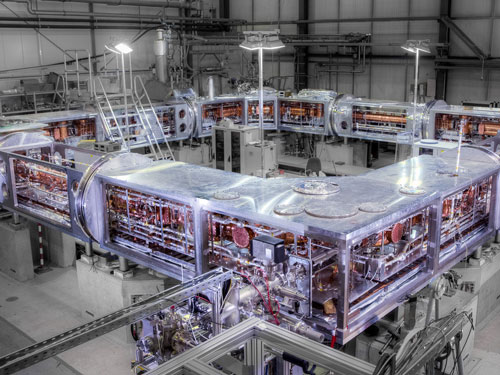
Astrochemistry: A racetrack for ultra-cold molecules
First experiment in the Cryogenic Storage Ring , which can be used to reproduce the chemical conditions in space in the laboratory.
June 10, 2015 Read more
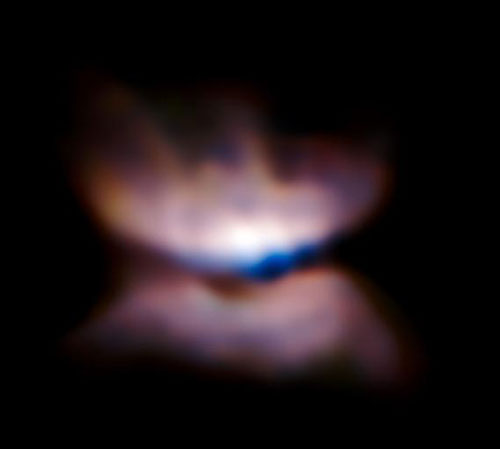
A celestial butterfly emerges from its dusty cocoon
Some of the sharpest images ever made with ESO's Very Large Telescope have, for the first time, revealed what appears to be an ageing star giving birth to a butterfly-like planetary nebula.
June 10, 2015 Read more
Flight over dwarf planet Ceres (w/video)
The Dawn orbiter initially traced the path of the equator before crossing the north and south poles of Ceres. Researchers have used the images acquired thus far with the Framing Camera on board the spacecraft and the first three-dimensional terrain models created from them to produce a virtual scenic flight over icy Ceres.
June 9, 2015 Read more
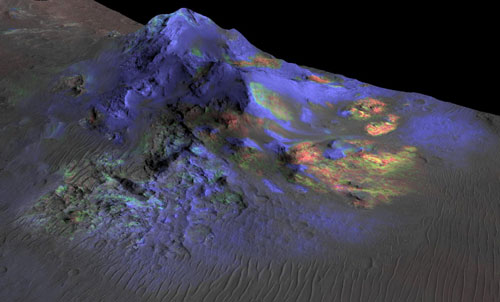
Martian glass - window into possible past life
Researchers have used satellite data to detect deposits of glass within impact craters on Mars. Though formed in the searing heat of a violent impact, the glasses just might provide a delicate window into the possibility of past life on the Red Planet.
June 8, 2015 Read more
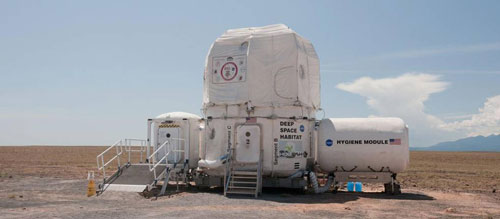
NASA selects eight projects for 2016 X-Hab Academic Innovation Challenge
NASA is working with eight U.S. universities on new technology projects for deep space exploration, including the agency's journey to Mars, as part of the 2016 X-Hab Academic Innovation Challenge.
June 8, 2015 Read more
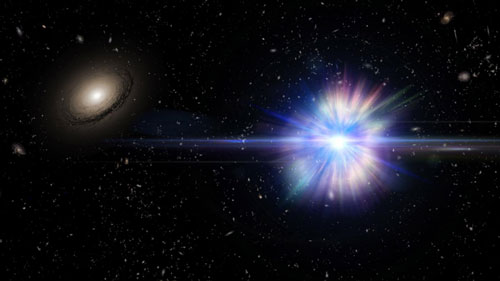
Exiled stars explode far from home
HST confirms 3 Type Ia supernovae were not part of a galaxy, but rare intracluster supernovae.
June 4, 2015 Read more
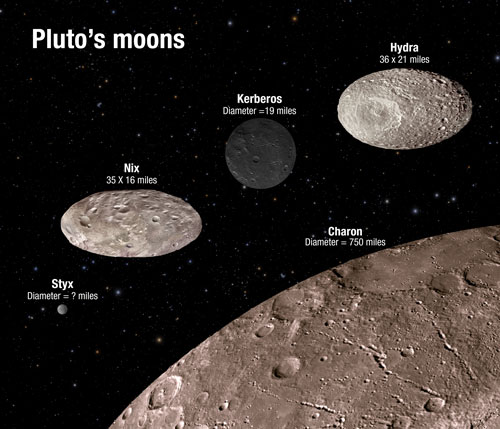
Hubble finds Pluto's moons tumbling in absolute chaos
If you lived on one of Pluto's moons, you might have a hard time determining when, or from which direction, the sun will rise each day. Comprehensive analysis of data from NASA's Hubble Space Telescope shows that two of Pluto's moons, Nix and Hydra, wobble unpredictably.
June 3, 2015 Read more
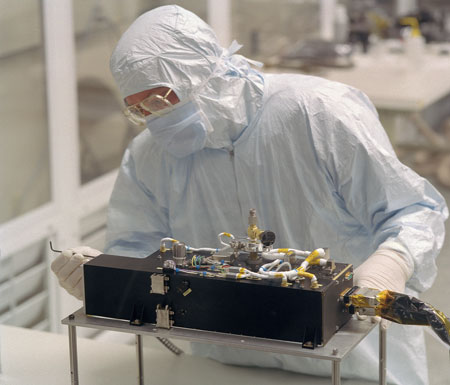
Alice instrument's ultraviolet close-up provides a surprising discovery about comet's atmosphere
A close-up of Comet 67P/Churyumov-Gerasimenko by NASA's ultraviolet instrument surprised scientists by revealing that electrons close to the comet's surface - not photons from the Sun as had been believed - cause the rapid breakup of water and carbon dioxide molecules spewing from the surface.
June 2, 2015 Read more
How to weigh the Milky Way
An international team of scientists used streams produced by dissolving globular clusters to measure the weight of our galaxy and determine the location of the sun within the Milky Way.
June 2, 2015 Read more
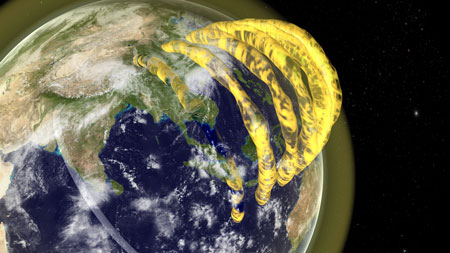
Distant radio galaxies reveal hidden structures right above our heads (w/video)
By observing galaxies billions of light-years away, a team of astronomers has detected tube-like structures mere hundreds of kilometres above the Earth's surface.
June 1, 2015 Read more