

Space Exploration News – Latest Headlines
 Subscribe to our Space Exploration News feed
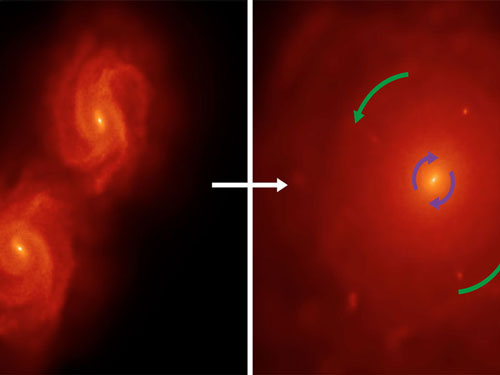
The forces that move stars in galaxies
A new mechanism explains the strange orbit of suns in elliptical galactic systems.
March 27, 2015 Read more
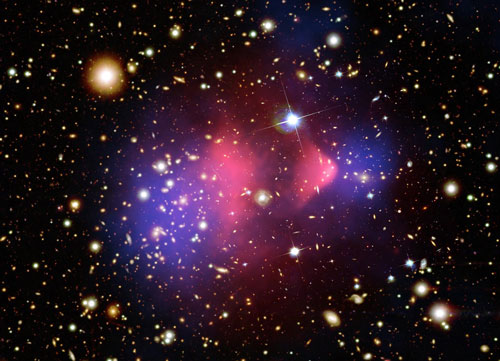
Galaxy clusters collide; dark matter still a mystery
When galaxy clusters collide, their dark matters pass through each other, with very little interaction. Deepening the mystery, a study by scientists at EPFL and the University of Edinburgh challenges the idea that dark matter is composed of particles.
March 27, 2015 Read more
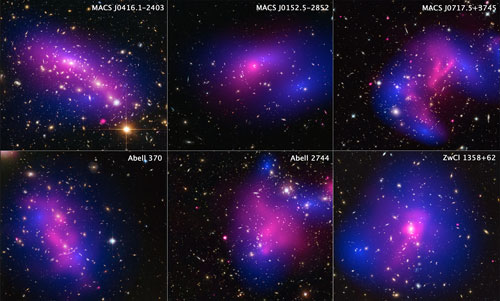
Hubble and Chandra discover Dark Matter is not as sticky as once thought
Astronomers using observations from NASA's Hubble Space Telescope and Chandra X-ray Observatory have found that dark matter does not slow down when colliding with each other. This means that it interacts with itself even less than previously thought. Researchers say this finding narrows down the options for what this mysterious substance might be.
March 26, 2015 Read more
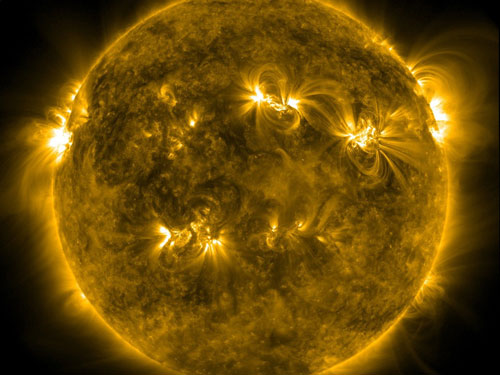
A new look at the Sun's magnetic field
Max Planck researchers discover how the strength of a forthcoming activity cycle can be predicted.
March 26, 2015 Read more
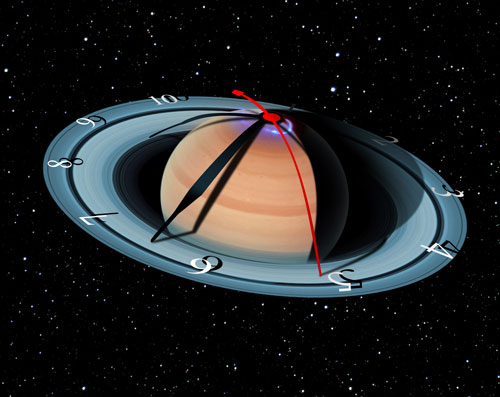
A short day on Saturn
If you could jump a spaceship out past Mars and Jupiter to Saturn, pass by its rings and somehow park on the planet's gaseous surface, how long would your day be there? This question, surprisingly, has not been precisely answered until now.
March 26, 2015 Read more
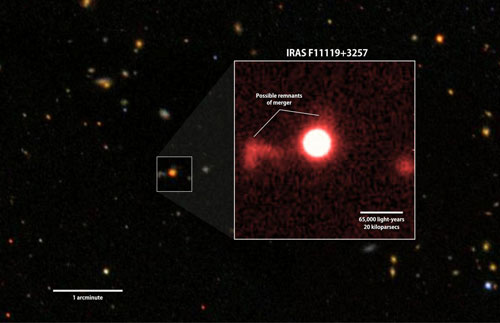
Supermassive black hole clears star-making gas from galaxy's core
A new study provides the first observational evidence that a supermassive black hole at the center of a large galaxy can power huge, wide-angled outpourings of material from deep inside the galaxy's core. These outflows remove massive quantities of star-making gas, thus influencing the size, shape and overall fate of the host galaxy.
March 25, 2015 Read more
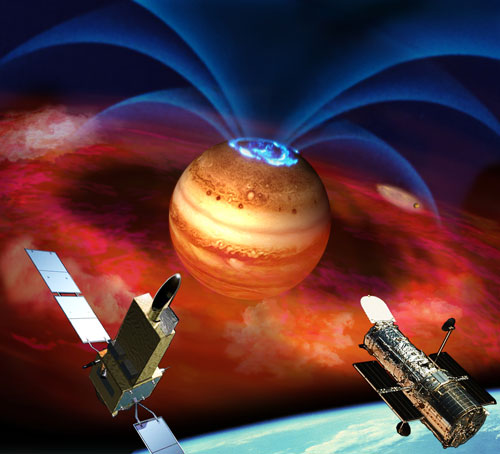
Explosions of Jupiter's aurora linked to extraordinary planet-moon interaction
New observations of the planet's extreme ultraviolet emissions show that bright explosions of Jupiter's aurora likely also get kicked off by the planet-moon interaction, not by solar activity.
March 25, 2015 Read more
A new spin on Saturn's peculiar rotation
The precise measurement of Saturn's rotation has presented a great challenge to scientists, as different parts of this sweltering ball of hydrogen and helium rotate at different speeds whereas its rotation axis and magnetic pole are aligned. A new method proposes a new determination of Saturn's rotation period and offers insight into the internal structure of the planet, its weather patterns, and the way it formed.
March 25, 2015 Read more
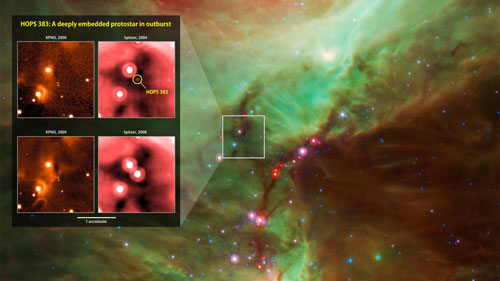
Satellites catch 'growth spurt' from newborn protostar
Using data from orbiting observatories, including NASA's Spitzer Space Telescope, and ground-based facilities, an international team of astronomers has discovered an outburst from a star thought to be in the earliest phase of its development. The eruption, scientists say, reveals a sudden accumulation of gas and dust by an exceptionally young protostar known as HOPS 383.
March 24, 2015 Read more
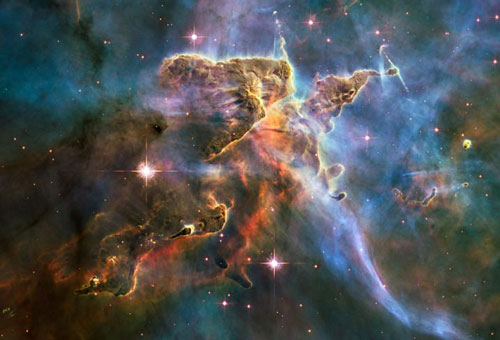
Automation offers big solution to big data in astronomy
The Square Kilometer Array, a radio telescope planned for Africa and Australia, will have an unprecedented ability to deliver data on the location and properties of stars, galaxies and giant clouds of hydrogen gas. In a new study, a team of scientists has developed a new, faster approach to analyzing all that data.
March 24, 2015 Read more

What is the impact of cosmic rays on galaxy formation?
European Research Council will fund HITS astrophysicist Christoph Pfrommer with an ERC Consolidator Grant with 2 million euros.
March 24, 2015 Read more
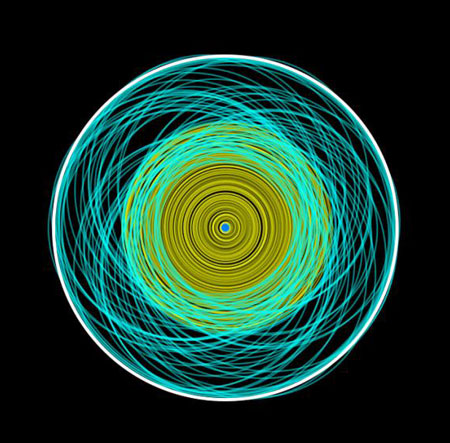
Our solar system may have once harbored super-earths
Long before Mercury, Venus, Earth, and Mars formed, it seems that the inner solar system may have harbored a number of super-Earths - planets larger than Earth but smaller than Neptune. If so, those planets are long gone - broken up and fallen into the sun billions of years ago largely due to a great inward-and-then-outward journey that Jupiter made early in the solar system's history.
March 24, 2015 Read more
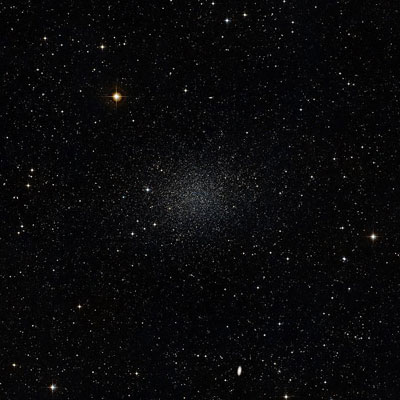
Chemical fingerprints of ancient supernovae found
A search of nearby galaxies for their oldest stars has uncovered two stars in the Sculptor dwarf galaxy that were born shortly after the galaxy formed, approximately 13 billion years ago. The unusual chemical content of the stars may have originated in a single supernova explosion from the first generation of Sculptor stars.
March 23, 2015 Read more
Have researchers discovered the sound of the stars?
A chance discovery by a team of researchers has provided experimental evidence that stars may generate sound.
March 23, 2015 Read more
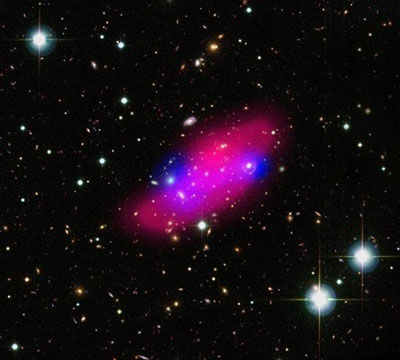
Black holes and the dark sector explained by quantum gravity
A quantum version of General relativity demonstrates that Dark Energy and Dark Matter are different manifestations of gravity. The theory calculates the precise value of the cosmological constant, derives the baryonic Tully-Fisher relation, gives a quantum description of Black Holes and calculates the baryonic mass content of the observable universe.
March 20, 2015 Read more
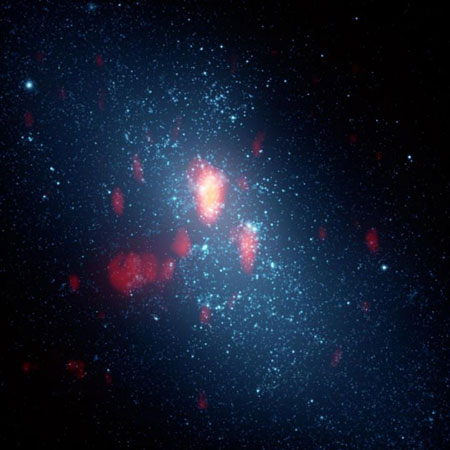
More than a million stars are forming in a mysterious dusty gas cloud in a nearby galaxy
The star cluster is buried within a supernebula in a dwarf galaxy known as NGC 5253, in the constellation Centaurus. The cluster has one billion times the luminosity of our sun, but is invisible in ordinary light, hidden by its own hot gases.
March 18, 2015 Read more
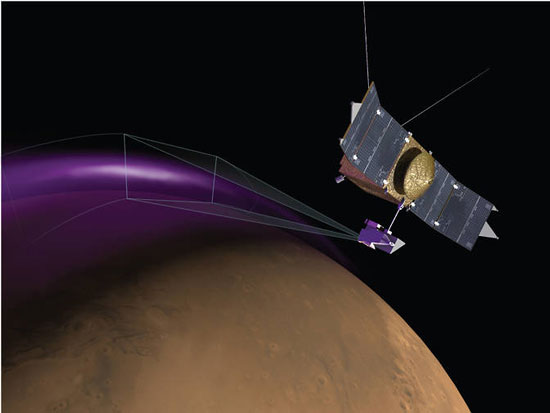
NASA spacecraft detects aurora and mysterious dust cloud around Mars
NASA's Mars Atmosphere and Volatile Evolution (MAVEN) spacecraft has observed two unexpected phenomena in the Martian atmosphere: an unexplained high-altitude dust cloud and aurora that reaches deep into the Martian atmosphere.
March 18, 2015 Read more
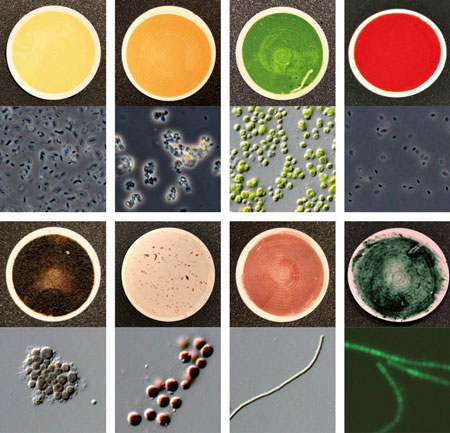
How to recognize life on distant planets
Astronomers and biologists investigate the colour properties of 137 different microorganisms.
March 18, 2015 Read more