

Space Exploration News – Latest Headlines
 Subscribe to our Space Exploration News feed
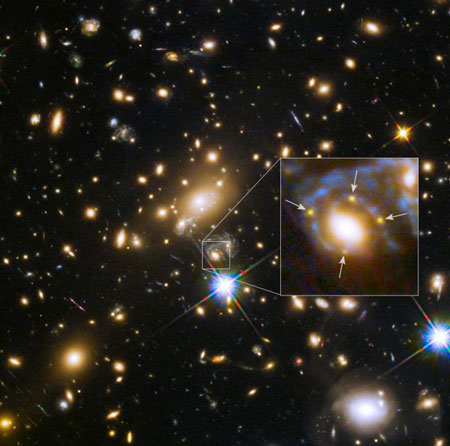
Hubble discovers four images of same supernova split by cosmic lens
Astronomers using the Hubble Space Telescope have spotted for the first time a distant supernova split into four images. The multiple images of the exploding star are caused by the powerful gravity of a foreground elliptical galaxy embedded in a massive cluster of galaxies. This unique observation will help astronomers refine their estimates of the mass of dark matter in the lensing galaxy and cluster.
March 8, 2015 Read more
'Planck' puts Einstein to the test
Data analysis of satellite mission on dark energy and theory of gravitation.
March 5, 2015 Read more
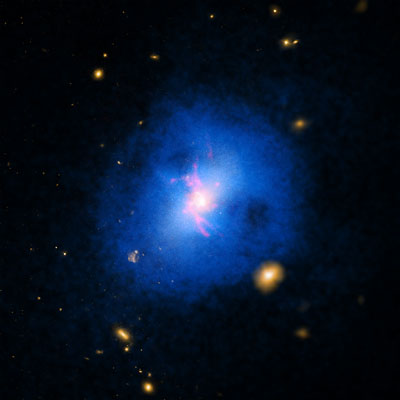
Galactic 'rain' could be key to star formation
A team of astronomers may have figured out why some galaxies are better than others at creating stars.
March 5, 2015 Read more
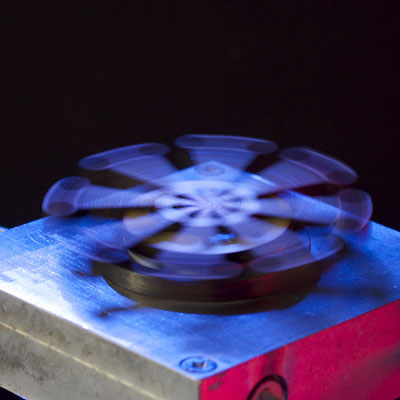
Breakthrough in energy harvesting could power 'life on Mars'
Martian colonists could use an innovative new technique to harvest energy from carbon dioxide thanks to research that proposes a new kind of engine for producing energy based on the Leidenfrost effect - a phenomenon which happens when a liquid comes into near contact with a surface much hotter than its boiling point.
March 5, 2015 Read more
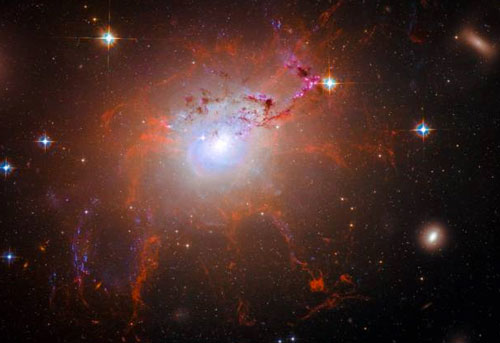
Why isn't the universe as bright as it should be?
Study explains why galaxies don't churn out as many stars as they should.
March 5, 2015 Read more
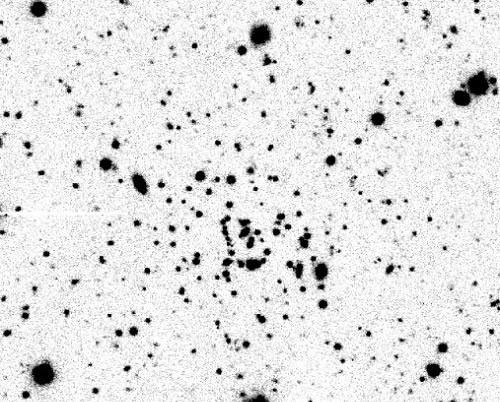
Far from home: Wayward cluster is both tiny and distant
Like the lost little puppy that wanders too far from home, astronomers have found an unusually small and distant group of stars that seems oddly out of place. The cluster, made of only a handful of stars, is located far away, in the Milky Way's 'suburbs'. It is located where astronomers have never spotted such a small cluster of stars before.
March 3, 2015 Read more
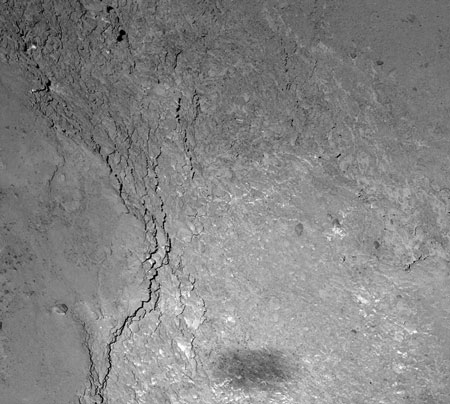
Lots of light and little shadow on 67P Churyumov-Gerasimenko
On 14 February 2015, the Optical, Spectroscopic and Infrared Remote Imaging System (OSIRIS) on the Rosetta spacecraft observed the surface of comet 67P Churyumov-Gerasimenko with the Sun directly behind it, so the only shadow seen in the image is that of the photographer, the orbiter itself.
March 3, 2015 Read more
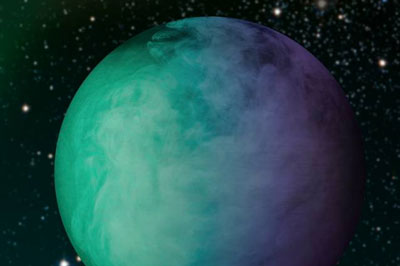
New technique allows analysis of clouds around exoplanets (w/video)
Team describes use of method to determine properties of clouds surrounding the exoplanet Kepler-7b.
March 3, 2015 Read more
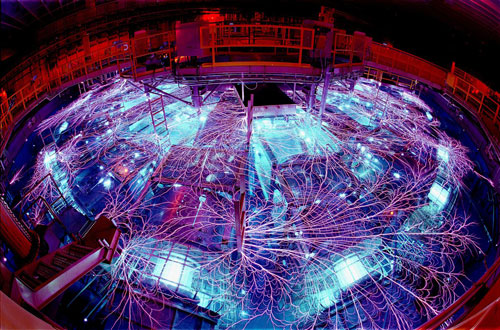
Core work: Iron vapor gives clues to formation of Earth and moon
Recreating the violent conditions of Earth's formation, scientists are learning more about how iron vaporizes and how this iron rain affected the formation of the Earth and Moon.
March 2, 2015 Read more
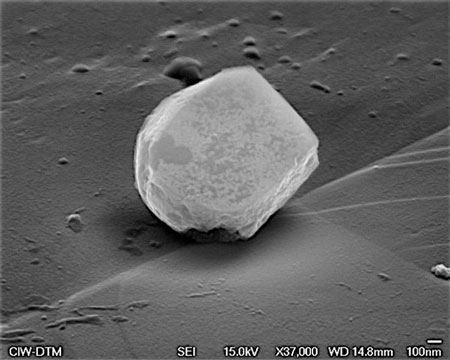
Astronomers find dust in the early universe
Astronomers have discovered a dust-filled galaxy from the very early universe. The discovery demonstrates that galaxies were very quickly enriched with dust particles containing elements such as carbon and oxygen, which could form planets.
March 2, 2015 Read more
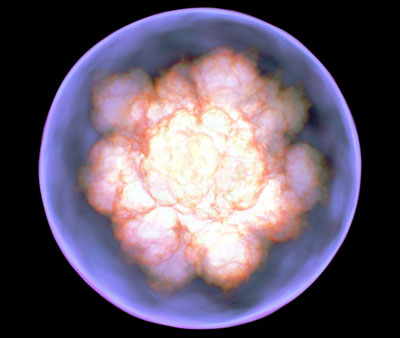
Brighter than 100 billion stars
A new astrophysics research group aims to find out how supernova explosions proceed.
March 2, 2015 Read more
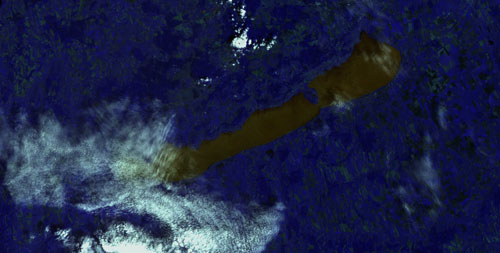
'Superhero vision' technology measures European lake's water quality from space
An international team of researchers has demonstrated a way to assess the quality of water on Earth from space by using satellite technology that can visualise pollution levels otherwise invisible to the human eye through 'Superhero vision'.
March 2, 2015 Read more
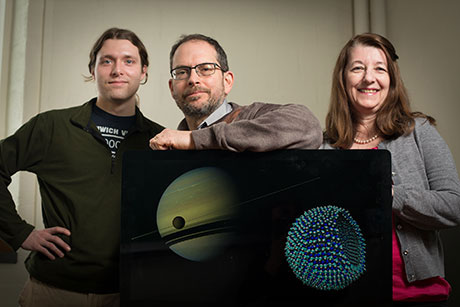
Life 'not as we know it' possible on Saturn's moon Titan
Taking a simultaneously imaginative and rigidly scientific view, Cornell chemical engineers and astronomers offer a template for life that could thrive in a harsh, cold world - specifically Titan, the giant moon of Saturn.
February 27, 2015 Read more
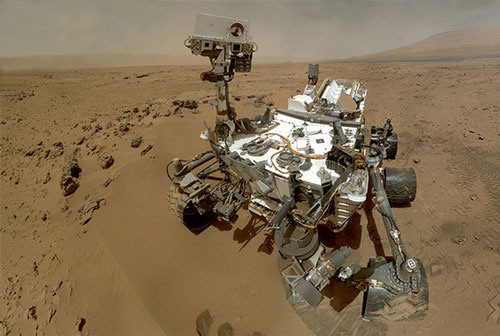
Curiosity confirms the existence of methane in Mars' atmosphere
An article published this week confirms the existence of methane fluctuations in the atmosphere of Mars, as a result of the detailed analysis of data sent during 605 soles or Martian days.
February 27, 2015 Read more
New insight found in black hole collisions
New research by an astrophysicist provides revelations about the most energetic event in the universe - the merging of two spinning, orbiting black holes into a much larger black hole.
February 26, 2015 Read more
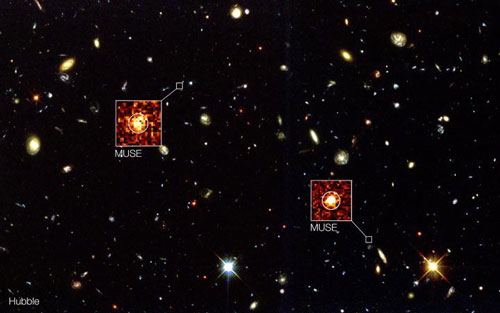
Looking deeply into the universe in 3-D
The MUSE instrument on ESO's Very Large Telescope has given astronomers the best ever three-dimensional view of the deep Universe. After staring at the Hubble Deep Field South region for only 27 hours, the new observations reveal the distances, motions and other properties of far more galaxies than ever before in this tiny piece of the sky. They also go beyond Hubble and reveal previously invisible objects.
February 26, 2015 Read more
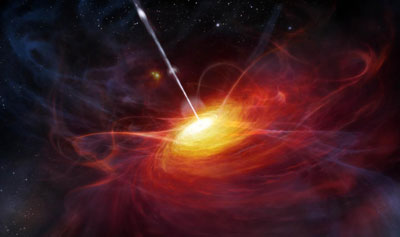
Astronomers find impossibly large black hole
Astronomers have found a huge black hole which was powering the brightest object in the early universe. The black hole's mass is 12 billion solar masses, and the surrounding quasar pumped out 10^15 times the sun's energy.
February 25, 2015 Read more
Physicists offer a solution to the puzzle of the origin of matter in the universe
Most of the laws of nature treat particles and antiparticles equally, but stars and planets are made of particles, or matter, and not antiparticles, or antimatter. That asymmetry, which favors matter to a very small degree, has puzzled scientists for many years. New research offers a possible solution to the mystery of the origin of matter in the universe.
February 25, 2015 Read more