

Space Exploration News – Latest Headlines
 Subscribe to our Space Exploration News feed
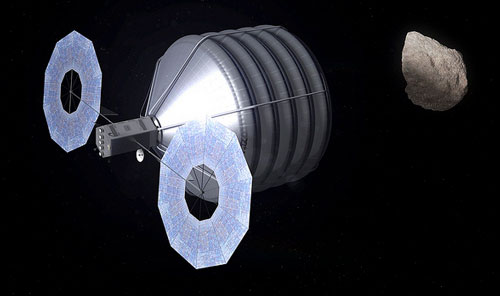
NASA proposal to capture asteroid
NASA's FY2014 budget proposal includes a plan to robotically capture a small near-Earth asteroid and redirect it safely to a stable orbit in the Earth-moon system where astronauts can visit and explore it.
April 12, 2013 Read more
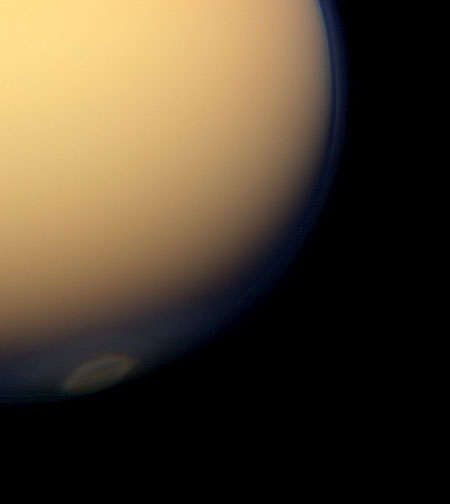
Ice cloud heralds fall at Titan's south pole
An ice cloud taking shape over Titan's south pole is the latest sign that the change of seasons is setting off a cascade of radical changes in the atmosphere of Saturn's largest moon. Made from an unknown ice, this type of cloud has long hung over Titan's north pole, where it is now fading, according to observations made by the Composite Infrared Spectrometer on NASA's Cassini spacecraft.
April 11, 2013 Read more
NASA, Air Force seek next generation space processor program
NASA and the U.S. Air Force Research Laboratory in Albuquerque, N.M., are requesting research and development proposals to define the type of spacecraft computing needed for future missions.
April 11, 2013 Read more
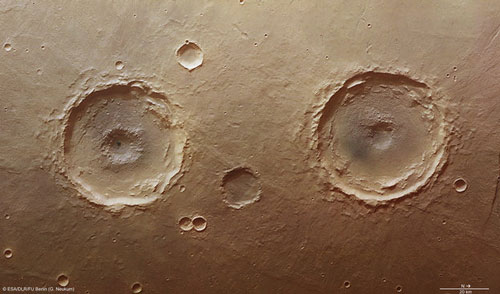
Explosive crater twins on Mars
Dramatic underground explosions, perhaps involving ice, are responsible for the pits inside these two large martian impact craters, imaged by ESA's Mars Express on 4 January.
April 11, 2013 Read more
An improved mathematical method for simulating the evolution of the solar system
In order to improve a simulation designed to study the evolution of the solar system through time, numerical mathematical methods have been developed at the Computing Faculty of the University of the Basque Country (UPV/EHU). Specifically, the methods proposed enable the simulation calculations to be done faster and more accurately.
April 11, 2013 Read more
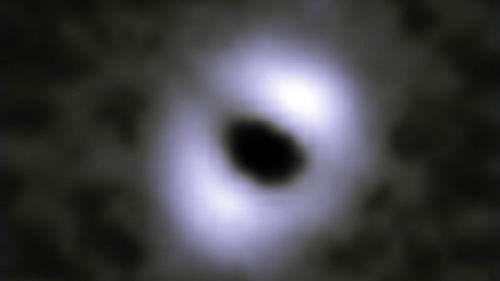
Retired star found with planets and debris disc
ESA's Herschel space observatory has provided the first images of a dust belt - produced by colliding comets or asteroids - orbiting a subgiant star known to host a planetary system.
April 10, 2013 Read more
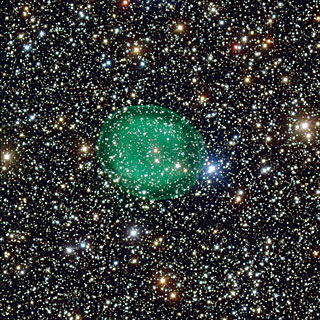
A ghostly green bubble
This intriguing new picture from ESO's Very Large Telescope shows the glowing green planetary nebula IC 1295 surrounding a dim and dying star located about 3300 light-years away in the constellation of Scutum (The Shield). This is the most detailed picture of this object ever taken.
April 10, 2013 Read more
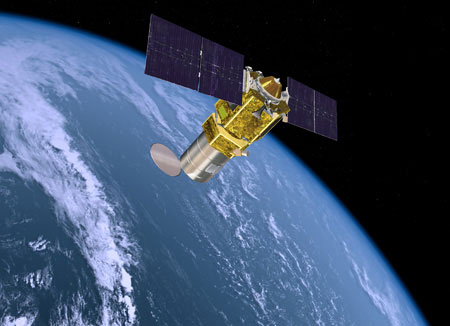
Boeing announces Phantom Phoenix family of small satellites
Boeing is developing a family of small satellite prototypes, called Phantom Phoenix, that can quickly and affordably be manufactured and configured for specific missions.
April 10, 2013 Read more
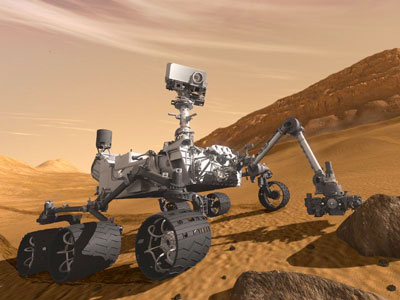
Mars Science Lab update: What remains of Mars' atmosphere is still dynamic
Mars has lost much of its original atmosphere, but what's left remains active, according to recent findings from NASA's Mars rover Curiosity that involve a University of Michigan researcher.
April 9, 2013 Read more

Astronaut's radiation study will be critical for Mars mission
As space exploration inches closer to Mars, research into space radiation will become increasingly critical, says ESA astronaut Christer Fuglesang, who was introduced today as the new head of the Aerospace Engineering master's programme at KTH Royal Institute of Technology.
April 9, 2013 Read more
Meteosat-9 takes over Rapid Scanning Service
Today, Meteosat-9 took over the rapid scanning imagery service (RSS) from Meteosat-8. This completes the reassignment of roles of the three Meteosat Second Generation (MSG) satellites following the launch of Meteosat-10 on 5 July.
April 9, 2013 Read more
China conducts first space science active experiment
China's first space science active experiment was conducted Friday morning to study the dynamical processes of the Earth's ionosphere, a top scientific institute said.
April 7, 2013 Read more
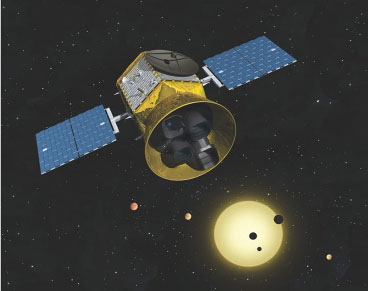
NASA selects MIT-led TESS project for 2017 mission
$200 million project will launch telescopes to perform full-sky search for transiting exoplanets.
April 5, 2013 Read more
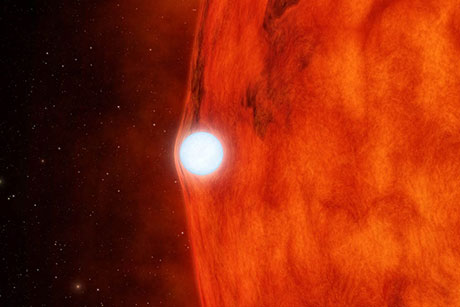
Dead star warps its partner's light, astronomers say
NASA's Kepler space telescope, in concert with Cornell-led measurements of stars' ultraviolet activity, has observed the effects of a dead star bending the light of its companion red star.
April 4, 2013 Read more
Hubble breaks record in search for farthest supernova
NASA's Hubble Space Telescope has found the farthest supernova so far of the type used to measure cosmic distances. Supernova UDS10Wil, nicknamed SN Wilson after American President Woodrow Wilson, exploded more than 10 billion years ago.
April 4, 2013 Read more
Registration opens for NASA Night Rover Energy Challenge
Registration is open for teams seeking to compete in the $1.5 million energy storage competition known as the Night Rover Challenge, sponsored by NASA and the Cleantech Open of Palo Alto, Calif.
April 4, 2013 Read more
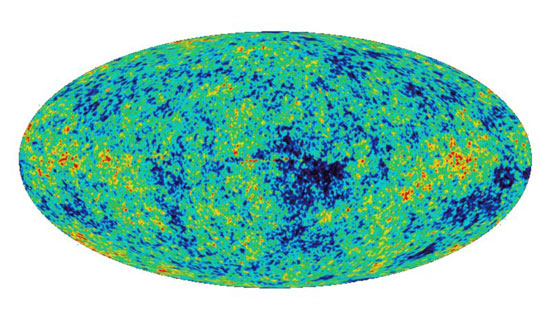
Listening to the Big Bang - in high fidelity
A decade ago, spurred by a question for a fifth-grade science project, physicist John Cramer devised an audio recreation of the Big Bang that started our universe nearly 14 billion years ago. Now, armed with more sophisticated data from a satellite mission observing the cosmic microwave background, Cramer has produced new recordings that fill in higher frequencies to create a fuller and richer sound.
April 4, 2013 Read more
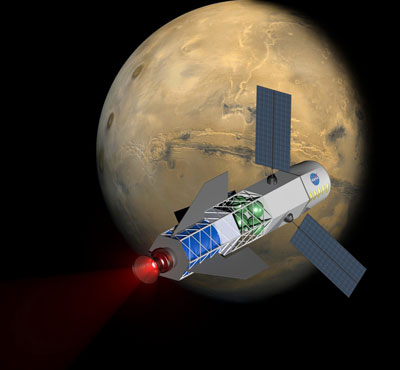
Rocket powered by nuclear fusion could send humans to Mars (w/video)
University of Washington researchers and scientists at a Redmond-based space-propulsion company are building components of a fusion-powered rocket aimed to clear many of the hurdles that block deep space travel, including long times in transit, exorbitant costs and health risks.
April 4, 2013 Read more