

Space Exploration News – Latest Headlines
 Subscribe to our Space Exploration News feed
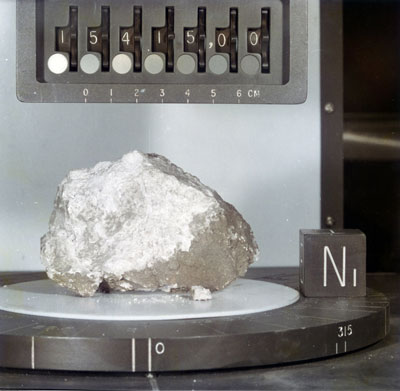
Water on the moon: It's been there all along
Traces of water have been detected within the crystalline structure of mineral samples from the lunar highland upper crust obtained during the Apollo missions, according to a University of Michigan researcher and his colleagues.
February 18, 2013 Read more
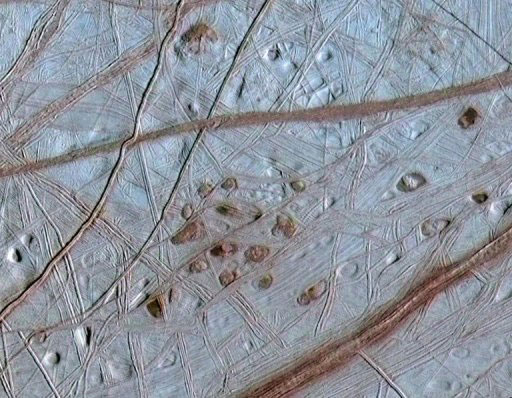
Jupiter's Europa moon 'likeliest to have life'
U.S. astronomers looking for life in the solar system believe that Europa, one of the moons of Jupiter, which has an ocean, is much more promising than desert-covered Mars, which is currently the focus of the US government's attention.
February 17, 2013 Read more
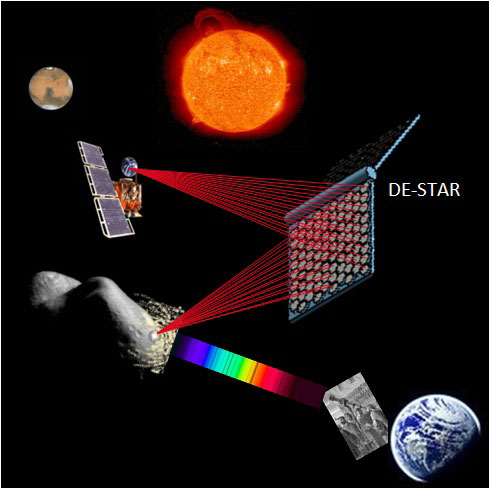
Scientists propose system to vaporize asteroids that threaten Earth
UC Santa Barbara physicist and professor Philip M. Lubin, and Gary B. Hughes conceived DE-STAR, or Directed Energy Solar Targeting of Asteroids an exploRation, as a realistic means of mitigating potential threats posed to the Earth by asteroids and comets.
February 15, 2013 Read more
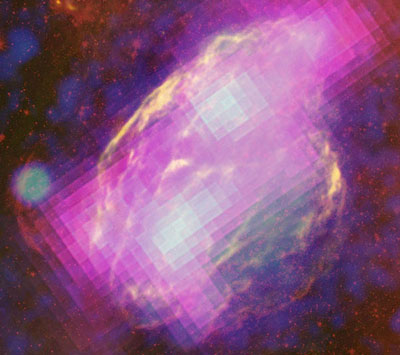
Fermi space telescope proves supernova remnants produce cosmic rays
A new study using observations from NASA's Fermi Gamma-ray Space Telescope reveals the first clear-cut evidence the expanding debris of exploded stars produces some of the fastest-moving matter in the universe. This discovery is a major step toward understanding the origin of cosmic rays, one of Fermi's primary mission goals.
February 14, 2013 Read more
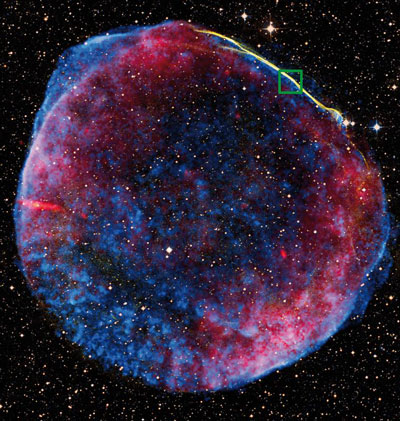
Novel approach in hunt for cosmic particle accelerator
A team of astronomers has observed the supernova remnant SN 1006, probing in unprecedented detail the region where the gas ejected during the supernova meets the surrounding interstellar matter. Such remnants have long been thought to be the source of cosmic ray particles hitting Earth.
February 14, 2013 Read more
MOND used to predict key property in Andromeda's satellites
Using modified laws of gravity, researchers from Case Western Reserve University and Weizmann Institute of Science closely predicted a key property measured in faint dwarf galaxies that are satellites of the nearby giant spiral galaxy Andromeda.
February 14, 2013 Read more
Unlocking the mystery behind Saturn's moonlets
Research by Loughborough University physicists casts new light on Saturn's moonlets - and could help solve some of the mysteries surrounding planet formation.
February 14, 2013 Read more
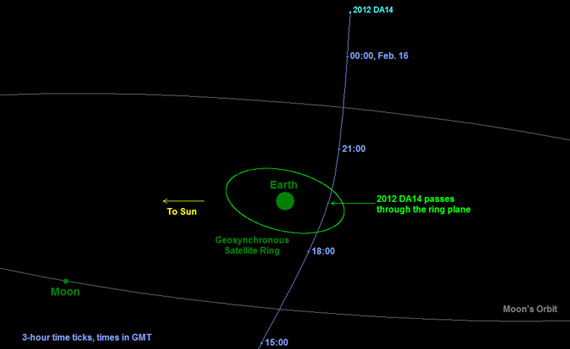
NASA live webcast to chronicle close Earth flyby of asteroid
NASA Television will provide commentary starting at 11 a.m. PST (2 p.m. EST) on Friday, Feb. 15, during the close, but safe, flyby of a small near-Earth asteroid named 2012 DA14.
February 14, 2013 Read more
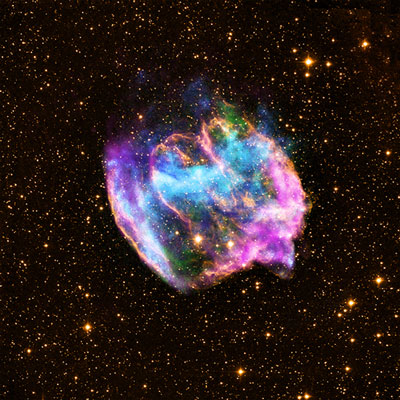
NASA's Chandra suggests rare explosion created our galaxy's youngest black hole
New data from NASA's Chandra X-ray Observatory suggest a highly distorted supernova remnant may contain the most recent black hole formed in the Milky Way galaxy. The remnant appears to be the product of a rare explosion in which matter is ejected at high speeds along the poles of a rotating star.
February 13, 2013 Read more
Magnetic shielding of ion beam thruster walls
Electric rocket engines known as Hall thrusters, which use a super high-velocity stream of ions to propel a spacecraft in space, have been used successfully onboard many missions for half a century. Erosion of the discharge channels walls, however, has limited their application to the inner solar system. A research team has found a way to effectively control this erosion by shaping the engine's magnetic field in a way that shields the walls from ion bombardment.
February 13, 2013 Read more
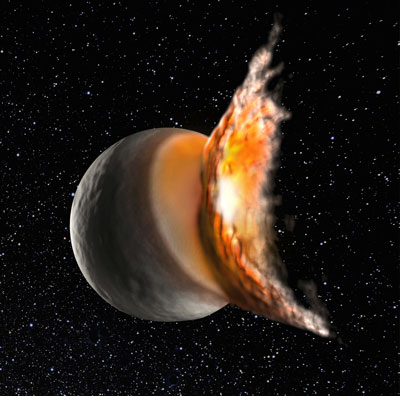
Computer simulation helps to better understand the origin of our solar system
Simulations boost the significance of image and measurement data from space missions: based on the example of an asteroid, Bernese astrophysicist Martin Jutzi shows how collisions with other celestial bodies can be reconstructed and that even the internal structure of so-called protoplanets can be described. These models help to understand the development of our solar system.
February 13, 2013 Read more
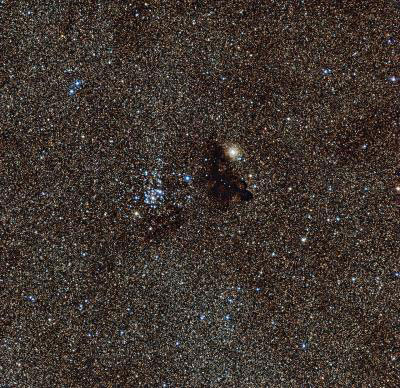
Wide Field Imager snaps cosmic gecko
NGC 6520 is an open star cluster that contains many hot stars that glow bright blue-white, a telltale sign of their youth. Open clusters usually contain a few thousand stars that all formed at the same time, giving them all the same age. Such clusters usually only live comparatively short lives, on the order of several hundred million years, before drifting apart.
February 13, 2013 Read more
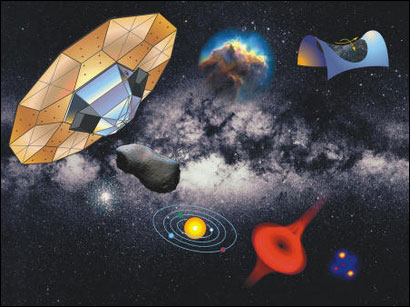
Gaia mission will reveal the secrets of ultra-cool dwarfs
Among the hundred billion stars which can be observed in the Milky Way, there is a group of stars, the so-named ultra-cool dwarfs, defined as stars with a temperature below 2500 K, which includes ultra-cool dwarfs and brown dwarfs.
February 12, 2013 Read more
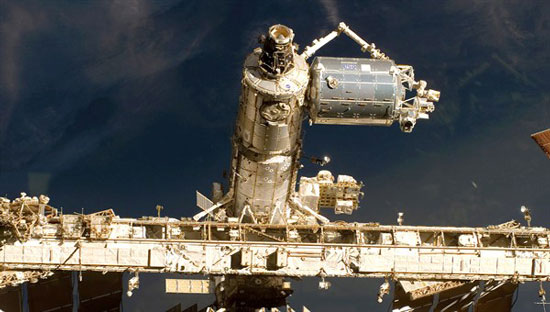
Columbus research laboratory in microgravity for five years
The European Columbus research module has been flying through space for five years, attached to the International Space Station (ISS).
February 12, 2013 Read more
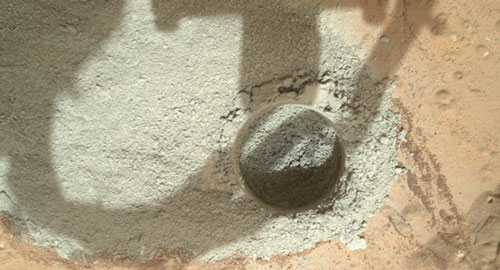
NASA Curiosity rover collects first Martian bedrock sample
NASA's Curiosity rover has, for the first time, used a drill carried at the end of its robotic arm to bore into a flat, veiny rock on Mars and collect a sample from its interior. This is the first time any robot has drilled into a rock to collect a sample on Mars.
February 9, 2013 Read more
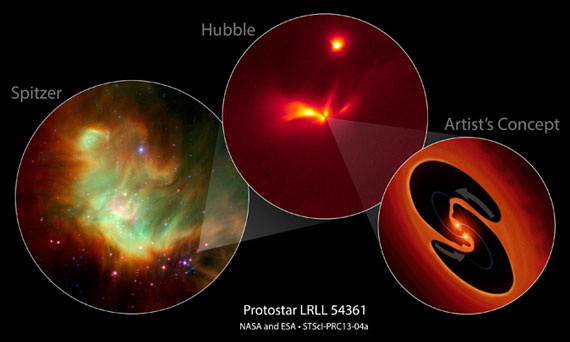
Astronomers discover strobe-like flashes in a suspected binary protostar
Two of NASA's great observatories, the Spitzer and Hubble space telescopes, have teamed up to uncover a mysterious infant star that behaves like a strobe light.
February 7, 2013 Read more
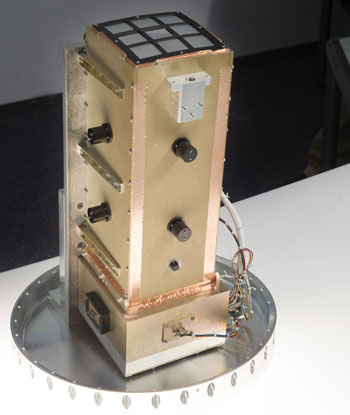
NASA scientists build first-ever wide-field X-ray imager
Three NASA scientists teamed up to develop and demonstrate NASA's first wide-field-of-view soft X-ray camera for studying "charge exchange," a poorly understood phenomenon that occurs when the solar wind collides with Earth's exosphere and neutral gas in interplanetary space.
February 7, 2013 Read more
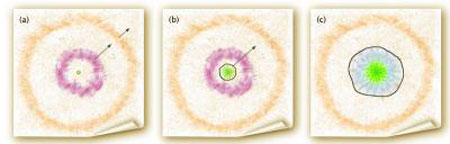
A massive stellar burst, before the supernova
An automated supernova hunt is shedding new light on the death sequence of massive stars - specifically, the kind that self-destruct in Type IIn supernova explosions.
February 6, 2013 Read more