

Space Exploration News – Latest Headlines
 Subscribe to our Space Exploration News feed
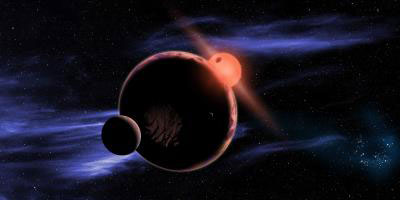
Earth-like planets are right next door
Using publicly available data from NASA's Kepler space telescope, astronomers at the Harvard-Smithsonian Center for Astrophysics (CfA) have found that six percent of red dwarf stars have habitable, Earth-sized planets. Since red dwarfs are the most common stars in our galaxy, the closest Earth-like planet could be just 13 light-years away.
February 6, 2013 Read more
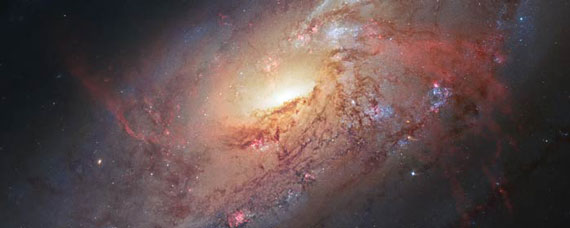
A spiral galaxy with a secret
Despite its appearance, which looks much like countless other galaxies, Messier 106 hides a number of secrets. Thanks to this image, which combines data from Hubble with observations by amateur astronomers Robert Gendler and Jay GaBany, they are revealed as never before.
February 6, 2013 Read more
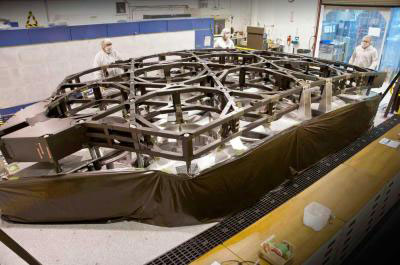
2012: The Webb telescope's big year of progress
The James Webb Space Telescope marked another year of significant progress in 2012 as flight instrumentation was completed and delivered to NASA.
February 6, 2013 Read more
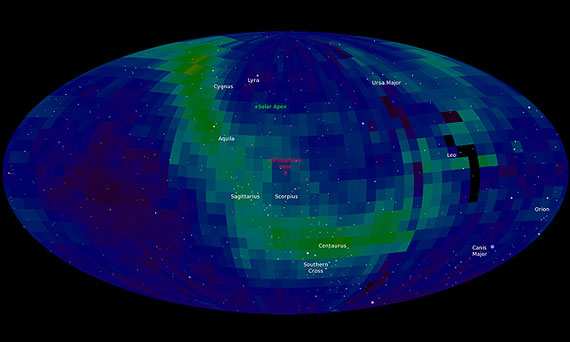
Explaining the ribbon in space discovered by NASA's IBEX mission
IBEX can map the boundary at the edge of our heliosphere in a way never before done. In 2009, IBEX saw something in that map that no one could explain: a vast ribbon dancing across the boundary that produced many more energetic neutral atoms than the surrounding areas.
February 6, 2013 Read more
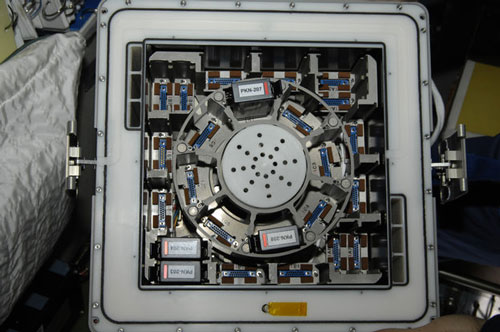
Finding the key to immunity (w/video)
Living in space weakens astronauts' immune systems, researchers have discovered. The findings are providing clues on how to tackle diseases on Earth before symptoms appear.
February 4, 2013 Read more
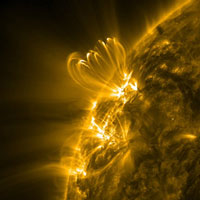
Unlocking the mystery of why the outer edge of the Sun is much hotter than its surface
Researchers have used cutting-edge solar-imaging technology to observe the Sun's chromosphere - a region of the Sun's atmosphere sandwiched between its surface and outer layer - to an unprecedented level of detail.
February 4, 2013 Read more
Space Station cargo ship flights to be broadcast on NASA TV
NASA Television will provide live coverage of the departure of one Russian cargo spacecraft at the International Space Station and the launch and arrival of another.
February 4, 2013 Read more
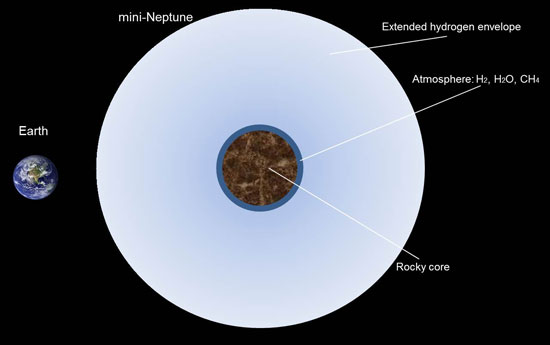
Are super-Earths actually mini-Neptunes?
A new study suggests that super-Earths are actually surrounded by extended hydrogen-rich envelopes and that they are unlikely to ever become Earth-like. Rather than being super-Earths, these worlds are more like mini-Neptunes.
February 4, 2013 Read more
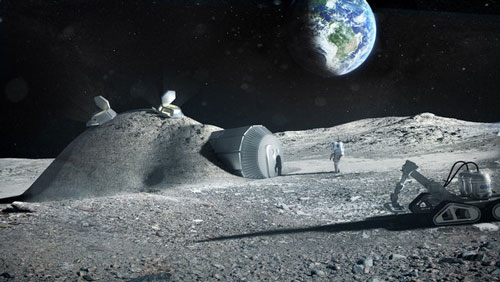
Building a lunar base with 3D printing
Setting up a lunar base could be made much simpler by using a 3D printer to build it from local materials. Industrial partners including renowned architects Foster + Partners have joined with ESA to test the feasibility of 3D printing using lunar soil.
February 1, 2013 Read more
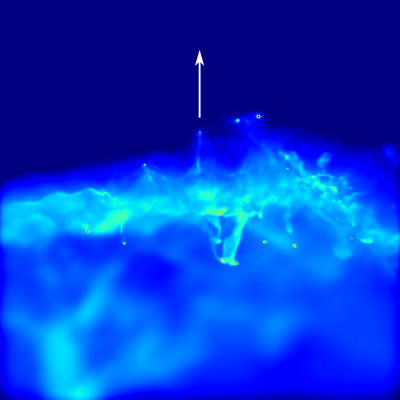
Where are all the dwarfs?
Astronomers of the international CLUES collaboration have identified "Cosmic Web Stripping" as a new way of explaining the famous missing dwarf problem: the lack of observed dwarf galaxies compared with that predicted by the theory of Cold Dark Matter and Dark Energy.
February 1, 2013 Read more
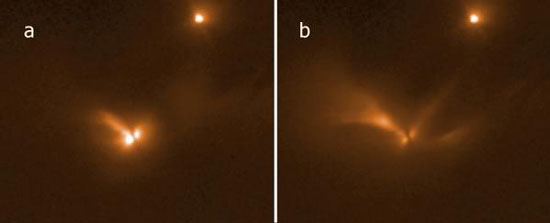
International team observe 'hungry twin' stars gobbling their first meals
Years of monitoring its infrared with the Spitzer instrument reveal that it becomes 10 times brighter every 25.34 days, Gutermuth and colleagues say. This periodicity suggests that a companion to the central forming star is likely inhibiting the infall of gas and dust until its closest orbital approach, when matter eventually comes crashing down onto the protostellar "twins".
January 31, 2013 Read more
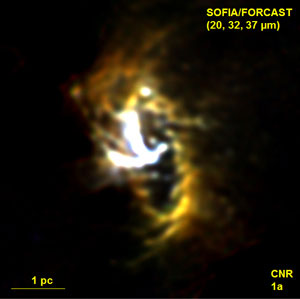
High-flying camera snaps sharpest shots of Milky Way ring
Cornell researchers have captured the sharpest mid-infrared images yet of a ring of gas and dust seven light-years wide orbiting the supermassive black hole at the center of the Milky Way.
January 31, 2013 Read more
New study of solar system dust shows some is from interstellar space
A new study concludes that 70 per cent of the dust that is found between the Sun and Mars comes from comets, 22 per cent is from asteroids and around seven and a half per cent comes from outside the solar system, dust from interstellar space.
January 31, 2013 Read more
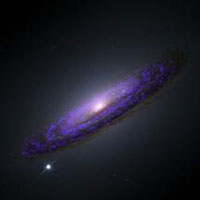
Gas promises bumper black hole 'weigh-in'
A new way of measuring the mass of supermassive black holes could revolutionise our understanding of how they form and help to shape galaxies.
January 31, 2013 Read more
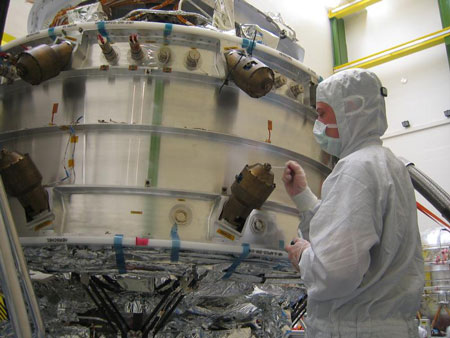
Microbes - possible hitchhikers to space?
First public collection of spacecraft-associated bacteria founded by the European Space Agency.
January 31, 2013 Read more
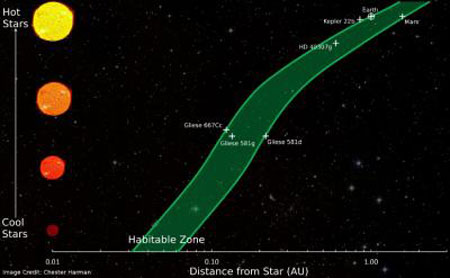
Researchers develop model for identifying habitable zones around star
Using the latest data, the Penn State Department of Geosciences team has developed an updated model for determining whether discovered planets fall within a habitable zone.
January 30, 2013 Read more
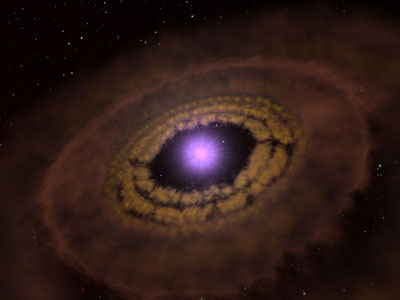
In the planetary nursery
Astronomers determine the mass of the disk of gas and dust surrounding the star TW Hydrae.
January 30, 2013 Read more
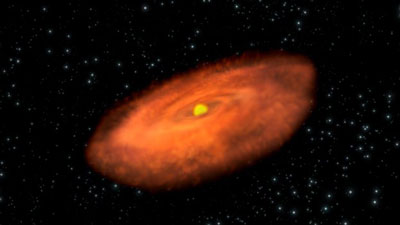
Herschel finds star possibly making planets past its prime
A star thought to have passed the age at which it can form planets may in fact be creating new worlds. The disk of material surrounding the surprising star called TW Hydrae may be massive enough to make even more planets than we have in our own solar system.
January 30, 2013 Read more