Nanotechnology in Solar Cells: Enhancing Renewable Energy Efficiency
How is Nanotechnology Used in Solar Cells?
Nanotechnology is revolutionizing solar cell technology, especially in photovoltaic (PV) and photovoltaic-thermal (PVT) systems. By manipulating materials on a nanoscale, researchers are developing more efficient solar cells capable of greater energy conversion and enhanced heat management. Nanoscale materials, such as quantum dots, carbon nanotubes (CNTs), and nanoparticles, increase the interaction between photons and electrons within solar cells, leading to significant improvements in power conversion efficiency (PCE).
Nanotechnology enables the use of materials with unique optical, electrical, and thermal properties. These materials can be engineered to absorb sunlight more efficiently, reduce energy loss, and enhance electron mobility. This allows solar cells to convert sunlight into electricity more effectively, increasing their overall efficiency. Nanotechnology also offers the potential for thinner, more flexible solar cells that can be integrated into a wide range of applications, from rooftops to portable electronics.
In PVT systems, nanomaterials are being used to improve both the electrical and thermal performance of solar panels. These systems convert sunlight into electricity and capture the heat generated during the process, using it for various applications such as water heating or space heating. Nanofluids, which consist of nanoparticles suspended in a fluid, play a key role in enhancing the thermal conductivity of PVT systems, allowing for better heat extraction and improved overall efficiency.
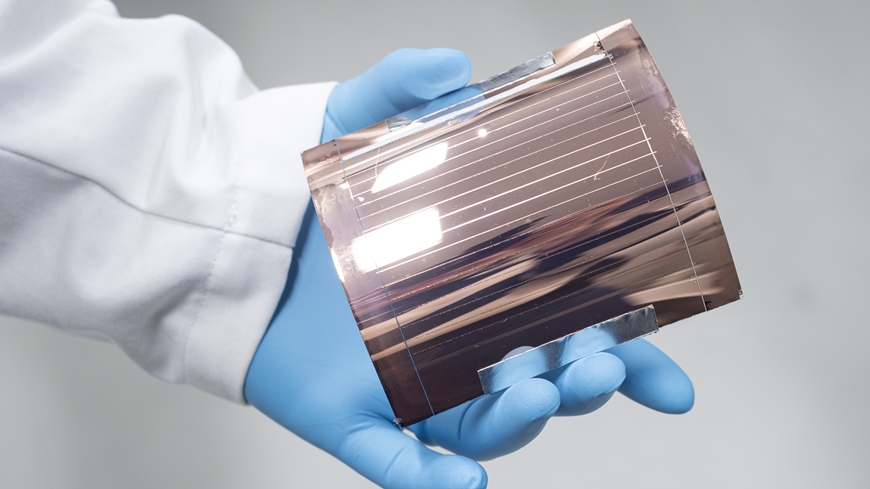
Efficient: A two-layer perovskite solar cells that can achieve higher efficiencies than silicon cells. (Image: Empa)
Generations of Solar Cells
The development of solar cells is often divided into three generations, each with its unique characteristics and innovations. Nanotechnology is playing a crucial role in advancing each generation of solar cells:
First Generation: Crystalline Silicon Solar Cells
Crystalline silicon solar cells represent the first generation of solar technology and currently dominate the global market. These cells are known for their high efficiency, with modern versions achieving efficiencies of up to 26.7%. Nanotechnology enhances the performance of these cells by reducing energy losses through the incorporation of nanoparticles into the cell structure. Nanoparticles can improve light absorption and electron mobility, which results in higher power output.
Second Generation: Thin-Film Solar Cells
Second-generation solar cells include thin-film technologies such as cadmium telluride (CdTe) and copper indium gallium selenide (CIGS). These cells are more cost-effective and flexible than crystalline silicon cells, making them suitable for a broader range of applications. Nanotechnology allows for the integration of nanomaterials like quantum dots and plasmonic nanoparticles, which improve light absorption and increase the overall efficiency of these thin-film solar cells.
Third Generation: Emerging Solar Technologies
The third generation of solar cells encompasses emerging technologies such as dye-sensitized solar cells (DSSCs), perovskite solar cells (PSCs), and organic solar cells (OSCs). These technologies offer the potential for low-cost, flexible, and highly efficient solar cells. Perovskite solar cells, in particular, have seen rapid advancements in recent years, with efficiency levels exceeding 25%. Nanotechnology is integral to the development of these cells, as nanoparticles and nanostructures are used to optimize light absorption and electron transport.
Key Nanomaterials in Solar Cells
Nanoparticles
Nanoparticles, such as carbon nanotubes (CNTs), graphene quantum dots (GQDs), and perovskites, are central to the latest advancements in solar cell technology. These materials possess extraordinary light-absorbing and electron-transporting properties, which contribute to higher PCE rates in solar cells.
Nanoparticles can be incorporated into the active layers of solar cells, where they improve the absorption of sunlight and facilitate the transport of electrons generated by the photovoltaic process. For instance, perovskite solar cells, which use nanoparticles with a unique crystal structure, have achieved PCEs of over 25%, making them one of the most promising next-generation solar technologies. Carbon nanotubes, with their exceptional electrical conductivity and mechanical strength, are often used as transparent electrodes, replacing more expensive materials like indium tin oxide (ITO).
Graphene and Quantum Dots
Graphene, a single layer of carbon atoms arranged in a hexagonal lattice, has attracted significant attention for its use in solar cells. It combines high electrical conductivity with exceptional mechanical strength, making it an ideal material for transparent conductive electrodes. Graphene quantum dots, which are nanoscale fragments of graphene, exhibit unique optical properties that make them particularly suitable for improving light absorption in solar cells. GQDs can be tuned to absorb specific wavelengths of light, allowing for more efficient utilization of the solar spectrum.
Quantum dots are semiconductor nanocrystals that exhibit quantum mechanical properties, allowing them to absorb and emit light at specific wavelengths. By incorporating QDs into solar cells, researchers can create multi-junction solar cells that absorb different parts of the solar spectrum, further increasing the efficiency of these devices.
Nanofluids in Photovoltaic-Thermal (PVT) Systems
Nanofluids, which consist of nanoparticles dispersed in a base fluid such as water or ethylene glycol, are increasingly being used in PVT systems to improve thermal management. The addition of nanoparticles enhances the thermal conductivity of the fluid, allowing it to absorb and transport heat more efficiently. This not only prevents the solar cells from overheating but also increases the amount of usable heat generated by the system.
Nanofluids have been shown to significantly improve the overall performance of PVT systems. For example, studies have demonstrated that nanofluids containing copper oxide (CuO) or aluminum oxide (Al2O3) can increase the thermal efficiency of PVT systems by as much as 76%. This makes PVT systems with nanofluids an attractive option for applications that require both electricity and heat, such as residential water heating or industrial processes.
Phase Change Materials (PCMs) and Their Role in Solar Energy
Phase change materials (PCMs) are another important component of advanced solar energy systems. PCMs store thermal energy by undergoing a phase transition (e.g., from solid to liquid), allowing them to absorb and release large amounts of heat. When combined with nanotechnology, PCMs can be enhanced to provide even greater thermal storage capacity and more efficient heat transfer.
In PVT systems, nano-enhanced PCMs are used to capture and store excess thermal energy generated during the photovoltaic process. This energy can then be used for heating applications or released during periods of low sunlight, improving the overall efficiency and reliability of the system. Nano-enhanced PCMs offer higher thermal conductivity than traditional PCMs, allowing for faster heat absorption and release.
Challenges and Future Directions
Despite the many benefits of nanotechnology in solar cells, several challenges remain. These include stability issues, high production costs, and the long-term durability of nanomaterials in harsh environmental conditions. Addressing these challenges is critical to the widespread adoption of nanotechnology in solar energy systems.
Stability: One of the main challenges with using nanomaterials in solar cells is their stability over time. Nanoparticles tend to aggregate or degrade, which can reduce the efficiency of the solar cells. Researchers are working to develop more stable nanomaterials that can maintain their performance over extended periods.
Cost: Another challenge is the cost of producing nanomaterials. While materials like CNTs and graphene offer significant performance advantages, they are currently expensive to manufacture. Reducing the cost of these materials is essential for making nanotechnology-enhanced solar cells more affordable and commercially viable.
Durability: The long-term durability of nanomaterials in outdoor environments is also a concern. Solar cells are exposed to a range of environmental conditions, including ultraviolet (UV) radiation, temperature fluctuations, and humidity. These factors can degrade the performance of nanomaterials over time, reducing the lifespan of the solar cells.
Future Directions
Nanotechnology is transforming solar energy by enabling the development of more efficient, cost-effective, and flexible solar cells. The use of nanoparticles, nanofluids, and nano-enhanced PCMs is helping to overcome the limitations of conventional solar technologies, paving the way for a new generation of high-performance solar energy systems.
As research in this field continues, we can expect to see further improvements in the efficiency and reliability of solar cells, making solar energy an even more attractive option for meeting the world's growing energy needs. With ongoing advancements in nanotechnology, solar energy has the potential to become one of the most widely adopted renewable energy sources, helping to reduce carbon emissions and combat climate change.