

The Nanotechnology Guide to Biohacking
How nanotechnology is turning the body into an engineering project, and what the science actually shows
Contents
Biohacking evidence levels explained: separating science from marketing and influencer speak
Walk into any gym, scroll any health podcast, or browse a supplement aisle and you will encounter a torrent of confident claims. Track your glucose. Take peptides. Wear a ring that knows when you are stressed. Sleep on a mattress engineered at the molecular level. The biohacking industry, estimated at USD 24.8 billion in 2024 and projected to grow at a CAGR of roughly 19% through 2030 (Grand View Research, 2025), has become very good at selling the future as if it were already here.
Most of it is a guessing game dressed up in the language of science. Search online for “is biohacking a scam” and you will find two kinds of answers: vendors insisting everything works, and cynics insisting nothing does. The truth is more interesting than either camp admits.
At Nanowerk, we cover materials science and nanotechnology for a living. That gives us an unusual vantage point on this industry: we can look past the marketing and read the actual research. And what the research shows is more interesting, and more honest, than almost anything in the mainstream biohacking conversation.
Some of the technology is real, validated, and already in your pocket. Some is genuinely promising but years from your medicine cabinet. And some of it is nano this or nano that: vocabulary bolted onto products that have no meaningful nanotechnology inside them at all.
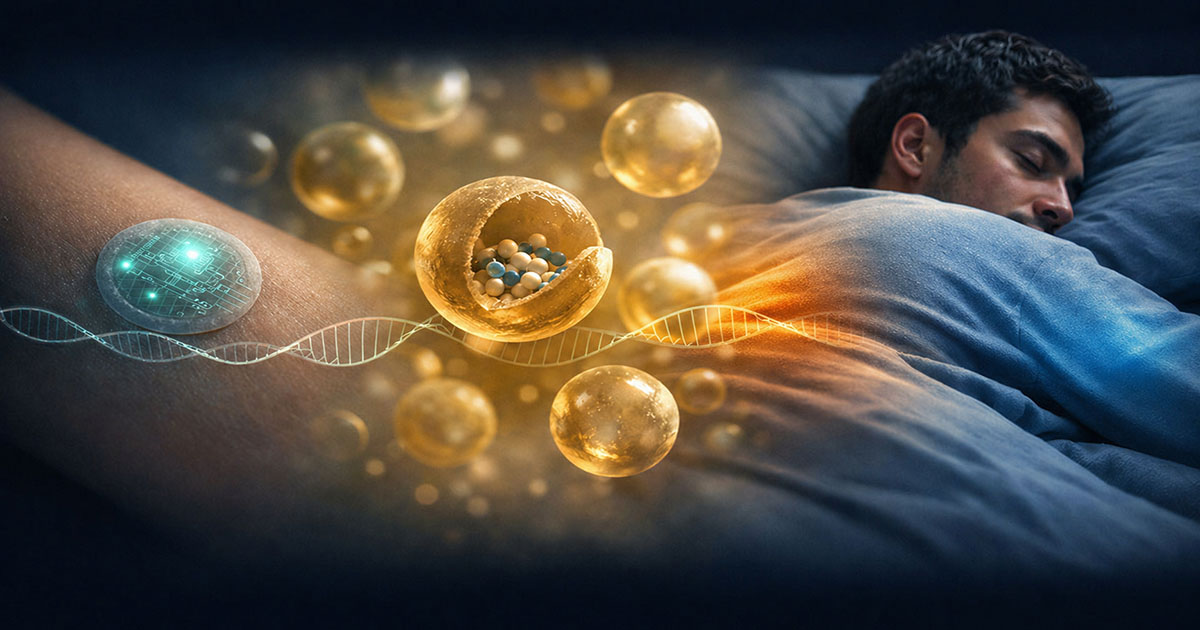
This guide covers all of these aspects. We have organized it around three pillars: knowing your body in real time; absorbing nutrients more effectively; and building a physical environment that supports recovery. For each one, we start in the research lab, trace the path to consumer products, and tell you exactly how far along that path the science has actually traveled.
One principle runs through everything we write: extraordinary claims require extraordinary evidence.
The short version
What actually works: continuous glucose monitors (for observation, not diagnosis), liposomal vitamin C and a handful of other encapsulated vitamins with published human pharmacokinetic data, and lipid nanoparticle drug delivery in approved medicines.
What is promising but early: multiplexed patch sensors tracking several biomarkers at once, nano-emulsified curcumin and resveratrol, phase-change and smart-textile sleep materials.
What is hype, regulatory limbo, or both: most “nano” supplement claims without named delivery systems and human pharmacokinetic data, BPC-157 and most gray-market biohacking peptides, and any product relying on the word “nano” as a marketing term rather than a specified technology.
What actually works: continuous glucose monitors (for observation, not diagnosis), liposomal vitamin C and a handful of other encapsulated vitamins with published human pharmacokinetic data, and lipid nanoparticle drug delivery in approved medicines.
What is promising but early: multiplexed patch sensors tracking several biomarkers at once, nano-emulsified curcumin and resveratrol, phase-change and smart-textile sleep materials.
What is hype, regulatory limbo, or both: most “nano” supplement claims without named delivery systems and human pharmacokinetic data, BPC-157 and most gray-market biohacking peptides, and any product relying on the word “nano” as a marketing term rather than a specified technology.
How we evaluate claims
We require peer-reviewed evidence published in indexed journals by reputable publishers (Nature, RSC, Springer, Wiley, and equivalents). We distinguish between in-vitro studies (cells in a dish), animal studies, and human clinical trials, and we tell you which is which. We flag when a product uses nanotechnology terminology without published pharmacokinetic or safety data to back it up. If we cannot find the evidence, we say so.
We require peer-reviewed evidence published in indexed journals by reputable publishers (Nature, RSC, Springer, Wiley, and equivalents). We distinguish between in-vitro studies (cells in a dish), animal studies, and human clinical trials, and we tell you which is which. We flag when a product uses nanotechnology terminology without published pharmacokinetic or safety data to back it up. If we cannot find the evidence, we say so.
Pillar 1: Know your body
How do continuous glucose monitors work, and what comes next?
For most of modern medical history, knowing what was happening inside your body required a doctor, a needle, a laboratory, and a few days’ wait. The idea that you could monitor the chemistry of your blood continuously, painlessly, and in real time would have seemed extraordinary even twenty years ago.
It is now available over the counter.
The science behind wearable biosensors
The story of biosensors starts with a materials problem. Biological signals (glucose concentrations, hormone levels, electrolyte balance) exist in tiny quantities, measured in nanomoles per liter. Detecting them reliably requires sensors with enormous surface area relative to their size, so that even trace amounts of a target molecule trigger a measurable electrical response.
This is exactly what nanomaterials provide. Graphene, a single layer of carbon atoms arranged in a hexagonal lattice, has an extraordinarily high surface-area-to-volume ratio. When graphene sheets are functionalized (chemically modified to attract specific molecules), they become exquisitely sensitive detectors. Carbon nanotubes work on a similar principle. Both materials can be printed onto flexible substrates thin enough to conform to skin, which is why they have become the backbone of the wearable sensor revolution. For a detailed technical review, see Ramesh et al. ("Nanotechnology-Enabled Biosensors: A Review of Fundamentals, Design Principles, Materials, and Applications"), Biosensors 13(1), 40 (2023).
In plain terms: the reason a modern glucose monitor is the size of a coin rather than a suitcase is because of what happens at the nanoscale.
What this means for you
You do not need to understand graphene chemistry to benefit from it. What matters is that micro- and nano-engineered sensors can now detect biological signals that were previously only measurable in a laboratory, and that detection is getting cheaper, faster, and more comprehensive every year. For more on how nanomaterials enable wearable electronics, see the Nanowerk article on How nanotechnology enables wearable electronics.
You do not need to understand graphene chemistry to benefit from it. What matters is that micro- and nano-engineered sensors can now detect biological signals that were previously only measurable in a laboratory, and that detection is getting cheaper, faster, and more comprehensive every year. For more on how nanomaterials enable wearable electronics, see the Nanowerk article on How nanotechnology enables wearable electronics.
Where we are now: continuous glucose monitors
Continuous glucose monitors (CGMs) are the most mature consumer application of micro- and nano-engineered electrochemical sensing. Devices from Abbott (Libre) and Dexcom (G7) are primarily enzymatic electrochemical sensors: enzymes on the electrode surface react with glucose and produce a measurable electrical signal. Nanoscale structuring of the electrode materials improves sensitivity and response time, but it is one component of the system rather than the sole enabler. They measure glucose in interstitial fluid (the fluid between your skin cells) every few minutes, around the clock.
In March 2024, the FDA cleared the Dexcom Stelo as the first over-the-counter CGM in the United States, meaning Americans no longer need a diabetes diagnosis or a prescription to use one. In the EU, the regulatory picture differs: CGMs like Abbott’s FreeStyle Libre have been available without a prescription in several member states for longer, though reimbursement policies vary significantly by country. The UK’s NHS, for example, expanded CGM access for Type 1 diabetes patients in 2022 but does not currently cover devices for non-diabetic wellness use.
A growing number of non-diabetic users (athletes, longevity enthusiasts, people experimenting with dietary interventions) are now using CGMs to understand how their bodies respond to food, exercise, stress, and sleep. The data is genuinely informative. The interpretive frameworks, however, are still developing, and we flag this below.
What other biohacking biosensors are worth wearing?
CGMs are the most visible nano-enabled biosensors, but they are not the only wearable technology generating real-time physiological data. The broader biosensor landscape includes:
Optical heart rate and SpO2 sensors (Apple Watch, Garmin, Whoop): These use photoplethysmography (PPG), LED light reflected off blood vessels, to measure heart rate, heart rate variability (HRV), and blood oxygen saturation. While not nanoscale in their current form, next-generation PPG sensors are incorporating nanostructured photodetectors for improved signal-to-noise ratios.
Ring-form-factor sensors (Oura Ring): Combine PPG with temperature sensors and accelerometers for sleep staging, readiness scoring, and menstrual cycle tracking. The miniaturization required for a ring form factor benefits directly from advances in micro- and nano-fabrication.
Sweat-based biosensors: Fully printed wearable patches that can simultaneously monitor glucose, alcohol, pH, and temperature in sweat are now in advanced research. A 2024 Nanowerk Spotlight "Fully printed wearable biosensor tracks glucose, alcohol, pH and temperature in sweat" covered a device that leverages innovative printing technology for continuous, non-invasive sweat monitoring.
Electrodermal activity (EDA) sensors (Fitbit Sense, Whoop 4.0): Measure skin conductance as a proxy for sympathetic nervous system activation. Useful for stress tracking, though the clinical interpretation of EDA data in healthy populations remains limited.
The common thread: sensor technology is advancing rapidly across multiple modalities, but the interpretation layer (knowing what to do with the data) consistently lags behind the hardware.
What is coming: multiplexed patch sensors
Current CGMs measure one thing: glucose. The next generation of micro- and nano-engineered sensors measures many things simultaneously from a single skin-worn patch.
Research published in 2026 in Nano-Micro Letters ("Modularly-Assembled Smart Microneedle Platform for Machine Learning-Driven Personalized Health Monitoring") demonstrated a microneedle-based patch, essentially an array of microscopic needles, painless and shallower than a mosquito bite, that monitors glucose, uric acid, cholesterol, sodium, potassium, and pH simultaneously from interstitial fluid. Each needle tip is coated with a different functionalized nanomaterial, each tuned to a different target molecule. For Nanowerk’s coverage of microneedle biosensor technology, see: fluorescent microneedle biosensors and self-powered microneedle diabetes patches.
These devices are not yet commercial. But they are past proof-of-concept and into clinical feasibility studies. Regulatory approval and manufacturing scale add meaningful time beyond research readiness: early commercial pilots are plausible within three to five years, with mainstream consumer availability likely longer.
| Today | 2–4 years | |
|---|---|---|
| What you can track | Glucose (continuous) | Glucose, lactate, uric acid, electrolytes, pH simultaneously |
| Form factor | Coin-sized patch, 10–15 day wear | Skin-conforming flexible patch, similar wear period |
| Availability | Over the counter (Dexcom Stelo, Abbott Libre) | Early clinical/consumer devices expected |
| Evidence level | Extensive clinical validation | Human feasibility studies underway |
CGMs for non-diabetics: a word of caution on interpretation
The sensors are ahead of the science of what to do with the data. Knowing your glucose curve after a meal is interesting. Knowing what to do about a particular curve (whether it is genuinely suboptimal, and if so, how to address it) is a far harder question, and the answer is individual, contextual, and still being researched.
We recommend treating CGM data as a starting point for observation, not as a diagnostic tool or a trigger for aggressive dietary intervention without professional guidance.
Pillar 2: Feed your body smarter
Do liposomal supplements actually work? The nanotechnology of absorption
Supplements are a roughly USD 190–200 billion global industry (Grand View Research valued the dietary supplements market at USD 209 billion in 2025; Polaris Market Research estimated USD 192 billion in 2024) built on a largely overlooked inconvenience: most of what you swallow does not reach its destination. Vitamins degrade in stomach acid. Fat-soluble compounds cannot cross water-based biological barriers. Large molecules get broken down before they can be absorbed. The gap between what is printed on the label and what actually enters your cells can be enormous.
Nanotechnology offers a genuine solution to this, and the emerging field of nano-nutraceuticals is built on that premise. It also offers an enormous opportunity for marketing abuse. Distinguishing between the two requires looking at the actual delivery chemistry.
Worth stating plainly before we go further: industry claims in this category are frequently overstated. Absorption improvements demonstrated in small, formulation-specific, sometimes industry-funded studies get generalized into blanket “10x bioavailability” marketing for entire product lines. The underlying science is real. Most of what is sold on the back of it is not rigorously validated.
How nanotechnology in supplements works
The core idea is encapsulation: wrapping an active compound inside a nanoscale carrier that protects it through digestion, improves its solubility, and releases it at the intended site. Several carrier types are in use.
Liposomes are tiny spheres made from the same phospholipid molecules that form cell membranes. Because they mimic the body’s own structures, they are taken up efficiently by cells. Liposomal vitamin C and liposomal NMN (nicotinamide mononucleotide) are the most common consumer applications. When comparing liposomal vs regular supplements, there is published human data showing improved absorption for the liposomal forms, though the magnitude of the benefit varies considerably between studies, often in small or formulation-specific trials, some of which are industry-funded. For a comprehensive review, see "Liposomes as Advanced Delivery Systems for Nutraceuticals"), Integrative Medicine.
Lipid nanoparticles (LNPs) are a more sophisticated cousin of liposomes, engineered with greater control over size, stability, and release rate. They became globally known as the delivery mechanism for mRNA COVID-19 vaccines, a landmark demonstration that nano-carriers can deliver fragile biological cargo effectively in humans at scale. For the definitive review of LNP development, see this paper in ACS Nano "Lipid Nanoparticles – From Liposomes to mRNA Vaccine Delivery").
Nanoemulsions and nanogels offer similar advantages for compounds that are poorly soluble in water (curcumin, resveratrol, and certain fat-soluble vitamins among them). Reducing particle size to the nanoscale dramatically increases surface area, which accelerates dissolution and absorption.
What this means for you
If a supplement uses genuine nano-encapsulation, it may meaningfully improve the amount of active compound that reaches your bloodstream. The critical question is whether the manufacturer has published pharmacokinetic data (absorption curves measured in human subjects) to back the claim. Without that data, “nano” on the label is marketing, not science.
If a supplement uses genuine nano-encapsulation, it may meaningfully improve the amount of active compound that reaches your bloodstream. The critical question is whether the manufacturer has published pharmacokinetic data (absorption curves measured in human subjects) to back the claim. Without that data, “nano” on the label is marketing, not science.
Supplement bioavailability claims: what the evidence shows
The honest picture is mixed. Liposomal delivery has solid human evidence for vitamin C (see "Liposomal vitamin C pharmacokinetics") and reasonable evidence for a handful of other compounds. A 2023 pharmacokinetic study comparing liposomal and non-liposomal multivitamin formulations found that liposomal encapsulation differentially improved absorption of specific vitamins and minerals in healthy adults ("Pharmacokinetic Analyses of Liposomal and Non-Liposomal Multivitamin/Mineral Formulations"). The evidence for nano-delivery of NMN, resveratrol, and most “longevity” supplements is thinner: promising in animal models, limited in human trials.
The deeper problem is that the supplements themselves are often ahead of the clinical evidence. NMN is a case in point: the underlying biology (NAD+ metabolism and its role in cellular aging) is well-established and genuinely interesting. Human trials of NMN supplementation have shown measurable increases in blood NAD+ levels ("The efficacy and safety of NMN supplementation in healthy adults"). Whether those increases translate into meaningful health or longevity outcomes in otherwise healthy adults is, as of 2026, still an open question.
Nano-encapsulation makes NMN absorb better. Comparing liposomal NMN vs regular NMN, the encapsulated form shows higher plasma uptake, but it does not make the underlying question about downstream health outcomes easier to answer.
| Compound | Nano-delivery evidence | Outcome evidence (humans) |
|---|---|---|
| Vitamin C (liposomal) | Strong: published PK data (Gopi & Balakrishnan, 2021) | Good for deficiency; modest for longevity claims |
| Vitamin D (nano-emulsion) | Moderate: improved absorption shown | Well-established for deficiency; excess has risks |
| NMN (liposomal / nano) | Early: limited human PK data | Raises NAD+ levels (Yi et al., 2023); downstream benefits unclear |
| Curcumin (nano-emulsion) | Moderate: multiple-fold increases reported (formulation-specific) | Anti-inflammatory signals; clinical outcomes weak |
| Resveratrol (nano) | Moderate: absorption improved | Animal data strong; human trials inconclusive |
How to tell if a nano supplement is real: nano-marketing vs nano-science
The word “nano” does not require regulatory approval or disclosure. Any manufacturer can call a product nano-formulated. Here is what to look for if you want to evaluate a claim seriously:
Nano supplement evaluation checklist
1. A named delivery system (liposomal, SNEDDS, nano-emulsion, LNP) with a specific particle size, usually measured in nanometers.
2. Published pharmacokinetic data: absorption studies in human subjects, not just cell or animal studies.
3. Third-party analysis of particle size and encapsulation efficiency, not just manufacturer claims.
4. Transparency about what percentage of the active compound is actually encapsulated versus free in solution.
1. A named delivery system (liposomal, SNEDDS, nano-emulsion, LNP) with a specific particle size, usually measured in nanometers.
2. Published pharmacokinetic data: absorption studies in human subjects, not just cell or animal studies.
3. Third-party analysis of particle size and encapsulation efficiency, not just manufacturer claims.
4. Transparency about what percentage of the active compound is actually encapsulated versus free in solution.
If none of these are available on the manufacturer’s website or in a linked study, the “nano” claim is most likely just marketing speak.
Biohacking peptides: promising biology, thin evidence, regulatory chaos
No guide to biohacking in 2026 would be complete without addressing peptides. They are the fastest-growing category in the longevity and performance space, promoted on podcasts, injected in clinics, and purchased from gray-market suppliers by a rapidly expanding community of self-experimenters. The interest is understandable. The evidence picture is not what most users think it is.
Peptides are short chains of amino acids that act as signaling molecules in the body. In pharmaceutical contexts, they can be engineered to trigger specific biological responses: stimulating growth hormone release, promoting tissue repair, modulating inflammation, or regulating sleep. The biology is real and genuinely interesting. Several peptides have become FDA-approved drugs for specific indications: semaglutide (Ozempic/Wegovy) for diabetes and weight management, and tesamorelin for HIV-related lipodystrophy, among others.
The biohacking peptide market, however, operates almost entirely outside that approval framework. The compounds that dominate longevity forums and clinic menus (BPC-157, TB-500/thymosin beta-4 fragment, CJC-1295, ipamorelin, GHK-Cu, MOTS-C) have not completed the clinical trial process required for FDA drug approval. Most have never been tested in large-scale human studies. Some have never been tested in humans at all.
BPC-157: the case study in hype outrunning data
BPC-157 (Body Protection Compound-157) is the most widely discussed peptide in the biohacking community, promoted for gut healing, tendon repair, injury recovery, and anti-inflammation. The preclinical literature is extensive: hundreds of animal studies, published across three decades, showing tissue repair and cytoprotective effects across multiple organ systems. A 2025 systematic review in the Orthopaedic Journal of Sports Medicine identified 36 studies, of which 35 were preclinical and only one was clinical ("Emerging Use of BPC-157 in Orthopaedic Sports Medicine: A Systematic Review").
The human evidence, as of early 2026, consists of three published pilot studies involving fewer than 30 total subjects, none of which included placebo controls: an intra-articular knee pain study with 16 patients (Lee & Padgett, Alternative Therapies in Health and Medicine 27(4), 8–13, 2021), an interstitial cystitis pilot with 12 patients (Lee et al., Alt Ther Health Med 30(10), 12–17, 2024), and an intravenous safety study in just two healthy adults (Lee & Burgess, Alt Ther Health Med 31(5), 20–24, 2025). A Phase I safety trial with 42 volunteers, registered in 2015 (NCT02637284), was canceled without publishing results.
This is the pattern that defines the peptide space: robust animal data, minimal human evidence, and a consumer market that has already decided the science is settled. It is not.
The regulatory landscape, and why it matters for safety
The regulatory situation around biohacking peptides is unusually volatile. In late 2023, the FDA placed 17 popular peptides (including BPC-157, TB-500, CJC-1295, ipamorelin, and injectable GHK-Cu) on its Category 2 list, effectively barring licensed compounding pharmacies from producing them. The stated reasons: risk of immunogenicity, peptide-related impurities, and insufficient safety data.
The ban did not eliminate demand. It pushed users toward unregulated gray-market suppliers, many sourcing from overseas manufacturers with no pharmaceutical oversight. In February 2026, HHS Secretary Robert F. Kennedy Jr. announced on The Joe Rogan Experience that approximately 14 of the 19 Category 2 peptides would be reclassified back to Category 1, restoring legal compounding access. As of April 2026, the formal FDA publication has not yet occurred.
The key point for consumers: Category 1 status means a licensed pharmacy can legally compound a peptide under a physician’s prescription. It does not mean the peptide has been proven safe or effective in clinical trials. Sermorelin, for example, was previously FDA-approved for a narrow indication (growth hormone deficiency in children) and remains available for compounding. Most other biohacking peptides have never reached that threshold.
Peptide evidence levels at a glance
| Peptide | Claimed uses | Human evidence | Regulatory status (US, April 2026) |
|---|---|---|---|
| BPC-157 | Gut healing, tendon repair, anti-inflammation | 3 pilot studies (<30 subjects total), no RCTs. Canceled Phase I (NCT02637284). | Category 2; pending reclassification to Category 1 |
| TB-500 (thymosin beta-4) | Wound healing, muscle recovery | Very limited. No published human efficacy trials for biohacking uses. | Category 2; pending reclassification |
| Sermorelin | Growth hormone release, body composition, recovery | Previously FDA-approved (pediatric GH deficiency). Off-label use expanding. | Category 1; legally compoundable |
| GHK-Cu | Collagen synthesis, skin regeneration, wound healing | Topical studies exist. Injectable evidence very limited. | Topical: Category 1. Injectable: Category 2; pending reclassification |
| CJC-1295 / Ipamorelin | Growth hormone secretion, fat loss, sleep quality | Some Phase I/II data for CJC-1295. Ipamorelin human data very limited. | Category 2; under PCAC review |
The same evidence landscape, plotted on two axes:
The delivery problem applies here too
Peptides share the same bioavailability challenge as many supplements: they are fragile molecules that degrade rapidly in the digestive system. Most biohacking peptides are administered by injection for this reason. Oral BPC-157 is an exception (as a gastric peptide, it appears to survive stomach acid) but for most peptides, the route of administration matters enormously. Nanotechnology-based delivery systems (liposomal encapsulation, nanoparticle carriers) are being explored for oral peptide delivery, but this research is early-stage. If a company claims its oral peptide product delivers the same efficacy as injectable forms without published pharmacokinetic data to demonstrate this, the same skepticism we apply to nano-supplement claims applies here.
Peptides share the same bioavailability challenge as many supplements: they are fragile molecules that degrade rapidly in the digestive system. Most biohacking peptides are administered by injection for this reason. Oral BPC-157 is an exception (as a gastric peptide, it appears to survive stomach acid) but for most peptides, the route of administration matters enormously. Nanotechnology-based delivery systems (liposomal encapsulation, nanoparticle carriers) are being explored for oral peptide delivery, but this research is early-stage. If a company claims its oral peptide product delivers the same efficacy as injectable forms without published pharmacokinetic data to demonstrate this, the same skepticism we apply to nano-supplement claims applies here.
The peptide space is moving fast: regulatory status is changing, new human studies are in progress, and the gray market is under unprecedented enforcement pressure. What is not changing is the fundamental gap between the enthusiasm of the consumer market and the depth of the clinical evidence. Our advice is the same as for nano-supplements: look for published human data, not animal studies or anecdotal reports; source from licensed pharmacies under physician supervision, not gray-market vendors; and treat Category 1 reclassification as a regulatory designation, not a stamp of clinical validation.
Pillar 3: Sleep & recover better
Smart materials and the environment pillar: the most underreported story in biohacking
Of the three pillars in this guide, this is the one most mainstream biohacking content ignores entirely. The focus is almost always on what you consume or track. But your physical environment (the temperature of your bed, the materials in your clothing, the way heat moves around your body during sleep) has a measurable effect on recovery quality that nanotechnology is only beginning to address seriously.
This is also the most research-stage pillar. We will be clear about what exists now and what is still in the laboratory.
Phase-change materials: the science of temperature regulation
The most commercially developed area is temperature regulation using phase-change materials (PCMs). These are substances (paraffin waxes, fatty acids, certain polymers) that absorb or release large amounts of heat as they transition between solid and liquid states. Microencapsulated at the nanoscale and embedded in textiles, they act as a thermal buffer: absorbing body heat when you get too warm, releasing it back when you cool down. For Nanowerk’s primer on PCMs, see: Phase-Change Materials Are The Key to Thermal Management.
The technology is not new. NASA developed early PCM applications for spacesuits in the 1980s. What is new is the quality of micro- and nano-encapsulation, which has made PCMs durable enough for repeated washing and practical enough for bedding, athletic wear, and sleep garments. A 2025 Nanowerk Spotlight Smart textile uses nanogenerators for energy harvesting and year-round thermal control covered a smart textile that uses nanogenerators and PCMs for year-round thermal control without batteries.
Several brands now sell PCM-infused mattress toppers, pillowcases, and sleepwear. The temperature buffering is real and measurable in laboratory settings. Whether it translates to meaningfully improved sleep quality in controlled human studies is less clear. The research is promising but small-scale.
Carbon nanotube textiles and passive radiative cooling
A more experimental application involves weaving carbon nanotube (CNT) fibers into textiles. CNT-infused fabrics can be engineered to emit body heat as infrared radiation (a process called passive radiative cooling) without requiring power. In laboratory conditions, CNT textiles have demonstrated skin temperature reductions of two to three degrees Celsius compared to conventional fabrics. For a technical review, see the Nanowerk Spotlight on cooling and drying nanoengineered textiles. As of 2026, there are no established consumer products using this technology; it remains at the advanced research and early prototype stage.
We include it here because it represents the direction the field is moving, and because Nanowerk readers are likely to encounter commercial claims about it in the next few years.
Chrono-delivery: nanotechnology and sleep medicine
The most conceptually interesting, and most research-stage, development in this pillar is the use of nanoscale delivery systems for compounds that support circadian rhythm regulation.
The problem with many sleep aids is timing. Melatonin, for example, is most effective when released in a specific pattern that mimics the body’s natural secretion curve. A standard tablet delivers a bolus (a single large release) that does not match the natural pattern well. Mesoporous silica nanoparticles, which have controllable pore sizes and surface chemistries, can be engineered to release compounds in a sustained, time-controlled manner that more closely follows the body’s own rhythm (Vallet-Regí et al., "Mesoporous Silica Nanoparticles for Drug Delivery: Current Insights", Molecules 23(1), 47, 2018).
Research published in RSC Advances in 2025 demonstrated nanomaterial-based delivery systems for circadian medicine, showing that nanoparticle delivery could modulate sleep-wake signaling more precisely than conventional formulations in animal models. Human studies are at early stages.
What this means for you
Of the three pillars, this one has the least that you can act on today with strong evidence behind it. PCM bedding and sleepwear are the most commercially available options and have the most honest evidence base: modest but real thermal benefits. Nano-textile and chrono-delivery applications are worth watching but not yet ready to spend significant money on.
Of the three pillars, this one has the least that you can act on today with strong evidence behind it. PCM bedding and sleepwear are the most commercially available options and have the most honest evidence base: modest but real thermal benefits. Nano-textile and chrono-delivery applications are worth watching but not yet ready to spend significant money on.
Safety & what we don’t yet know
Are nano supplements safe? Risks, unknowns, and the regulatory gap
No guide to nanotechnology in consumer products is complete without an honest account of what we do not know. This is not a disclaimer. It is arguably the most important section in the piece.
Is nano silver safe? And what about other engineered nanoparticles?
The properties that make nanomaterials so useful (their tiny size, enormous surface area, and ability to cross biological barriers) are exactly the properties that make their safety profile harder to evaluate. Some nanoparticles have been shown in experimental contexts to cross the blood-brain barrier, accumulate in organs, and trigger inflammatory responses that larger particles of the same material would not.
The research picture is nuanced rather than alarming. Many nanomaterials used in consumer health products (liposomes, lipid nanoparticles, and nano-emulsions based on food-grade lipids) have strong safety profiles established through extensive pharmaceutical and food industry use. Others, particularly engineered inorganic nanoparticles (titanium dioxide, silver, certain metal oxides), carry more uncertainty, especially for chronic low-level exposure.
The key variable is the material, its surface chemistry, its concentration, and the route of exposure. Generalizing about “nanoparticles” as uniformly safe or uniformly dangerous is an error. The specifics matter.
The regulatory gap in nano health products
Regulatory frameworks for nano-enabled consumer health products lag significantly behind the technology. In most jurisdictions, a supplement delivered in a liposomal form is regulated the same way as its non-nano equivalent. There is no requirement to disclose nano-encapsulation, no standardized definition of what qualifies as a nano-formulation, and no mandatory safety testing specific to the nanoscale properties of a product.
This is a genuine gap that consumer advocacy groups and some regulatory agencies are beginning to address, but it means that the burden of evaluation currently falls on the consumer rather than the manufacturer.
How to evaluate biohacking claims: what we recommend
Our recommendations
Prioritize products with published pharmacokinetic human data over those with animal or in-vitro data only.
Treat any product using the word “nano” without a named delivery system and published particle size data with skepticism.
For ingestible nano-formulations, look for products using food-grade lipid-based carriers (liposomes, LNPs, nanoemulsions with GRAS-listed ingredients) over engineered inorganic nanoparticles.
Consult a healthcare professional before using nano-formulated supplements alongside medications. Nano-delivery can alter absorption kinetics in ways that affect drug interactions.
Prioritize products with published pharmacokinetic human data over those with animal or in-vitro data only.
Treat any product using the word “nano” without a named delivery system and published particle size data with skepticism.
For ingestible nano-formulations, look for products using food-grade lipid-based carriers (liposomes, LNPs, nanoemulsions with GRAS-listed ingredients) over engineered inorganic nanoparticles.
Consult a healthcare professional before using nano-formulated supplements alongside medications. Nano-delivery can alter absorption kinetics in ways that affect drug interactions.
Where this is going: the next two to three years
The convergence of nano-enabled sensors, smarter delivery systems, and materials science is producing something genuinely new: the ability to observe the body at molecular resolution, intervene at molecular precision, and build an environment calibrated to biological rather than aesthetic standards.
The timeline is uneven. Biosensor technology is moving fastest: multiplexed patch sensors tracking six or more analytes simultaneously are likely to reach early commercial pilots within three to five years, with mainstream adoption beyond that. Nano-delivery supplements are here now, with quality ranging from rigorous to fraudulent. Peptides are in regulatory limbo, with reclassification pending but clinical validation still years away. Smart materials for sleep and recovery are real but early; the honest advice is to watch the space rather than pay a premium for it yet.
What is consistent across all three areas is the direction: away from guesswork and toward measurement. Nanotechnology is not going to make you immortal. But it is beginning to make the body legible in ways that were not previously possible, and that is worth understanding clearly, which is what we have tried to do here.
About this guide
This article is part of Nanowerk’s evidence reviews series. All claims are referenced to peer-reviewed published research. Where human clinical evidence is limited, we say so. We do not accept affiliate arrangements with any company whose products are discussed. Our editorial standard is the same as our research standard: evidence first.
This article is part of Nanowerk’s evidence reviews series. All claims are referenced to peer-reviewed published research. Where human clinical evidence is limited, we say so. We do not accept affiliate arrangements with any company whose products are discussed. Our editorial standard is the same as our research standard: evidence first.
Frequently asked questions
Do liposomal supplements actually work?
For some compounds, yes. Liposomal vitamin C has solid published pharmacokinetic evidence in humans, and liposomal multivitamin formulations show differential absorption improvements for specific nutrients. For others (NMN, resveratrol, most “longevity” compounds), human evidence is thinner and often limited to small, formulation-specific, sometimes industry-funded trials. The word “nano” on a label is unregulated; without a named delivery system, a specified particle size, and published human pharmacokinetic data, liposomal claims are marketing rather than demonstrated science.
Are continuous glucose monitors useful for non-diabetics?
The sensors are accurate and the data is real, but the interpretive science lags behind the hardware. Knowing your glucose curve after a meal is informative; knowing whether a particular curve is actually suboptimal, and what to do about it, is individual and still being researched. CGMs are reasonable as a tool for observation and self-experimentation in non-diabetic users, but should not be used as a diagnostic device or a trigger for aggressive dietary intervention without professional guidance.
Are CGMs and peptides actually nanotechnology?
Not strictly. CGMs are nano-enabled: nanoscale structuring of electrode materials improves sensitivity, but they are primarily enzymatic electrochemical sensors rather than nanotechnology in the strict sense. Peptides are short amino acid chains and are not nanotechnology at all, though some are delivered using nano-carriers. We cover them because they are adjacent biohacking tools that readers routinely ask about alongside genuinely nano-enabled products, and because clear classification helps separate real nanotech from products that simply use “nano” as marketing vocabulary.
Is BPC-157 safe and effective?
BPC-157 has promising animal data for tissue repair and anti-inflammatory effects, but as of 2026 it has not completed human clinical trials for any indication. It is not FDA-approved, is typically sold through gray-market compounding pharmacies and research-chemical suppliers, and its long-term safety profile in humans is genuinely unknown. It is the clearest case in the biohacking peptide space of hype outrunning data.
Are nano-supplements safe?
It depends on the material. Lipid-based nano-carriers (liposomes, lipid nanoparticles, nano-emulsions built from food-grade ingredients) have strong safety profiles from extensive pharmaceutical and food-industry use. Engineered inorganic nanoparticles (nano-silver, titanium dioxide, certain metal oxides) carry more uncertainty, especially for chronic low-level exposure. The regulatory framework in most jurisdictions does not require disclosure of nano-formulation, so the burden of evaluation currently falls on the consumer. Generalizing about “nanoparticles” as uniformly safe or dangerous is an error: the material, surface chemistry, dose, and route of exposure all matter.
How can I tell a real nano-supplement from marketing?
Look for four things: a named delivery system (liposomal, SNEDDS, nano-emulsion, LNP) with a specified particle size in nanometers; published human pharmacokinetic data, not just cell or animal studies; third-party analysis of particle size and encapsulation efficiency; and transparency about what percentage of the active compound is actually encapsulated versus free in solution. If none of these are available on the manufacturer’s website or in a linked study, the “nano” claim is almost certainly marketing rather than science.