Reference terms from Wikipedia, the free encyclopedia
 

Animal cognition

Animal cognition encompasses the mental capacities of non-human animals including insect cognition. The study of animal conditioning and learning used in this field was developed from comparative psychology. It has also been strongly influenced by research in ethology, behavioral ecology, and evolutionary psychology; the alternative name cognitive ethology is sometimes used. Many behaviors associated with the term animal intelligence are also subsumed within animal cognition.

Researchers have examined animals that placed in the cognition, in mammals instead of humans; (included primates, cetaceans, elephants, bears, dogs, cats, pigs, horses, cows, rabbits, raccoons, and rodents), birds (including parrots, fowl, corvids, and pigeons), reptiles (lizards, snakes, and turtles), fish and invertebrates (including cephalopods, spiders, and insects).

 
Note:   The above text is excerpted from the Wikipedia article Animal cognition, which has been released under the GNU Free Documentation License.
 

Check out these latest Nanowerk News:
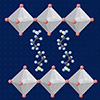
 

Researchers develop a new predictive model for designing 2D perovskites

By separating dielectric-screening effects from structural distortion, the study offers practical design rules for tuning excitons in 2D perovskites.

Orbitronics breakthrough points to low-power memory

Researchers directly used orbital currents in a magnetic device, producing much stronger signals for future low-energy memory and processors.

Microscopy at the space-time limit

Ultrafast scanning tunneling microscopy reaches the quantum mechanical space-time limit for the first time.

Programmable molecular machines are getting closer

Researchers created a highly stable electrically controlled DNA origami switch that regulates molecular functions and keeps working through hundreds of thousands of cycles.

Nanozyme tags reveal where nanoparticles go in cells

A new nanozyme labeling method maps nanoparticle interactions in living cells, showing how targeting alters trafficking and could guide better nanomedicines.

Light-written magnetic memory moves closer

Researchers used laser pulses to write and read antiferromagnetic data, opening a path to faster, lower-energy memory linked to optical networks.

Laser-controlled molecules reveal hidden reaction dynamics

Synchronized infrared lasers steer molecules between structures, exposing clear spectral fingerprints and new ways to study chemical reactions.

MOF thin films reveal a denser, less porous structure than expected

Advanced diffraction and modeling show a widely studied MOF thin film is densely packed, reshaping expectations for sensors, microelectronics and magnetic storage.

Atomic-scale insights clarify hidden defect signals in carbon materials

New analysis links long-ambiguous carbon defect peaks to specific atomic structures, helping improve material design for energy and electronics.

Room-temperature photon source brings quantum security closer to deployment

A compact plug-and-play device produces single photons without cryogenic cooling, easing integration with quantum-secure communication networks.