Reference terms from Wikipedia, the free encyclopedia
 

Bodybuilding

Bodybuilding is the use of progressive resistance exercise to control and develop one's muscles (muscle building) by muscle hypertrophy for aesthetic purposes. It is distinct from similar activities such as powerlifting because it focuses on physical appearance instead of strength. An individual who engages in this activity is referred to as a bodybuilder. In professional bodybuilding, competitors appear in lineups and perform specified poses (and later individual posing routines) for a panel of judges who rank them based on symmetry, muscularity, size, conditioning, posing, and stage presentation. Bodybuilders prepare for competitions through the elimination of nonessential body fat, enhanced at the last stage by a combination of extracellular dehydration and carbo-loading, to achieve maximum muscular definition and vascularity; they also tan and shave to accentuate the contrast of their skin under the spotlights.Body building takes a great amount of effort and time to reach the desired results. A bodybuilder might first be able to gain 8–20 pounds (4–9 kg) a year, if he or she lifts for seven hours on a weekly basis. However, gains begin to slow down after the first two years to about 5–15 pounds (2–7 kg). After five years, gains can decrease to just 3–10 pounds (1–5 kg).

Some bodybuilders use anabolic steroids and other performance-enhancing drugs to build muscles and recover from injuries more quickly, but competitions sometimes ban using them because of the health risks or considerations regarding fair competition. Despite some calls for testing for steroids, the leading bodybuilding federation (National Physique Committee) does not require testing. The winner of the annual IFBB Mr. Olympia contest is generally recognized as the world's top male professional bodybuilder. Since 1950, the NABBA Universe Championships have been considered the top amateur bodybuilding contests, with notable winners such as Reg Park, Lee Priest, Steve Reeves, and Arnold Schwarzenegger.

 
Note:   The above text is excerpted from the Wikipedia article Bodybuilding, which has been released under the GNU Free Documentation License.
 

Check out these latest Nanowerk News:
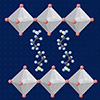
 

Organic molecule pushes LED emission closer to monochromatic light

A boron-rich ladder molecule narrows spontaneous emission, improving color purity while exposing stability challenges inside OLED devices.

Alkali-doped zinc oxide enables rare-earth-free mechanoluminescence

Lithium or sodium substitution turns abundant zinc oxide into a stress-activated near-infrared emitter for self-powered optical sensing.

Cryogenic silicon carbide transistor mimics neuron-like switching

A silicon carbide transistor uses negative differential resistance at millikelvin temperatures to enable low-power local control near quantum processors.

Ballistic electron transport observed in single-crystalline copper thin films

Defect-free copper pathways let electrons travel with less scattering, pointing to ways of reducing resistance in future nanoscale wiring.

Researchers discover piezoelectric effect in diamond membranes

Diamond, long deemed non-piezoelectric, now shows stable voltage generation in ultrathin flexible membranes, unlocking self-powered medical sensors.

On the trail of the missing hydrogen atoms

AI method reconstructs missing hydrogen atom positions in crystal databases, enabling faster, more accurate materials simulations for storage, batteries and other uses.

New method visualizes band structures in finite and curved nanomaterials

A new computational method extracts electronic band structures from finite, imperfect, and curved nanomaterials, linking nano-ARPES measurements with theory.

Light-induced drag reveals new way to control nanoscale motion

Researchers show light can add drag to fluorescent carbon nanotubes in water, revealing quantum friction that may help control nanoscale transport.

Novel nanowire device offers rapid, noninvasive cancer detection

The device selectively captured cancer biomarkers from the blood serum of ovarian cancer patients.

Newly synthesized fullerene material remains metallic even under low temperatures

Robust metallicity in a fullerene-based material challenges conventional electron-behavior theories and may inform future quantum technologies.