Reference terms from Wikipedia, the free encyclopedia
 

Brackish water

Brackish water, also sometimes termed brack water, is water occurring in a natural environment having more salinity than freshwater, but not as much as seawater. It may result from mixing seawater (salt water) with fresh water together, as in estuaries, or it may occur in brackish fossil aquifers. The word comes from the Middle Dutch root "brak". Certain human activities can produce brackish water, in particular civil engineering projects such as dikes and the flooding of coastal marshland to produce brackish water pools for freshwater prawn farming. Brackish water is also the primary waste product of the salinity gradient power process. Because brackish water is hostile to the growth of most terrestrial plant species, without appropriate management it is damaging to the environment (see article on shrimp farms).

Technically, brackish water contains between 0.5 and 30 grams of salt per litre—more often expressed as 0.5 to 30 parts per thousand (‰), which is a specific gravity of between 1.0004 and 1.0226. Thus, brackish covers a range of salinity regimes and is not considered a precisely defined condition. It is characteristic of many brackish surface waters that their salinity can vary considerably over space or time. Water with a salt concentration greater than 30‰ is considered saline.

 
Note:   The above text is excerpted from the Wikipedia article Brackish water, which has been released under the GNU Free Documentation License.
 

Check out these latest Nanowerk News:
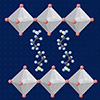
 

Organic molecule pushes LED emission closer to monochromatic light

A boron-rich ladder molecule narrows spontaneous emission, improving color purity while exposing stability challenges inside OLED devices.

Alkali-doped zinc oxide enables rare-earth-free mechanoluminescence

Lithium or sodium substitution turns abundant zinc oxide into a stress-activated near-infrared emitter for self-powered optical sensing.

Cryogenic silicon carbide transistor mimics neuron-like switching

A silicon carbide transistor uses negative differential resistance at millikelvin temperatures to enable low-power local control near quantum processors.

Ballistic electron transport observed in single-crystalline copper thin films

Defect-free copper pathways let electrons travel with less scattering, pointing to ways of reducing resistance in future nanoscale wiring.

Researchers discover piezoelectric effect in diamond membranes

Diamond, long deemed non-piezoelectric, now shows stable voltage generation in ultrathin flexible membranes, unlocking self-powered medical sensors.

On the trail of the missing hydrogen atoms

AI method reconstructs missing hydrogen atom positions in crystal databases, enabling faster, more accurate materials simulations for storage, batteries and other uses.

New method visualizes band structures in finite and curved nanomaterials

A new computational method extracts electronic band structures from finite, imperfect, and curved nanomaterials, linking nano-ARPES measurements with theory.

Light-induced drag reveals new way to control nanoscale motion

Researchers show light can add drag to fluorescent carbon nanotubes in water, revealing quantum friction that may help control nanoscale transport.

Novel nanowire device offers rapid, noninvasive cancer detection

The device selectively captured cancer biomarkers from the blood serum of ovarian cancer patients.

Newly synthesized fullerene material remains metallic even under low temperatures

Robust metallicity in a fullerene-based material challenges conventional electron-behavior theories and may inform future quantum technologies.