Reference terms from Wikipedia, the free encyclopedia
 

Laboratory safety

Many laboratories contain significant risks, and the prevention of laboratory accidents requires great care and constant vigilance. Examples of risk factors include high voltages, high and low pressures and temperatures, corrosive and toxic chemicals and chemical vapours, radiation, fire, explosions, and biohazards including infective organisms and their toxins.

Measures to protect against laboratory accidents include safety training and enforcement of laboratory safety policies, safety review of experimental designs, the use of personal protective equipment, and the use of the buddy system for particularly risky operations.

In many countries, laboratory work is subject by health and safety legislation. In some cases, laboratory activities can also present environmental health risks, for example, the accidental or deliberate discharge of toxic or infective material from the laboratory into the environment.

 
Note:   The above text is excerpted from the Wikipedia article Laboratory safety, which has been released under the GNU Free Documentation License.
 

Check out these latest Nanowerk News:
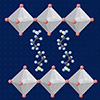
 

Organic molecule pushes LED emission closer to monochromatic light

A boron-rich ladder molecule narrows spontaneous emission, improving color purity while exposing stability challenges inside OLED devices.

Alkali-doped zinc oxide enables rare-earth-free mechanoluminescence

Lithium or sodium substitution turns abundant zinc oxide into a stress-activated near-infrared emitter for self-powered optical sensing.

Cryogenic silicon carbide transistor mimics neuron-like switching

A silicon carbide transistor uses negative differential resistance at millikelvin temperatures to enable low-power local control near quantum processors.

Ballistic electron transport observed in single-crystalline copper thin films

Defect-free copper pathways let electrons travel with less scattering, pointing to ways of reducing resistance in future nanoscale wiring.

Researchers discover piezoelectric effect in diamond membranes

Diamond, long deemed non-piezoelectric, now shows stable voltage generation in ultrathin flexible membranes, unlocking self-powered medical sensors.

On the trail of the missing hydrogen atoms

AI method reconstructs missing hydrogen atom positions in crystal databases, enabling faster, more accurate materials simulations for storage, batteries and other uses.

New method visualizes band structures in finite and curved nanomaterials

A new computational method extracts electronic band structures from finite, imperfect, and curved nanomaterials, linking nano-ARPES measurements with theory.

Light-induced drag reveals new way to control nanoscale motion

Researchers show light can add drag to fluorescent carbon nanotubes in water, revealing quantum friction that may help control nanoscale transport.

Novel nanowire device offers rapid, noninvasive cancer detection

The device selectively captured cancer biomarkers from the blood serum of ovarian cancer patients.

Newly synthesized fullerene material remains metallic even under low temperatures

Robust metallicity in a fullerene-based material challenges conventional electron-behavior theories and may inform future quantum technologies.