Life
Life is a characteristic that distinguishes physical entities that have biological processes, such as signaling and self-sustaining processes, from those that do not, either because such functions have ceased (they have died), or because they never had such functions and are classified as inanimate. Various forms of life exist, such as plants, animals, fungi, protists, archaea, and bacteria. Biology is the science that studies life.
There is currently no consensus regarding the definition of life. One popular definition is that organisms are open systems that maintain homeostasis, are composed of cells, have a life cycle, undergo metabolism, can grow, adapt to their environment, respond to stimuli, reproduce and evolve. Other definitions sometimes include non-cellular life forms such as viruses and viroids.
Abiogenesis is the natural process of life arising from non-living matter, such as simple organic compounds. The prevailing scientific hypothesis is that the transition from non-living to living entities was not a single event, but a gradual process of increasing complexity. Life on Earth first appeared as early as 4.28 billion years ago, soon after ocean formation 4.41 billion years ago, and not long after the formation of Earth 4.54 billion years ago. The earliest known life forms are microfossils of bacteria. Life on Earth is probably descended from an RNA world, although RNA-based life may not have been the first life to have existed. The classic 1952 Miller–Urey experiment and similar research demonstrated that most amino acids, the chemical constituents of the proteins used in all living organisms, can be synthesized from inorganic compounds under conditions intended to replicate those of the early Earth. Complex organic molecules occur in the Solar System and in interstellar space, and these molecules may have provided starting material for the development of life on Earth.
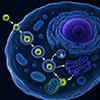
Since its primordial beginnings, life on Earth has changed its environment on a geologic time scale, but it has also adapted to survive in most ecosystems and conditions. Some microorganisms, called extremophiles, thrive in physically or geochemically extreme environments that are detrimental to most other life on Earth. The cell is considered the structural and functional unit of life. There are two kinds of cells, prokaryotic and eukaryotic, both of which consist of cytoplasm enclosed within a membrane and contain many biomolecules such as proteins and nucleic acids. Cells reproduce through a process of cell division, in which the parent cell divides into two or more daughter cells.
In the past, there have been many attempts to define what is meant by "life" through obsolete concepts such as odic force, hylomorphism, spontaneous generation and vitalism, that have now been disproved by biological discoveries. Aristotle is considered to be the first person to classify organisms. Later, Carl Linnaeus introduced his system of binomial nomenclature for the classification of species. Eventually new groups and categories of life were discovered, such as cells and microorganisms, forcing significant revisions of the structure of relationships between living organisms. Though currently only known on Earth, life need not be restricted to it, and many scientists speculate in the existence of extraterrestrial life. Artificial life is a computer simulation or human-made reconstruction of any aspect of life, which is often used to examine systems related to natural life.
Death is the permanent termination of all biological processes which sustain an organism, and as such, is the end of its life. Extinction is the term describing the dying-out of a group or taxon, usually a species. Fossils are the preserved remains or traces of organisms.
Check out these latest Nanowerk News: