Reference terms from Wikipedia, the free encyclopedia
 

Mental disorder

A mental disorder, also called a mental illness or psychiatric disorder, is a behavioral or mental pattern that causes significant distress or impairment of personal functioning. Such features may be persistent, relapsing and remitting, or occur as a single episode. Many disorders have been described, with signs and symptoms that vary widely between specific disorders. Such disorders may be diagnosed by a mental health professional, usually a clinical psychologist or psychiatrist.

The causes of mental disorders are often unclear. Theories may incorporate findings from a range of fields. Mental disorders are usually defined by a combination of how a person behaves, feels, perceives, or thinks. This may be associated with particular regions or functions of the brain, often in a social context. A mental disorder is one aspect of mental health. Cultural and religious beliefs, as well as social norms, should be taken into account when making a diagnosis.

Services are based in psychiatric hospitals or in the community, and assessments are carried out by mental health professionals such as psychiatrists, psychologists, psychiatric nurses and clinical social workers, using various methods such as psychometric tests but often relying on observation and questioning. Treatments are provided by various mental health professionals. Psychotherapy and psychiatric medication are two major treatment options. Other treatments include lifestyle changes, social interventions, peer support, and self-help. In a minority of cases, there might be involuntary detention or treatment. Prevention programs have been shown to reduce depression.

In 2019, common mental disorders around the globe include depression, which affects about 264 million, bipolar disorder, which affects about 45 million, dementia, which affects about 50 million, and schizophrenia and other psychoses, which affects about 20 million people. Neurodevelopmental disorders include intellectual disability and autism spectrum disorders which usually arise in infancy or childhood. Stigma and discrimination can add to the suffering and disability associated with mental disorders, leading to various social movements attempting to increase understanding and challenge social exclusion.

 
Note:   The above text is excerpted from the Wikipedia article Mental disorder, which has been released under the GNU Free Documentation License.
 

Check out these latest Nanowerk News:
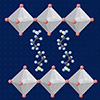
 

Organic molecule pushes LED emission closer to monochromatic light

A boron-rich ladder molecule narrows spontaneous emission, improving color purity while exposing stability challenges inside OLED devices.

Alkali-doped zinc oxide enables rare-earth-free mechanoluminescence

Lithium or sodium substitution turns abundant zinc oxide into a stress-activated near-infrared emitter for self-powered optical sensing.

Cryogenic silicon carbide transistor mimics neuron-like switching

A silicon carbide transistor uses negative differential resistance at millikelvin temperatures to enable low-power local control near quantum processors.

Ballistic electron transport observed in single-crystalline copper thin films

Defect-free copper pathways let electrons travel with less scattering, pointing to ways of reducing resistance in future nanoscale wiring.

Researchers discover piezoelectric effect in diamond membranes

Diamond, long deemed non-piezoelectric, now shows stable voltage generation in ultrathin flexible membranes, unlocking self-powered medical sensors.

On the trail of the missing hydrogen atoms

AI method reconstructs missing hydrogen atom positions in crystal databases, enabling faster, more accurate materials simulations for storage, batteries and other uses.

New method visualizes band structures in finite and curved nanomaterials

A new computational method extracts electronic band structures from finite, imperfect, and curved nanomaterials, linking nano-ARPES measurements with theory.

Light-induced drag reveals new way to control nanoscale motion

Researchers show light can add drag to fluorescent carbon nanotubes in water, revealing quantum friction that may help control nanoscale transport.

Novel nanowire device offers rapid, noninvasive cancer detection

The device selectively captured cancer biomarkers from the blood serum of ovarian cancer patients.

Newly synthesized fullerene material remains metallic even under low temperatures

Robust metallicity in a fullerene-based material challenges conventional electron-behavior theories and may inform future quantum technologies.