Reference terms from Wikipedia, the free encyclopedia
 

Mesopotamia

Mesopotamia (Ancient Greek: Μεσοποταμία Mesopotamíā; Arabic: بِلَاد ٱلرَّافِدَيْن Bilād ar-Rāfidayn; Classical Syriac: ܐܪܡ ܢܗܪ̈ܝܢ, Ārām-Nahrīn or ܒܝܬ ܢܗܪ̈ܝܢ, Bēṯ Nahrīn) is a historical region of Western Asia situated within the Tigris–Euphrates river system, in the northern part of the Fertile Crescent. It occupies the area of present-day Iraq, and parts of Iran, Turkey, Syria and Kuwait.

The Sumerians and Akkadians (including Assyrians and Babylonians) dominated Mesopotamia from the beginning of written history (c. 3100 BC) to the fall of Babylon in 539 BC, when it was conquered by the Achaemenid Empire. It fell to Alexander the Great in 332 BC, and after his death, it became part of the Greek Seleucid Empire. Later the Arameans dominated major parts of Mesopotamia (c. 900 BC – 270 AD)

Around 150 BC, Mesopotamia was under the control of the Parthian Empire. Mesopotamia became a battleground between the Romans and Parthians, with western parts of Mesopotamia coming under ephemeral Roman control. In 226 AD, the eastern regions of Mesopotamia fell to the Sassanid Persians. The division of Mesopotamia between Roman (Byzantine from 395 AD) and Sassanid Empires lasted until the 7th century Muslim conquest of Persia of the Sasanian Empire and Muslim conquest of the Levant from Byzantines. A number of primarily neo-Assyrian and Christian native Mesopotamian states existed between the 1st century BC and 3rd century BC, including Adiabene, Osroene, and Hatra.

Mesopotamia is the site of the earliest developments of the Neolithic Revolution from around 10,000 BC. It has been identified as having "inspired some of the most important developments in human history, including the invention of the wheel, the planting of the first cereal crops, and the development of cursive script, mathematics, astronomy, and agriculture". It has been known as one of the earliest civilizations to ever exist in the world.

 
Note:   The above text is excerpted from the Wikipedia article Mesopotamia, which has been released under the GNU Free Documentation License.
 

Check out these latest Nanowerk News:
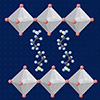
 

Organic molecule pushes LED emission closer to monochromatic light

A boron-rich ladder molecule narrows spontaneous emission, improving color purity while exposing stability challenges inside OLED devices.

Alkali-doped zinc oxide enables rare-earth-free mechanoluminescence

Lithium or sodium substitution turns abundant zinc oxide into a stress-activated near-infrared emitter for self-powered optical sensing.

Cryogenic silicon carbide transistor mimics neuron-like switching

A silicon carbide transistor uses negative differential resistance at millikelvin temperatures to enable low-power local control near quantum processors.

Ballistic electron transport observed in single-crystalline copper thin films

Defect-free copper pathways let electrons travel with less scattering, pointing to ways of reducing resistance in future nanoscale wiring.

Researchers discover piezoelectric effect in diamond membranes

Diamond, long deemed non-piezoelectric, now shows stable voltage generation in ultrathin flexible membranes, unlocking self-powered medical sensors.

On the trail of the missing hydrogen atoms

AI method reconstructs missing hydrogen atom positions in crystal databases, enabling faster, more accurate materials simulations for storage, batteries and other uses.

New method visualizes band structures in finite and curved nanomaterials

A new computational method extracts electronic band structures from finite, imperfect, and curved nanomaterials, linking nano-ARPES measurements with theory.

Light-induced drag reveals new way to control nanoscale motion

Researchers show light can add drag to fluorescent carbon nanotubes in water, revealing quantum friction that may help control nanoscale transport.

Novel nanowire device offers rapid, noninvasive cancer detection

The device selectively captured cancer biomarkers from the blood serum of ovarian cancer patients.

Newly synthesized fullerene material remains metallic even under low temperatures

Robust metallicity in a fullerene-based material challenges conventional electron-behavior theories and may inform future quantum technologies.