Reference terms from Wikipedia, the free encyclopedia
 

Physics

Physics is the natural science that studies matter, its fundamental constituents, its motion and behavior through space and time, and the related entities of energy and force. Physics is one of the most fundamental scientific disciplines, and its main goal is to understand how the universe behaves.

Physics is one of the oldest academic disciplines and, through its inclusion of astronomy, perhaps the oldest. Over much of the past two millennia, physics, chemistry, biology, and certain branches of mathematics were a part of natural philosophy, but during the Scientific Revolution in the 17th century these natural sciences emerged as unique research endeavors in their own right. Physics intersects with many interdisciplinary areas of research, such as biophysics and quantum chemistry, and the boundaries of physics are not rigidly defined. New ideas in physics often explain the fundamental mechanisms studied by other sciences and suggest new avenues of research in academic disciplines such as mathematics and philosophy.

Advances in physics often enable advances in new technologies. For example, advances in the understanding of electromagnetism, solid-state physics, and nuclear physics led directly to the development of new products that have dramatically transformed modern-day society, such as television, computers, domestic appliances, and nuclear weapons; advances in thermodynamics led to the development of industrialization; and advances in mechanics inspired the development of calculus.

 
Note:   The above text is excerpted from the Wikipedia article Physics, which has been released under the GNU Free Documentation License.
 

Check out these latest Nanowerk News:
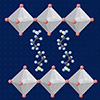
 

Organic molecule pushes LED emission closer to monochromatic light

A boron-rich ladder molecule narrows spontaneous emission, improving color purity while exposing stability challenges inside OLED devices.

Alkali-doped zinc oxide enables rare-earth-free mechanoluminescence

Lithium or sodium substitution turns abundant zinc oxide into a stress-activated near-infrared emitter for self-powered optical sensing.

Cryogenic silicon carbide transistor mimics neuron-like switching

A silicon carbide transistor uses negative differential resistance at millikelvin temperatures to enable low-power local control near quantum processors.

Ballistic electron transport observed in single-crystalline copper thin films

Defect-free copper pathways let electrons travel with less scattering, pointing to ways of reducing resistance in future nanoscale wiring.

Researchers discover piezoelectric effect in diamond membranes

Diamond, long deemed non-piezoelectric, now shows stable voltage generation in ultrathin flexible membranes, unlocking self-powered medical sensors.

On the trail of the missing hydrogen atoms

AI method reconstructs missing hydrogen atom positions in crystal databases, enabling faster, more accurate materials simulations for storage, batteries and other uses.

New method visualizes band structures in finite and curved nanomaterials

A new computational method extracts electronic band structures from finite, imperfect, and curved nanomaterials, linking nano-ARPES measurements with theory.

Light-induced drag reveals new way to control nanoscale motion

Researchers show light can add drag to fluorescent carbon nanotubes in water, revealing quantum friction that may help control nanoscale transport.

Novel nanowire device offers rapid, noninvasive cancer detection

The device selectively captured cancer biomarkers from the blood serum of ovarian cancer patients.

Newly synthesized fullerene material remains metallic even under low temperatures

Robust metallicity in a fullerene-based material challenges conventional electron-behavior theories and may inform future quantum technologies.