Reference terms from Wikipedia, the free encyclopedia
 

Red supergiant

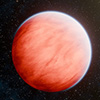
Red supergiants (RSGs) are stars with a supergiant luminosity class (Yerkes class I) of spectral type K or M. They are the largest stars in the universe in terms of volume, although they are not the most massive or luminous. Betelgeuse and Antares are the brightest and best known red supergiants (RSGs), indeed the only first magnitude red supergiant stars.

 
Note:   The above text is excerpted from the Wikipedia article Red supergiant, which has been released under the GNU Free Documentation License.
 

Check out these latest Nanowerk Astronomy & Space News:
 

Researchers use counterjet to reveal clumpy gas near a black hole

Counterjet observations reveal clumpy, dense ionized gas around a supermassive black hole, offering a new probe of AGN jet–gas interactions.

Cosmic dawn fuel discovery unlocks early galaxy growth secrets

NSF VLA and ALMA observations detect enormous cold molecular gas reserves in a distant galaxy seen 13 billion years ago.

Big Bang inside a star: How a gravastar forms

A new relativity model suggests gravastars could form when dark energy creates an expanding mini-universe inside a collapsing star, preventing a black hole.

Webb finds strongest evidence yet for 'black hole stars'

Many of the scattered pieces of the little red dot puzzle are coming together.

Galaxy-killing wind discovered in the early universe

Galaxy-killing winds from early galaxy collisions may blow away star-forming gas, explaining why massive galaxies lived fast and died young.

Study reveals growth spurt of massive stars in extreme galactic center

Massive stars can form via accretion disks even in the Milky Way’s harsh center, showing disk-driven growth works across extreme environments.

Astronomers discover the earliest known flickering quasar

When the universe was just 850 million years old, this voracious black hole was already surprisingly mature, a new study finds.

Understanding neutron star mergers with artificial intelligence

Machine learning models energy release during heavy-element formation, enabling faster simulations of neutron star mergers and kilonova signals.

X-ray telescopes on a satellite can map the Moon's surface chemistry in a few years

Simulations show a compact orbital instrument could chart lunar elements in 1–2 years, offering new insight into the Moon's evolution.

Magnetic field helps binary star systems form

Simulations show magnetic fields can remove angular momentum from forming protostars, helping binary star systems form within realistic timescales.

Check out more of the latest Astronomy & Space News here.