Reference terms from Wikipedia, the free encyclopedia
 

Seawater

Seawater, or salt water, is water from a sea or ocean. On average, seawater in the world's oceans has a salinity of about 3.5% (35 g/l, 35 ppt, 600 mM). This means that every kilogram (roughly one liter by volume) of seawater has approximately 35 grams (1.2 oz) of dissolved salts (predominantly sodium (Na+) and chloride (Cl−) ions). Average density at the surface is 1.025 kg/l. Seawater is denser than both fresh water and pure water (density 1.0 kg/l at 4 °C (39 °F)) because the dissolved salts increase the mass by a larger proportion than the volume. In comparison, most human physiological saline levels are approximately one quarter of this, for example blood is 9g/l (0.9% w/v). The freezing point of seawater decreases as salt concentration increases. At typical salinity, it freezes at about −2 °C (28 °F). The coldest seawater still in the liquid state ever recorded was found in 2010, in a stream under an Antarctic glacier: the measured temperature was −2.6 °C (27.3 °F). Seawater pH is typically limited to a range between 7.5 and 8.4. However, there is no universally accepted reference pH-scale for seawater and the difference between measurements based on different reference scales may be up to 0.14 units.

 
Note:   The above text is excerpted from the Wikipedia article Seawater, which has been released under the GNU Free Documentation License.
 

Check out these latest Nanowerk News:
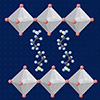
 

Researchers develop a new predictive model for designing 2D perovskites

By separating dielectric-screening effects from structural distortion, the study offers practical design rules for tuning excitons in 2D perovskites.

Orbitronics breakthrough points to low-power memory

Researchers directly used orbital currents in a magnetic device, producing much stronger signals for future low-energy memory and processors.

Microscopy at the space-time limit

Ultrafast scanning tunneling microscopy reaches the quantum mechanical space-time limit for the first time.

Programmable molecular machines are getting closer

Researchers created a highly stable electrically controlled DNA origami switch that regulates molecular functions and keeps working through hundreds of thousands of cycles.

Nanozyme tags reveal where nanoparticles go in cells

A new nanozyme labeling method maps nanoparticle interactions in living cells, showing how targeting alters trafficking and could guide better nanomedicines.

Light-written magnetic memory moves closer

Researchers used laser pulses to write and read antiferromagnetic data, opening a path to faster, lower-energy memory linked to optical networks.

Laser-controlled molecules reveal hidden reaction dynamics

Synchronized infrared lasers steer molecules between structures, exposing clear spectral fingerprints and new ways to study chemical reactions.

MOF thin films reveal a denser, less porous structure than expected

Advanced diffraction and modeling show a widely studied MOF thin film is densely packed, reshaping expectations for sensors, microelectronics and magnetic storage.

Atomic-scale insights clarify hidden defect signals in carbon materials

New analysis links long-ambiguous carbon defect peaks to specific atomic structures, helping improve material design for energy and electronics.

Room-temperature photon source brings quantum security closer to deployment

A compact plug-and-play device produces single photons without cryogenic cooling, easing integration with quantum-secure communication networks.