Voyager program
The Voyager program is an ongoing American scientific program that employs two robotic interstellar probes, Voyager 1 and Voyager 2. They were launched in 1977 to take advantage of a favorable alignment of Jupiter and Saturn, to fly near them while collecting data for transmission back to Earth. After launch the decision was taken to additionally send Voyager 2 near Uranus and Neptune to collect data for transmission back to Earth.
As of 2021, the two Voyagers are still in operation past the outer boundary of the heliosphere in interstellar space. They both continue to collect and transmit useful data to Earth.
As of 2021, Voyager 1 was moving with a velocity of 61,045 kilometers per hour (37,932 mph) relative to the Sun, and was 22,676,000,000 kilometers (1.4090×10¹⁰ mi) from the Sun reaching at a distance of 152.6 AU (22.8 billion km; 14.2 billion mi) from Earth as of April 24, 2021. On 25 August 2012, data from Voyager 1 indicated that it had entered interstellar space.
As of 2021, Voyager 2 was moving with a velocity of 55,150 kilometers per hour (34,270 mph) relative to the Sun, and was 18,980,000,000 kilometers (1.179×10¹⁰ mi) from the Sun reaching at a distance of 126.9 AU (19.0 billion km; 11.8 billion mi) from Earth as of April 24, 2021. On 5 November 2019, data from Voyager 2 indicated that it also had entered interstellar space. On 4 November 2019, scientists reported that, on 5 November 2018, the Voyager 2 probe had officially reached the interstellar medium (ISM), a region of outer space beyond the influence of the solar wind, and has now joined the Voyager 1 probe which had reached the ISM earlier in 2012.
Although the Voyagers have moved beyond the influence of the solar wind, they still have a long way to go before exiting the Solar System. NASA indicates "f we define our solar system as the Sun and everything that primarily orbits the Sun, Voyager 1 will remain within the confines of the solar system until it emerges from the Oort cloud in another 14,000 to 28,000 years."
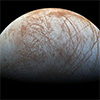
Data and photographs collected by the Voyagers' cameras, magnetometers and other instruments revealed unknown details about each of the four giant planets and their moons. Close-up images from the spacecraft charted Jupiter's complex cloud forms, winds and storm systems and discovered volcanic activity on its moon Io. Saturn's rings were found to have enigmatic braids, kinks and spokes and to be accompanied by myriad "ringlets".
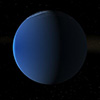
At Uranus, Voyager 2 discovered a substantial magnetic field around the planet and ten more moons. Its flyby of Neptune uncovered three rings and six hitherto unknown moons, a planetary magnetic field and complex, widely distributed auroras. As of 2021 Voyager 2 is the only spacecraft to have visited the ice giants Uranus and Neptune.
In August 2018, NASA confirmed, based on results by the New Horizons spacecraft, the existence of a "hydrogen wall" at the outer edges of the Solar System that was first detected in 1992 by the two Voyager spacecraft.
The Voyager spacecraft were built at the Jet Propulsion Laboratory in Southern California and funded by the National Aeronautics and Space Administration (NASA), which also financed their launches from Cape Canaveral, Florida, their tracking and everything else concerning the probes.
The cost of the original program was $865 million, with the later-added Voyager Interstellar Mission costing an extra $30 million.
Check out these latest Nanowerk Astronomy & Space News: