

Nanotechnology News – Latest Headlines
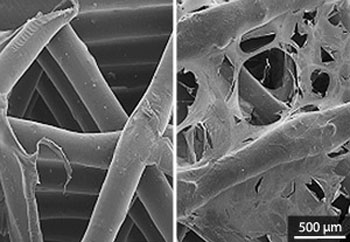
Biomaterials: Finding the right support
Scaffolds that are able to support stem-cell proliferation and differentiation in culture may not have the same effects in the human body.
January 19, 2011 Read more
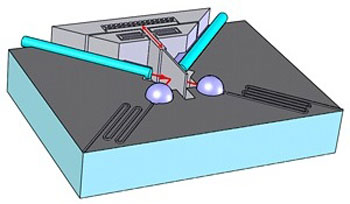
A two-wafer approach for integration of optical MEMS and photonics on silicon substrate
Photonics and microelectromechanical systems fabricated separately on different wafers can now be aligned precisely by finishing with a single processing step.
January 19, 2011 Read more
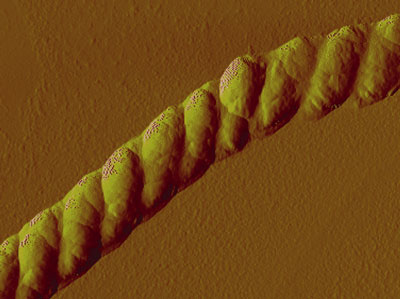
A nanoscale rope - another step toward complex nanomaterials that assemble themselves
Scientists at the U.S. Department of Energy's Lawrence Berkeley National Laboratory (Berkeley Lab) have coaxed polymers to braid themselves into wispy nanoscale ropes that approach the structural complexity of biological materials.
January 18, 2011 Read more
Imec at SPIE Photonics West - CMOS image sensors, hyperspectral imaging, silicon photonics, and more
CMOS processes currently used to manufacture logic and/ DRAM chips can open a whole new market of smart devices and microsystems. By integrating CMOS chip technology with sensors, actuators, passives, MEMS, optics, etc. smart devices with new functionalities can be developed.
January 18, 2011 Read more
Breakthrough in converting heat waste to electricity with nanocrystals
Automotive, chemical, brick and glass industries could benefit from scientific discovery.
January 18, 2011 Read more
Gold 'nano-popcorn' detects and treats tumors, monitors response to therapy
Using a two-step process that creates gold nanoparticles that look like kernels of popcorn, researchers at Jackson State University have created a targeted nanoparticle that can detect as few as 50 malignant prostate cells and serve as a thermal scalpel that can kill the cells.
January 18, 2011 Read more
Nanoparticle blocks key molecule involved in spread of breast cancer
Scientists have shown that attaching the PHSCN peptide to a spherical polymeric nanoparticle increases the drug's potency by as much as 6,700 fold compared to the free drug in a test designed to measure breast cancer cell invasiveness.
January 18, 2011 Read more
Nanosponges harvest rare cancer marker from blood
An international research team from the United States and Italy has shown that it can use a new type of nanoparticle to selectively trap specific families of proteins from blood and protect them from degradation by enzymes in blood.
January 18, 2011 Read more
Silicon nanocrystals map location of spreading tumors
Nano-sized fluorescent particles known as quantum dots have shown promise as powerful imaging agents capable of detecting a wide range of diseases, but these nanoparticles are usually made with toxic metals such as cadmium. Now, researchers at the University of Buffalo have developed a novel synthetic method that enables them to design and create biocompatible fluorescent nanocrystals made of non-toxic silicon.
January 18, 2011 Read more
Sharply focused on neurons, light controls a worm's behavior
Scientists commandeer a freely moving organism's nervous system without wires or electrodes.
January 18, 2011 Read more
Special sugar, nanoparticles combine to detect cholera toxin
A complex sugar may someday become one of the most effective weapons to stop the spread of cholera, a disease that has claimed thousands of lives in Haiti since the devastating earthquake last year.
January 18, 2011 Read more
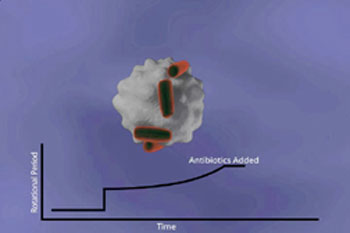
See how they grow on the nanoscale: Monitoring single bacteria without a microscope
With an invention that can be made from some of the same parts used in CD players, University of Michigan researchers have developed a way to measure the growth and drug susceptibility of individual bacterial cells without the use of a microscope.
January 18, 2011 Read more

Wider den Widerstand - auf dem Weg zu besseren Lithium-Ionen Batterien
Darmstaedter Forscher tragen zur Entwicklung kleinerer und leistungsfaehigerer Batterien bei.
January 18, 2011 Read more
Nanotechnology's contribution to reconstructive surgery
To rebuild damaged parts of a human body from scratch is a dream that has long fired human imagination, from Mary Shelley's Doctor Frankenstein to modern day surgeons. Now, a team of European scientists, working in the frame of the EUREKA project ModPolEUV, has made a promising contribution to reconstructive surgery thanks to an original multidisciplinary approach matching cutting-edge medicine to the latest developments in nanotechnology.
January 18, 2011 Read more
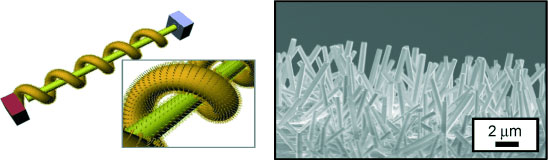
T-Shirt replaces battery - fiber supercapacitors take shape
Will we soon be plugging our mobile phone into our t-shirt instead of putting in a battery? This vision is not totally out of reach: the first steps in this direction have already been taken.
January 18, 2011 Read more

Researcher warns of health risks with carbon nanotubes
Carbon nanotubes, which are extremely small fibers used in many new light and strong materials, may present health risks if inhaled, in the worst case leading to cancer, according to new research from Lulea University of Technology.
January 18, 2011 Read more
 Subscribe to our Nanotechnology News feed