

Nanotechnology News – Latest Headlines
Ergebnisse des NanoDialog 2009-2011 - Abschlusskonferenz
Die Ergebnisse seiner Arbeiten und weitere uebergreifende Aspekte stellt die NanoKommission am 2. Februar auf einer Konferenz der interessierten Fachoeffentlichkeit vor und diskutiert mit den Anwesenden.
January 18, 2011 Read more
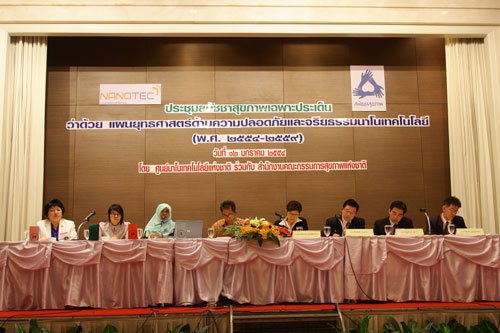
Thailand pushing forward on nanosafety regulations
Thailand is making advancement in pushing for the country's first strategy plan on nanotechnology safety and ethic which is expected to be submitted to the government in 2011.
January 18, 2011 Read more
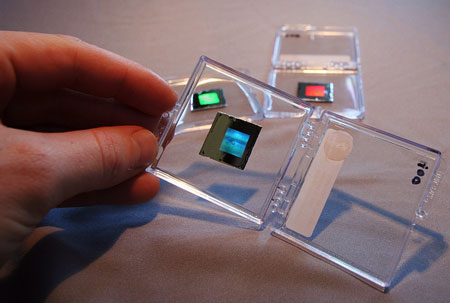
Butterfly wings behind anti-counterfeiting nanotechnology
Imagine a hole so small that air can't go through it, or a hole so small it can trap a single wavelength of light. Nanotech Security Corp., with the help of Simon Fraser University researchers, is using this type of nanotechnology to create unique anti-counterfeiting security features.
January 18, 2011 Read more
Electron gas on the surface of an insulator opens the way to multifunctional transistors
Researchers at CNRS and Universite Paris-Sud 11 have succeeded in creating a conductive layer on the surface of strontium titanate (SrTiO3), a transparent insulating material considered to be very promising for the development of future microelectronics applications. Two nanometers thick, this conductive layer is a two-dimensional metallic electron gas (2DEG) that is part of the insulating material.
January 17, 2011 Read more
A new way to measure how single atoms interact with surfaces
Physicists discovered a new way to measure how single atoms interact with surfaces. Their findings help develop nanotechnology and test new theories about the internal structure of atoms.
January 17, 2011 Read more
'It's good to talk': Nanochannels project to open lines of communication for public dialogue
Nanotechnology issues are about to hit the mass media in a big way. The new EC-funded NANOCHANNELS project was launched last week with a two-day kick-off meeting that led to the planning of a dynamic programme of communication, dialogue, and engagement in issues of nanotechnology aimed at European citizens.
January 17, 2011 Read more
Forschung: Sicherer Umgang mit Nanomaterialien
Mehr als 200 Interessierte aus Betrieben und Behoerden nahmen am Dialog-Forum 'Nanomaterialien am Arbeitsplatz' teil, das die Bundesanstalt fuer Arbeitsschutz und Arbeitsmedizin (BAuA) heute in Dortmund veranstaltete. Im Mittelpunkt der Veranstaltung standen Forschungsergebnisse und praktische Hilfestellungen der BAuA, die zum verantwortungsvollen Umgang mit Nanomaterialien am Arbeitsplatz beitragen.
January 17, 2011 Read more
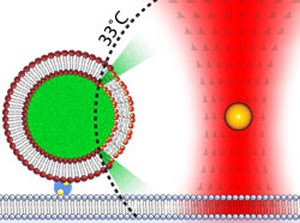
Controlled heating of gold nanoparticles
Tiny gold particles are good for transferring heat and could be a promising tool for creating localized heating in, for example, a living cell. In new experiments, researchers at the Niels Bohr Institute have measured the temperature of nano-sized gold particles with extreme precision and have examined their ability to melt the lipid membranes surrounding cells, paving the way for dissolving sick cells.
January 17, 2011 Read more
AGS zu Nanomaterialien
Der Ausschuss fuer Gefahrstoffe (AGS) hat bei seiner Sitzung im November 2010 den vom AK Nanomaterialien des UA I des AGS erarbeiteten Sachstandsbericht zum Thema Nanomaterialien beraten und beschlossen, mit der Erarbeitung einer Bekanntmachung zur Umsetzung der Vorgaben der Gefahrstoffverordnung (GefStoffV) bei Taetigkeiten mit Nanomaterialien zu beginnen.
January 17, 2011 Read more
A first look at flight in 2025
An 18-month NASA research effort to visualize the passenger airplanes of the future has produced some ideas that at first glance may appear to be old fashioned. Instead of exotic new designs seemingly borrowed from science fiction, familiar shapes - but built with high-tech materials - dominate the pages of advanced concept studies.
January 16, 2011 Read more
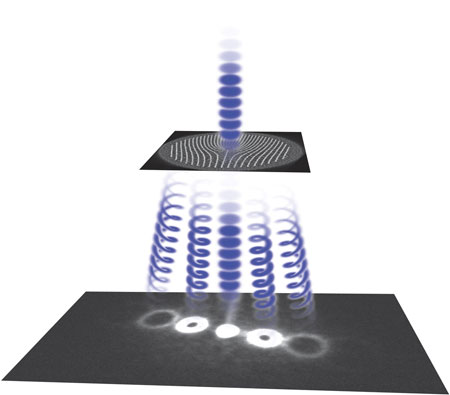
'Electron vortices' have the potential to increase conventional microscopes' capabilities
Electron microscopes are among the most widely used scientific and medical tools for studying and understanding a wide range of materials, from biological tissue to miniature magnetic devices, at tiny levels of detail. Now, researchers at the National Institute of Standards and Technology (NIST) have found a novel and potentially widely applicable method to expand the capabilities of conventional transmission electron microscopes (TEMs). Passing electrons through a nanometer-scale grating, the scientists imparted the resulting electron waves with so much orbital momentum that they maintained a corkscrew shape in free space.
January 14, 2011 Read more
Call for nominations in nanochemistry - $250k 2012 Bower Award
The theme for the 2012 Bower Award and Prize for Achievement in Science is Nanochemistry. Notice of intent to nominate is encouraged: March 31, 2011. Complete Nomination: May 31, 2011
January 14, 2011 Read more
Researcher uses living cells to create 'biotic' video games
Stanford physicist Ingmar Riedel-Kruse has begun developing 'biotic games' involving paramecia and other living organisms. He hopes the games lead to advances in education and crowd-sourcing of laboratory research while helping to raise the level of public discourse on bio-related issues.
January 14, 2011 Read more
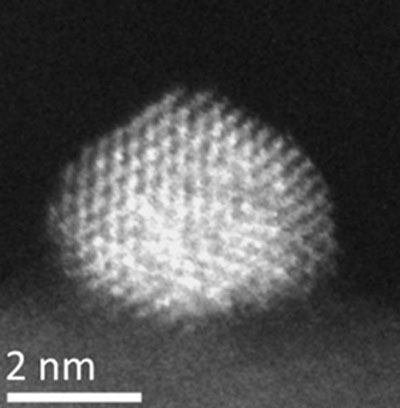
Nanoparticles for a greener path for the production of a vital chemical
Nanoparticles of gold and palladium (Au-Pd) could lead to a more efficient and environmentally friendly way of producing benzyl benzoate, a chemical compound used widely in the food, pharmaceutical and chemical industries whose applications include a fixative for fragrances, a food additive and a solvent for chemical reactions.
January 14, 2011 Read more
European Food Safety Authority launches public consultation on risk assessment of nanomaterials in food and feed
The European Food Safety Authority has launched a public consultation on its draft guidance document for engineered nanomaterial (ENM) applications in food and feed.
January 14, 2011 Read more
Bacterial minicompass uses nanomagnets
Magnetotactic bacteria orient themselves in their environment with the aid of tiny compasses, consisting of chains of membrane sacs called magnetosomes, each containing a single nanomagnet.
January 14, 2011 Read more
 Subscribe to our Nanotechnology News feed