

Nanotechnology News – Latest Headlines
Oscillating layers of molecules on liquid's surface influence carbon capture
Two tiny molecular layers in a liquid that traps carbon dioxide constantly swap places, influencing how much of the greenhouse gas is absorbed, according to scientists.
January 12, 2011 Read more
Semiconductor Technology for Ultra Large Scale Integrated Circuits and Thin Film Transistors III
This conference is organized with the intention of again providing a forum for continued discussion on the latest developments in two of the most critical high-tech fields, i.e., Ultra Large Scale Integrated Circuits (ULSIC) and Thin Film Transistor (TFT). It is aimed at the exchange of state-of-the-art information among those involved in research, development, and production of semiconductor materials, processes, and devices.
January 12, 2011 Read more
Fastest movie in the world recorded - a method to film nanostructures
Scientists at Helmholtz-Zentrum Berlin fuer Materialien und Energie (HZB) and the Technische Universitaet Berlin (TUB) now present a method that takes us a good step towards producing a "molecular movie". They can record two pictures at such a short time interval that it will soon be possible to observe molecules and nanostructures in real time.
January 12, 2011 Read more
Spaser - groundbreaking nano-laser for medicine and electronics
The physical length of an ordinary laser cannot be less than one half of the wavelength of its light, which limits its application in many industries. Now the Spaser, a new invention developed in part by Tel Aviv University, can be as small as needed to fuel nanotechnologies of the future.
January 12, 2011 Read more
Scaling up: The future of nanoscience
Fifty-one years after Richard Feynman envisioned nanoscience in his famous address, 'Plenty of Room at the Bottom', four extraordinary researchers joined in a roundtable discussion of the future of nanoscience.
January 12, 2011 Read more
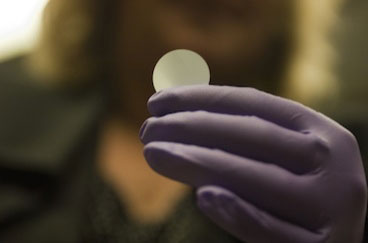
Nanofilters for molecule selection by size and substance
Separating molecules is an important part of many manufacturing and testing processes, including pharmaceutical production and some biomedical tests. One way of carrying out such separation is by using nanofilters - materials with holes of a precisely controlled tiny diameter, to allow molecules up to that size to pass through while blocking any that are larger. But a new system devised by researchers at MIT could add an important new capability: a way to selectively filter out molecules of the same size that have different chemical properties.
January 12, 2011 Read more
Free white paper: Why and how to communicate your research
Frank Burnett, Emeritus Professor of Science Communication at the University of the West of England, has written a concise 26 page Guide designed to help scientists, engineers and technologists develop effective, attention-grabbing ways of communicating what they do and why they do it to public audiences.
January 12, 2011 Read more
Novel concept of organic photovoltaic cell
A novel concept of organic photovoltaic cell based on the optical absorption due to charge-transfer between different organic molecules was developed by Japanese researchers.
January 12, 2011 Read more
BMBF-Branchendialog NanoPackaging: Nanotechnologie und Neue Materialien in der Verpackungsindustrie
Nanotechnologien und Neue Materialien sind Innovationstreiber fuer die Entwicklung intelligenter und multifunktionaler Verpackungen. Das Anwendungsspektrum reicht von verbesserter Barriere- und Schutzfunktion ueber neuartige Sicherheitsmerkmale fuer den Faelschungsschutz bis hin zu Smart Labels fuer intelligente Verpackungen der Zukunft.
January 12, 2011 Read more
Biomedical breakthrough: Blood vessels for lab-grown tissues
Rice, BCM discovery addresses key roadblock to growing replacement tissues, organs.
January 12, 2011 Read more
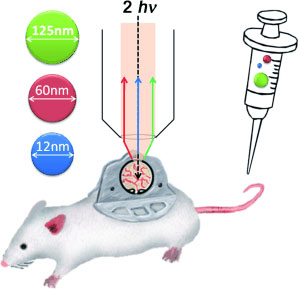
Flares on the move: Nanoparticle test kit shows how nanoparticles of different size disperse in tumor tissue
Nanoparticles play a significant role in the development of future diagnostic and therapeutic techniques for tumors, for example as transporters for drugs or as contrast agents. Absorption and dispersion of nanoparticles in tumor tissue depend strongly on particle size. In order to systematically study this, scientists at the Massachusetts Institute of Technology and Harvard Medical School have now produced a set of fluorescent nanoparticles of various diameters between 10 and 150 nm.
January 12, 2011 Read more
Plasmonics: From metallic foils to cancer treatment
In a timely review paper, scientists from Japan, Germany, and Spain provide a highly relevant overview of the history, physical interpretation and applications of plasmons in metallic nanostructures.
January 12, 2011 Read more
Virus killer gets supercharged with nanoparticles
A simple technique to make a common virus-killing material significantly more effective is a breakthrough from the Rice University labs of Andrew Barron and Qilin Li. Rather than trying to turn the process into profit, the researchers have put it into the public domain.
January 12, 2011 Read more
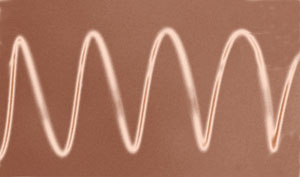
Coiled nanowires may hold key to stretchable electronics
Researchers at North Carolina State University have created the first coils of silicon nanowire on a substrate that can be stretched to more than double their original length, moving us closer to incorporating stretchable electronic devices into clothing, implantable health-monitoring devices, and a host of other applications.
January 11, 2011 Read more
UAlbany NanoCollege awarded nearly $5M in federal funding to enable nanotechnology research and education
Initiatives will support nanoscale innovation and workforce training across a variety of critical sectors.
January 11, 2011 Read more
Polymer membranes with molecular-sized channels that assemble themselves
Many futurists envision a world in which polymer membranes with molecular-sized channels are used to capture carbon, produce solar-based fuels, or desalinate sea water, among many other functions. This will require methods by which such membranes can be readily fabricated in bulk quantities. A technique representing a significant first step down that road has now been successfully demonstrated.
January 11, 2011 Read more
 Subscribe to our Nanotechnology News feed