

Nanotechnology News – Latest Headlines

New research shows how light can control electrical properties of graphene
New research published today shows how light can be used to control the electrical properties of graphene, paving the way for graphene-based optoelectronic devices and highly sensitive sensors.
January 10, 2011 Read more
New insights from the nano world: Direct observation of carbon monoxide binding
Carbon monoxide is highly toxic since it blocks the binding site for oxygen in hemoglobin. This very principle - a porphyrin ring with a central iron or cobalt atom that the poisonous gas attaches to - can be used to implement sensors to warn against carbon monoxide. Physicists have now deciphered the mechanism for binding of gas molecules to iron and cobalt porphyrins.
January 10, 2011 Read more
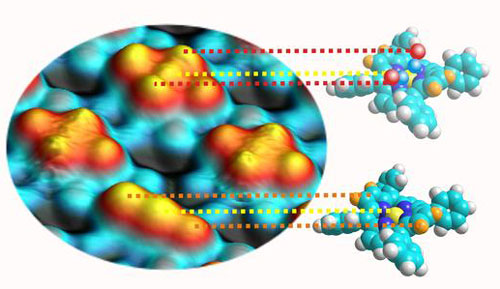
Neue Bilder aus der Nanowelt: Direkte Beobachtung der Bindung von Kohlenmonoxid
Physiker um Professor Johannes Barth von der TU MUenchen haben in Zusammenarbeit mit Theoretikern in Lyon und Barcelona Bindungsmechanismen fuer Gasmolekuele an Eisen- oder Kobalt-Porphyrinen aufgeklaert.
January 10, 2011 Read more
Nanotechnology symposium to explore innovations to improve health
Arizona State University will host a premier nanotechnology symposium titled 'Organic/Inorganic Interfaces and Health Science Applications' at the Biodesign Institute on Jan. 13-14.
January 10, 2011 Read more
Leading molecular materials experts meet in Singapore to seed the next 'big ideas' for tackling energy, sustainability and health issues
In celebration of the International Year of Chemistry 2011, nearly 70 scientists from across the globe will speak at a two-day conference on research that can greatly impact technologies in health, lifestyle, high-value manufacturing and sustainability.
January 10, 2011 Read more
Nano-contact experiment clarifies role of electrons during friction
Is friction dominated by electrons or by lattice vibrations? A nano-contact experiment shows that on a Nb surface friction drops by a factor of three when crossing the superconductivity transition, showing that it has essentially an electronic nature in the metallic state, whereas the phononic contribution dominates in the superconducting state.
January 10, 2011 Read more
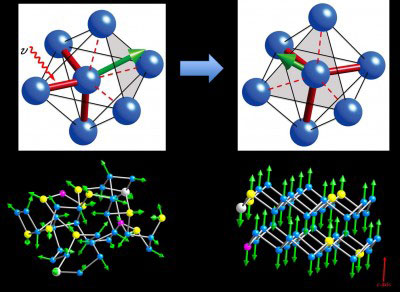
Supercomputer unravels structures in DVD materials
First model of rapid phase change in storage material.
January 9, 2011 Read more

NSF launches an Engineering Research Center to develop smart lighting
The National Science Foundation (NSF) announces an award to Rensselaer Polytechnic Institute and its partners to establish a new NSF Engineering Research Center (ERC). The ERC will develop interdisciplinary research and education programs that address an important societal need and provide the foundation for new industries through innovation. NSF will invest $18.5 million in the Center over the next five years.
January 7, 2011 Read more
Spinning information for better memory
Scientists have now shown that the spin of atomic nuclei in silicon can store information for over a minute and that the information can then be read out electrically, an important step in linking spintronics with classical electronics.
January 7, 2011 Read more
Expitaxial graphene shows promise for replacing silicon in electronics
With silicon device fabrication approaching its physical limits, many researchers believe graphene can provide a new platform material that would allow the semiconductor industry to continue its march toward ever-smaller and faster electronic devices -- progress described in Moore's Law. Though graphene will likely never replace silicon for everyday electronic applications, it could take over as the material of choice for high-performance devices.
January 7, 2011 Read more
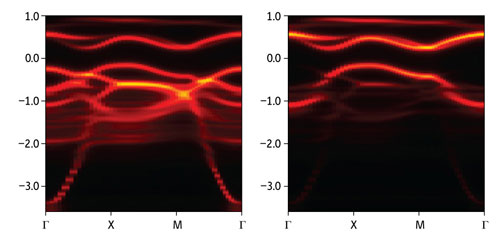
Anything goes in oxides
The interaction of electrons in an unusual oxide reveals new ways to tune electrical conductivity.
January 7, 2011 Read more
Spinning the unspinnable - weavable, knittable, sewable, and knottable nano-yarns
Nanotechnologists at The University of Texas at Dallas have invented a broadly deployable technology for producing weavable, knittable, sewable, and knottable yarns containing up to 95 weight percent of otherwise unspinnable guest powders and nanofibers.
January 6, 2011 Read more

The power of convergence
In white paper, MIT scientists discuss potential for revolutionary advances in biomedicine and other fields.
January 6, 2011 Read more
Researchers settle argument over mobility of flexible filaments
Researchers have settled a long-standing controversy in the field of polymer dynamics: The researchers proved once and for all that Theo Odijk at Delft University of Technology in the Netherlands was correct in proclaiming that a little flexibility goes a long way for stiff filaments in a solution.
January 6, 2011 Read more
Free online event: Nanoscience research highlights - Asia (East)
Organised by The Chinese Society for Micro and Nano Technology (CSMNT), this online workshop will showcase the latest developments in the region and will offer a unique platform for nanoscientists and researchers to meet and listen to presentations given by our expert speakers from China, Malaysia and Thailand.
January 6, 2011 Read more
Scientists develop groundbreaking technology to detect Alzheimer's disease
Scientists from the Florida campus of The Scripps Research Institute, have developed a novel technology that is able to detect the presence of immune molecules specific to Alzheimer's disease in patients' blood samples. While still preliminary, the findings offer clear proof that this breakthrough technology could be used in the development of biomarkers for a range of human diseases.
January 6, 2011 Read more
 Subscribe to our Nanotechnology News feed