

Nanotechnology News – Latest Headlines
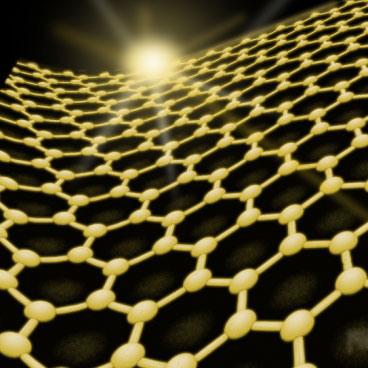
Graphene electrodes for organic solar cells
Researchers identify technique that could make a new kind of solar photovoltaic panel practical.
January 6, 2011 Read more
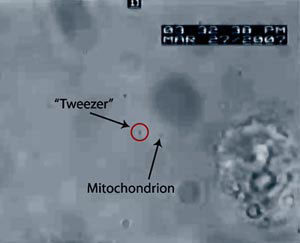
Extracting cellular 'engines' may aid in understanding mitochondrial diseases
Medical researchers who crave a means of exploring the genetic culprits behind a host of neuromuscular disorders may have just had their wish granted by a team working at the National Institute of Standards and Technology (NIST), where scientists have performed surgery on single cells to extract and examine their mitochondria.
January 6, 2011 Read more
Mussel adhesive for DNA chips
Simple and universal DNA immobilization on surfaces with synthetical mussel polymer.
January 6, 2011 Read more
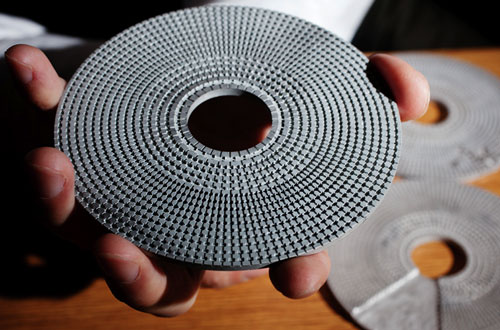
Newly developed cloak hides underwater objects from sonar
In one University of Illinois lab, invisibility is a matter of now you hear it, now you don't. Led by mechanical science and engineering professor Nicholas Fang, Illinois researchers have demonstrated an acoustic cloak, a technology that renders underwater objects invisible to sonar and other ultrasound waves.
January 5, 2011 Read more
Study of graphene grain boundaries reveals atomic patchwork quilts
A quick look at new Cornell research hints at colorful patchwork quilts, but they are actually pictures of graphene -- one atom-thick sheets of carbon stitched together at tilted interfaces. Researchers have unveiled striking, atomic-resolution details of what graphene 'quilts' look like at the boundaries between patches, and have uncovered key insights into graphene's electrical and mechanical properties.
January 5, 2011 Read more
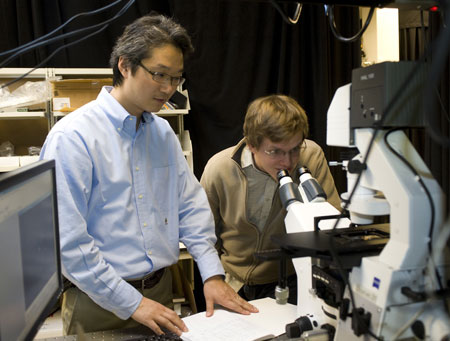
New solar cell self-repairs like natural plant systems
Researchers are creating a new type of solar cell designed to self-repair like natural photosynthetic systems in plants by using carbon nanotubes and DNA, an approach aimed at increasing service life and reducing cost.
January 4, 2011 Read more
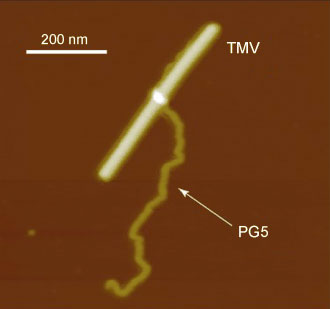
From molecule to object - Largest synthetic structure with molecular precision
Organic Chemists have always been trying to imitate biology. Although it is possible to make many molecules that imitate biomolecules in terms of structure and function, it remains a challenge to attain the size and form of large biomolecules. An international team at the ETH Zurich has now introduced a branched polymer that resembles the tobacco mosaic virus in size and cylindrical form.
January 4, 2011 Read more
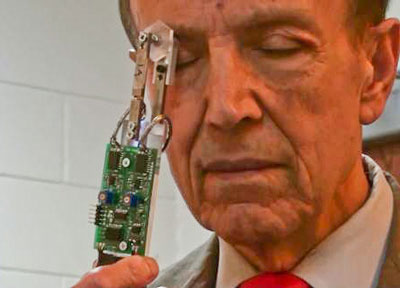
New glaucoma test allows earlier, more accurate detection
Cumbersome glaucoma tests that require a visit to the ophthalmologist could soon be history thanks to a home test. The self-test instrument has been designed in Eniko Enikov's lab at the UA College of Engineering. Gone are the eye drops and need for a sterilized sensor. In their place is an easy-to-use probe that gently rubs the eyelid and can be used at home.
January 4, 2011 Read more
Muschelkleber fixiert DNA auf Chips
Muscheln sind wahre Klebekuenstler. Ob am Holz eines Stegs, am Metall eines Schiffrumpfes, an Steinen oder an einem Artgenossen, sie haften ueberall. Forschern um Philip B. Messersmith von der Northwestern University ist es nun gelungen, einen der 'Universal-Klebstoffe' von Muscheln nachzuahmen.
January 4, 2011 Read more
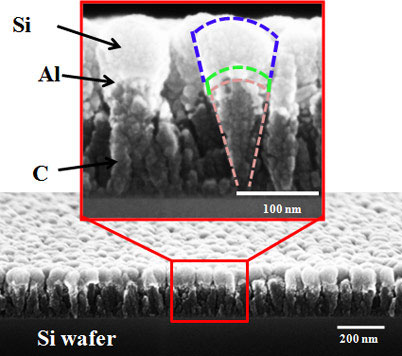
Entirely new type of nanomaterial could spark new generation of electric automobile batteries
The new material, dubbed a 'nanoscoop' because its shape resembles a cone with a scoop of ice cream on top, can withstand extremely high rates of charge and discharge that would cause conventional electrodes used in today's Li-ion batteries to rapidly deteriorate and fail. The nanoscoop's success lies in its unique material composition, structure, and size.
January 4, 2011 Read more
European grant means professor can play snooker with molecules
TU Delft professor of process intensification, Andrzej Stankiewicz, has received an ERC Advanced Investigators Grant of 2.3 million euros from the European Research Council. Professor Stankiewicz will use the money to carry out research on improving chemical reactions at the molecular level in the next five years.
January 4, 2011 Read more
Special issue update of Proceedings of the IEEE on nanoelectronics applications
Proceedings of the IEEE cites potential for spin-based technology to replace static RAM.
January 4, 2011 Read more
EU-funded team in qubit control breakthrough
EU-funded scientists in the Netherlands have managed to rapidly control the building blocks of a quantum computer by using an electric field rather than a magnetic one. In addition, the team succeeded in embedding these building blocks, known as quantum bits or qubits, in a semiconductor nanowire.
January 4, 2011 Read more
Researchers will test nanoparticles against pancreatic cancer
A five-year, $16-million grant from the National Cancer Institute will take advantage of specialized expertise developed by scientists at Albert Einstein College of Medicine of Yeshiva University and Montefiore, the University Hospital and Academic Medical Center for Einstein.
January 4, 2011 Read more
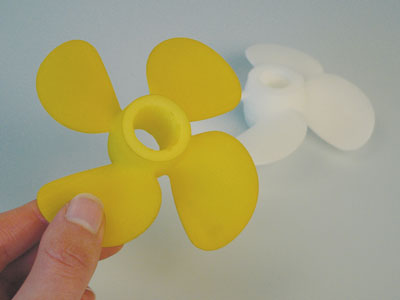
Impregnating plastics with carbon dioxide
Researchers at the Fraunhofer Institute for Environmental, Safety and Energy Technology UMSICHT in Oberhausen are pursuing a new idea by testing how carbon dioxide can be used to impregnate plastics.
January 3, 2011 Read more
Moved by light - as if by magic
A few months ago Muenster scientists showed that certain molecules - so-called nano-containers - can be guided by light alone. This study has now been singled out for special praise.
January 3, 2011 Read more
 Subscribe to our Nanotechnology News feed