

Nanotechnology News – Latest Headlines
io9 talks to Kathleen Ann Goonan about nanopunk and jazz
Science fiction author Kathleen Ann Goonan was writing about nanotechnology before most people even know it existed. Her Nanotech Quartet, including her celebrated first novel Queen City Jazz, is about a future United States where nanotech has gone wild and turned cities into living entities - and reprogrammed people to reenact scenarios from US history and literature.
January 17, 2008 Read more
Cities of the future, part 2: If we build them, will we stay?
An article in TechNewsWorld questions whether the super-cities and hyperstructures under consideration today really new and improved ways for man to exist?
January 17, 2008 Read more
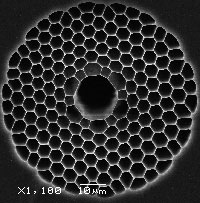
Discovery cuts cost of next generation optical fibres
Scientists have discovered a way of speeding up the production of hollow-core optical fibres - a new generation of optical fibres that could lead to faster and more powerful computing and telecommunications technologies.
January 17, 2008 Read more
Albany nanotechnology college draws new lab
A German company is the latest international technology firm to set up shop at the University at Albany's College of Nanoscale Science and Engineering.
January 17, 2008 Read more
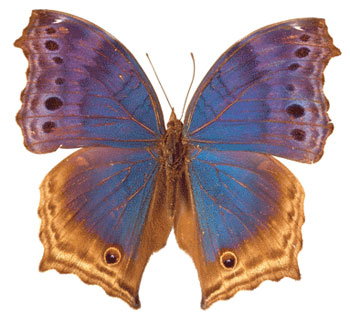
Iridescence workshop promotes nature's nanotechnology
The phrase 'sex sells' takes on special significance when scientists and students gather. While nature's showiest subjects step out to promote reproductive success and survival with bright colors, flash and iridescence in feathers, scales, petals and wings, biologists, physicists, behaviorists and materials scientists will delve into whatâ??s behind all the bling at a workshop on 'Iridescence' to be held Feb. 6-9 at Arizona State University in Tempe, Ariz.
January 17, 2008 Read more
A bottom-up approach to nanotechnology safety
Within the next month, a panel of advisers to the Department of Public Health in Cambridge will deliver a set of recommendations to the City Council on how to deal with nanotechnology firms operating inside the city's boundaries.
January 17, 2008 Read more
University of Alberta attempts to balance research and instruction
While undergraduate students may think that the University of Alberta emphasizes research over teaching, those in research say thatâ??s not the case, arguing that good teaching needs good research programs.
January 17, 2008 Read more
Nanotechnology development initiative proposed in Wisconsin
The NanoSTEM initiative recognizes that the Chippewa Valley is positioned to be a hub of nanotechnology activity. It would provide additional resources to the Universities of Wisconsin-Eau Claire and Stout and to Chippewa Valley Technical College, and provide tax incentives for businesses that partner with the schools to develop nanotechnologies.
January 16, 2008 Read more
New technique could dramatically lower costs of DNA sequencing
Using computer simulations, researchers at the University of Illinois have demonstrated a strategy for sequencing DNA by driving the molecule back and forth through a nanopore capacitor in a semiconductor chip. The technique could lead to a device that would read human genomes quickly and affordably.
January 16, 2008 Read more
Polymeric nanoparticles for tumor vaccines
The quest for an effective antitumor vaccine has received a boost from the results of work aimed at developing a nanoparticle that delivers tumor antigens to the immune system cells that trigger antibody production.
January 16, 2008 Read more
Nanorod-aptamer combo targets tumors
Aptamers, short stretches of DNA or RNA that can act much like antibodies, have shown promise as targeting agents for selective nanoparticle trafficking to tumors. Their ability to recognize and bind to tumor-specific molecules is undisputed, but the strength with which aptamers bind to their molecular targets is often insufficient to act as an effective targeting agent under clinically relevant conditions.
January 16, 2008 Read more
Tumor-associated enzyme triggers drug release from nanoparticles
Cancer cells display a variety of proteins on their outer membranes that are not present on the surface of normal cells. Although these proteins are likely to be critical to the survival or metastatic spread of cancer, investigators at North Dakota State University have turned one of these proteins against the malignant cell, using it to trigger the release of dye molecules entrapped in a nanoparticle.
January 16, 2008 Read more
Nanoparticles harvest tumor biomarkers
The long and challenging effort to find blood-borne markers for cancer and other diseases may soon enter a new realm of success using a new nanoparticle that preferentially and rapidly removes small proteins and other molecules from blood while simultaneously protecting them from degradation.
January 16, 2008 Read more
Gold nanoparticles shine brightly in tumors
Solid gold nanoparticles have long been used to treat rheumatoid arthritis and more recently have shown promise in treating various types of cancer. Now, thanks to work by Shuming Nie, Ph.D., and his colleagues at the Emory-Georgia Tech Nanotechnology Center for Personalized and Predictive Oncology, these same nanoparticles could serve as a powerful tumor-homing beacon for detecting microscopic tumors or even individual malignant cells.
January 16, 2008 Read more
NASA nanotechnology helps advance brain tumor research
The potential of carbon nanotubes to diagnose and treat brain tumors is being explored through a partnership between NASA's Jet Propulsion Laboratory, Pasadena, Calif., and City of Hope, a leading cancer research and treatment center in Duarte, Calif.
January 16, 2008 Read more
Scientists discover new method of observing interactions in nanoscale systems
Scientists have used new optical technologies to observe interactions in nanoscale systems that Heisenbergâ??s uncertainty principle usually would prohibit, according to a study published Jan. 17 in the journal Nature.
January 16, 2008 Read more
 Subscribe to our Nanotechnology News feed