

Nanotechnology News – Latest Headlines
New book: The New Frontiers of Organic and Composite Nanotechnology
This book is an attempt to illustrate current status of modern nanotechnology.
November 10, 2007 Read more
Nanotechnology focuses on new applications
Scientific advances today are accomplished at the intersections of various fields, according to Frans Johansson's brilliant book, 'The Medici Effect.' Breakthroughs come when disparate disciplines collide in new ways. This innovation is readily seen in nanotechnology, or the creation and use of materials - even machines - at the atomic or molecular scale.
November 9, 2007 Read more
MIT's 'electronic nose' could detect hazards
A tiny 'electronic nose' that MIT researchers have engineered with a novel inkjet printing method could be used to detect hazards including carbon monoxide, harmful industrial solvents and explosives.
November 9, 2007 Read more
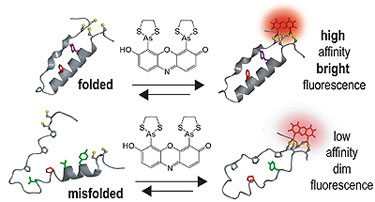
New technology illuminates protein interactions in living cells
While fluorescence has long been used to tag biological molecules, a new technology developed at Yale allows researchers to use tiny fluorescent probes to rapidly detect and identify protein interactions within living cells while avoiding the biological disruption of existing methods.
November 9, 2007 Read more
Carbon nanotubes could go antiballistic
CSIRO has been granted $2 million under the Defence Capability and Technology Demonstrator Program to demonstrate the capabilities of carbon nanotubes as strong, lightweight antiballistic materials.
November 9, 2007 Read more
Nanotechnology at war
Mike Treder from the Center for Responsible Nanotechnology (CRN) has reviewed Jürgen Altmann's book, Military Nanotechnology: New Technology and arms Control in the current issue of the Bulletin of the Atomic Scientists.
November 9, 2007 Read more
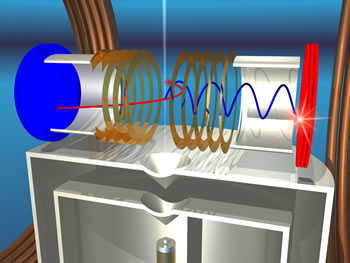
The world's smallest double slit experiment: breaking up the hydrogen molecule
Researchers have now established that quantum particles start behaving in a classical way on a scale as small as a single hydrogen molecule.
November 9, 2007 Read more
Developing kryptonite for superbug
University of Idaho scientists' nanoelectronics, nanomaterials, and Staphylococcus aureus research efforts generate new MRSA detection and treatment strategies.
November 8, 2007 Read more
Soybeans strike nanogold
A simple mix of soybeans, water and gold salts may hold the secret to producing gold nanoparticles without harming the environment, according to one team of US researchers.
November 8, 2007 Read more
The tiniest refrigerator in the world
A Finnish group of researchers at the Low Temperature Laboratory of Helsinki University of Technology (TKK) have developed and fabricated a nanoscale heat transistor, and simultaneously the smallest refrigerator ever made.
November 8, 2007 Read more
Europe's first conference exclusively on Tip Enhanced Raman and Fluorescence Spectroscopy
The National Physical Laboratory (NPL) in the UK is currently organizing a key event for nanotechnology measurement and characterisation on January 24-25, 2008.
November 8, 2007 Read more
Nanoparticle images and treats cancer, reports on drug delivery
Using a quantum dot plus an aptamer that doubles as a tether for the anticancer drug doxorubicin, a team of investigators at the Massachusetts Institute of Technology (MIT)-Harvard Center of Cancer Nanotechnology Excellence has developed a multifunctional nanoparticle that not only treats cancer but also images those tumors that have received drug therapy.
November 8, 2007 Read more
Oligonucleotides create versatile coating for nanoscale imaging agents
Nanoparticles made of metals such as gold or iron oxide show tremendous promise as contrast agents for molecular imaging, but turning promise into clinical utility requires adding tumor targeting molecules to the surfaces of these nanoparticles.
November 8, 2007 Read more
Mining tiny diamonds for drug delivery
Northwestern University researchers have shown that nanodiamonds are effective at delivering chemotherapy drugs to cells without the negative effects associated with current drug delivery agents.
November 8, 2007 Read more
Implantable microfluidic device could detect cancer markers
A tiny implant now being developed at the Massachusetts Institute of Technology (MIT) could one day help doctors rapidly monitor the growth of tumors and the progress of chemotherapy in cancer patients.
November 8, 2007 Read more
Tracking targeted siRNA nanoparticles with in vivo imaging
Using nanoparticles tagged with both a fluorescent label and a radioactive isotope of the element copper, a team of investigators at the California Institute of Technology has shown that targeting siRNA-containing nanoparticles to tumors increases tumor uptake rather than tumor localization.
November 8, 2007 Read more
 Subscribe to our Nanotechnology News feed