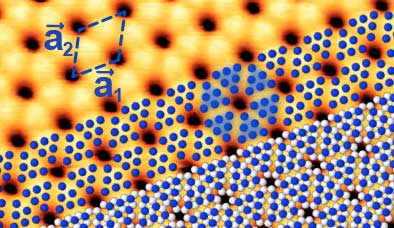
 Until recently, the existence of blue phosphorus was pure theory: Now scientists examined samples of blue phosphorus for the first time and confirm via mapping of their electronic band structure that this is actually this exotic phosphorus modification.
Oct 16th, 2018
Read more
 Bendable, rollable, scrunchable - touch screen technology is on the move, and the scope for flexibility is just one of the possibilities that has emerged. With its many exciting properties, graphene is anticipated as a game changer for this shift.
Oct 16th, 2018
Read more
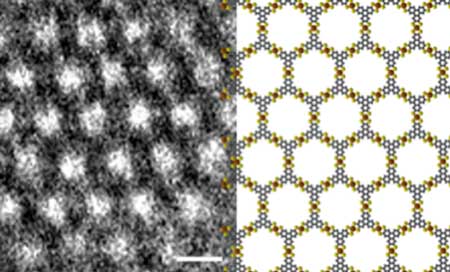 Scientists have observed unequivocally for the first time band-like electron transport in an organic based material, a metal organic framework. This semiconducting behavior, together with its cost-effective production, opens the path for employing metal organic frameworks as active materials in electronic devices.
Oct 15th, 2018
Read more
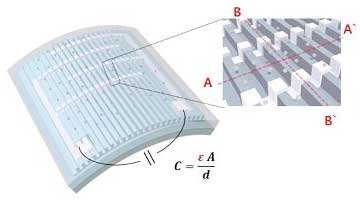 Researchers reported a high-performance and transparent nanoforce touch sensor by developing a thin, flexible, and transparent hierarchical nanocomposite film.
Oct 15th, 2018
Read more
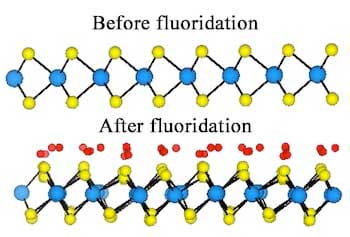 By getting in the way, fluorine atoms help a two-dimensional material transform from a semiconductor to a metal in a way that could be highly useful for electronics and other applications.
Oct 15th, 2018
Read more
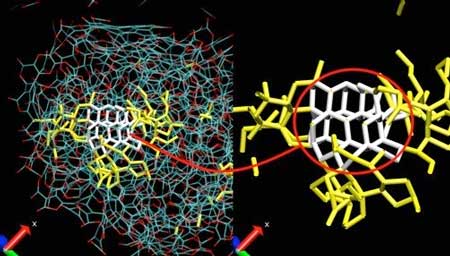 Researchers have developed a procedure and a computer model that can simulate the highly variable conditions of explosions on phenomenally short time scales.
Oct 15th, 2018
Read more
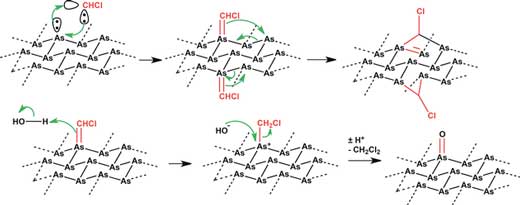 Scientists have introduced a new 2D material by successfully modifying arsenene (arsenic in a graphene-like structure) with chloromethylene groups.
Oct 15th, 2018
Read more
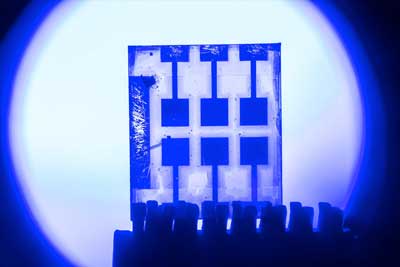 Researchers have shown how an inorganic perovskite can be made into a cheap and efficient photodetector that transfers both text and music.
Oct 15th, 2018
Read more
 Researchers have developed an automated method of tracking single fluorescently labeled molecules in living cells, enabling large numbers of molecules to be analyzed and characterized rapidly and cost-effectively.
Oct 15th, 2018
Read more
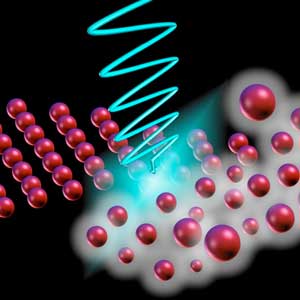 Scientists disrupted crystalline order in a quantum system in a controlled manner by shining light on it that oscillates in time at a specific frequency.
Oct 12th, 2018
Read more
 T-CUP makes it possible to see phenomena -- and even light! -- in extremely slow motion.
Oct 12th, 2018
Read more
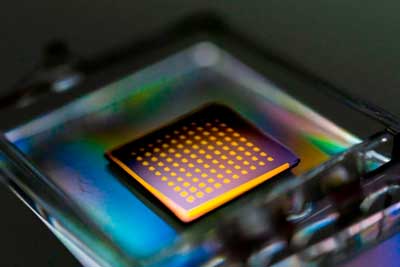 Efficient method for making single-atom-thick, wafer-scale materials opens up opportunities in flexible electronics.
Oct 12th, 2018
Read more
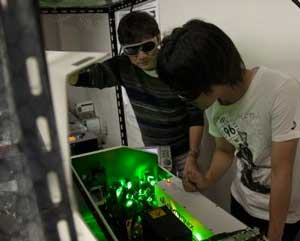 Scientists have taken a step toward faster and more advanced electronics by developing a way to better measure and manipulate conductive materials through scanning tunneling microscopy.
Oct 12th, 2018
Read more
 Researchers succeeded to switch wettability of a nanofiber obtained out of polymers with piezoelectric properties. The time of response to an external trigger was shortened to a few seconds instead of a few minutes at existing methods.
Oct 12th, 2018
Read more
 A new review paper concludes that graphene offers a unique evolutionary pathway for next-generation communications.
Oct 12th, 2018
Read more
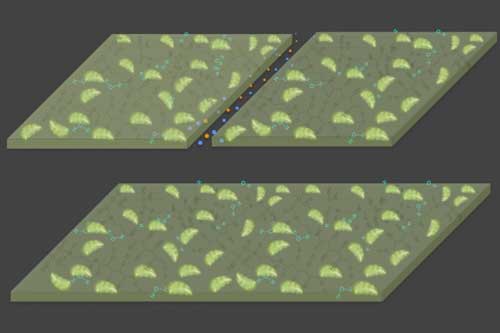 Taking a page from green plants, new polymer 'grows' through a chemical reaction with carbon dioxide.
Oct 11th, 2018
Read more

 Subscribe to our Nanotechnology News feed