

Biotechnology News – Latest Headlines
 Subscribe to our Biotechnology News feed
New tool could help reshape the limits of synthetic biology
Yeast geneticists report they have developed a novel tool - dubbed the 'telomerator' - that could redefine the limits of synthetic biology and advance how successfully living things can be engineered or constructed in the laboratory based on an organism's genetic, chemical base-pair structure.
November 3, 2014 Read more
New process transforms wood, crop waste into valuable chemicals
Scientists disclosed a new method to convert lignin, a biomass waste product, into simple chemicals. The innovation is an important step toward replacing petroleum-based fuels and chemicals with biorenewable materials.
November 3, 2014 Read more
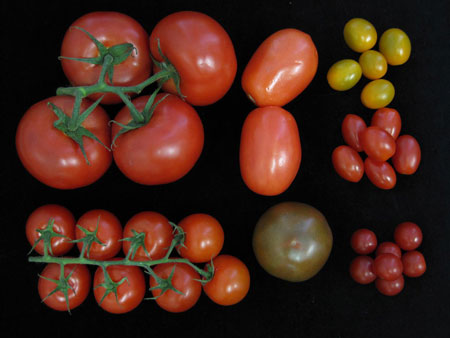
Getting more out of nature: Genetic toolkit finds new maximum for crop yields
Scientists have found a new way to dramatically increase crop yields. The team has discovered a set of gene variations that boost fruit production in the tomato plant by as much as 100 percent. Plant breeders will be able to combine different gene variants to create an optimal plant architecture for particular varieties and growing conditions. The set will enable farmers to maximize yield in tomatoes and potentially other flowering plants, including crops like soybeans.
November 2, 2014 Read more
Improving imaging of cancerous tissues by reversing time
Scientists are applying a novel time-reversal technology that allows researchers to better focus light in tissue, such as muscles and organs.
November 2, 2014 Read more
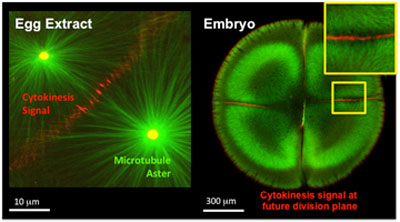
Cell division, minus the cells
Researchers have reconstituted cell division - complete with signals that direct molecular traffic - without the cell. Combining frog-egg extracts with lipid membranes that mimic the membrane of the cell, they built a cell-free system that recapitulates how the cleavage furrow is assembled.
October 31, 2014 Read more
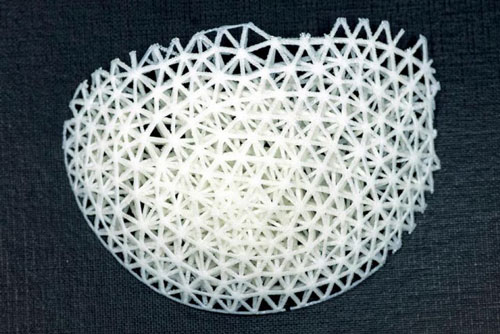
Biofabrication enters university mainstream with 3D body part printing degree
Australian students will soon be learning how to use 3D printing to churn out living replacement body parts, as universities team with their European counterparts to offer a world-first degree course.
October 31, 2014 Read more

The man with a thousand brains
Forty million people worldwide are living with Alzheimer's and this is only set to increase. But tiny brains grown in culture could help scientists learn more about this mysterious disease - and test new drugs.
October 31, 2014 Read more
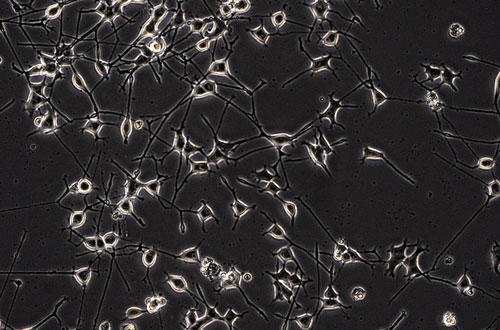
Beating a bottleneck to regenerate nerves
A membrane-mimicking biocompatible conducting polymer selectively binds to nerve cells and stimulates the changes needed for nerve regeneration.
October 31, 2014 Read more

Biology meets geometry
Architecture imitates life, at least when it comes to those spiral ramps in multistory parking garages. Stacked and connecting parallel levels, the ramps are replications of helical structures found in a ubiquitous membrane structure in the cells of the body.
October 30, 2014 Read more
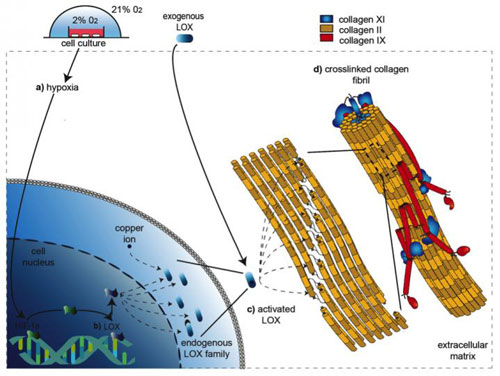
Making lab-grown tissues stronger
Biomedical engineers, exploring ways to toughen up engineered cartilage and keep natural tissues strong outside the body, report new developments this week.
October 30, 2014 Read more
Researcher uses microscaffolding injections to mend cartilage, prevent osteoarthritis
A bioengineering professor has received a $1.04 million grant that aims to regenerate cartilage tissue and reduce osteoarthritis using a patient's own stem cells, spurred through the injection of microscaffolding made of biodegradable polymers.
October 30, 2014 Read more
Ion adsorption matter in biology
Study demonstrates that quantum holograms could be a candidate for becoming quantum information memory.
October 30, 2014 Read more
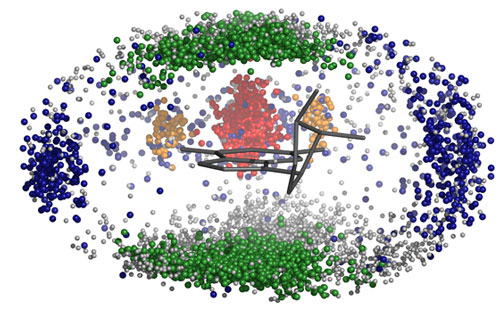
A new method simplifies the analysis of RNA structure
Scientists have devised a simple and versatile method, based on the geometry of the RNA molecule, which proved to be highly promising for analysing and understanding the complex interactions that characterise these molecules.
October 30, 2014 Read more
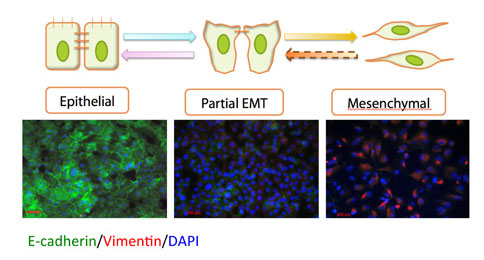
Modeling cancer: Researchers prove mathematical models can predict cellular processes
How does a normal cellular process derail and become unhealthy? A multi-institutional, international team studied cells found in breast and other types of connective tissue and discovered new information about cell transitions that take place during wound healing and cancer.
October 29, 2014 Read more
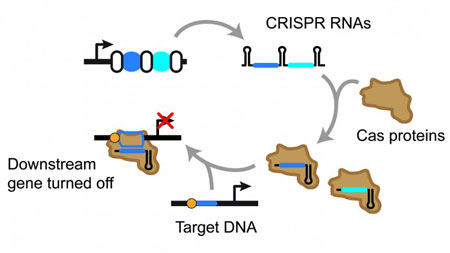
Technique uses bacteria's own CRISPR-Cas system to turn off genes
Researchers have developed a technique that co-opts an immune system already present in bacteria and archaea to turn off specific genes or sets of genes - creating a powerful tool for future research on genetics and related fields.
October 28, 2014 Read more
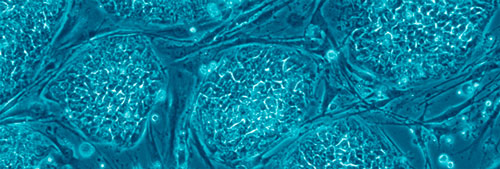
Immorality and invention: The 'great stem cell debate'
Human stem cell research holds promise for combating some of the most recalcitrant of diseases and for regenerating damaged bodies. It is also an ethical, legal and political minefield.
October 28, 2014 Read more
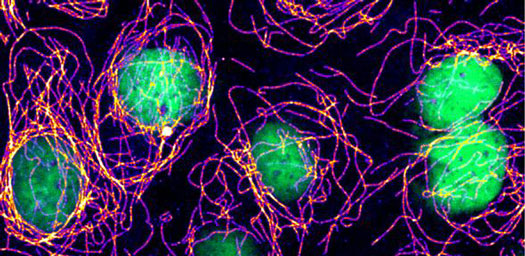
Imaging the genome: cataloguing the fundamental processes of life
A new study at the University of Cambridge has allowed researchers to peer into unexplored regions of the genome and understand for the first time the role played by more than 250 genes key to cell growth and development.
October 27, 2014 Read more
Artificial cells produce real proteins
A living cell, from one point of view, is a sort of sprawling protein factory that can churn out thousands of different proteins to order. Researchers are building on the basic idea of creating 'artificial cells' that might, in the future, enable us to control the production of proteins or other complex biological processes.
October 27, 2014 Read more