

Biotechnology News – Latest Headlines
 Subscribe to our Biotechnology News feed
Bacterial biosurgery shows promise for reducing the size of inoperable tumors
Deep within most tumors lie areas that remain untouched by chemotherapy and radiation. These troublesome spots lack the blood and oxygen needed for traditional therapies to work, but provide the perfect target for a new cancer treatment using bacteria that thrive in oxygen-poor conditions. Now, researchers have shown that injections of a weakened version of one such anaerobic bacteria can shrink tumors in rats, pet dogs, and a human patient.
August 13, 2014 Read more
Coming soon: Genetically edited fruit?
Recent advances that allow the precise editing of genomes now raise the possibility that fruit and other crops might be genetically improved without the need to introduce foreign genes.
August 13, 2014 Read more
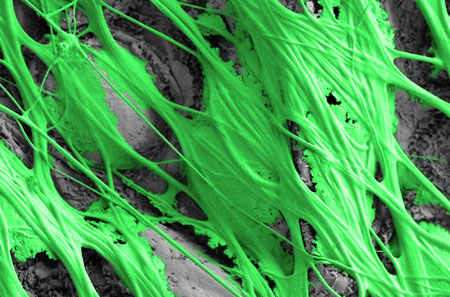
How spiders fix their webs
Spider silk is light and delicate, while incredibly resilient and tear-resistant. Understanding the structure and way of construction of these threads is a challenge taken up by a research team of Kiel University.
August 13, 2014 Read more
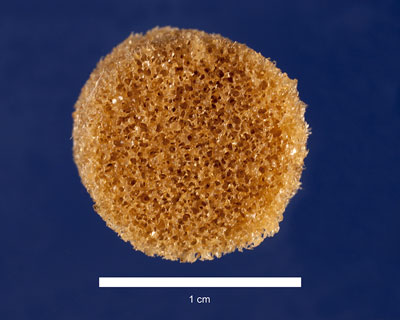
'Shape-shifting' material could help reconstruct faces
Researchers have developed a 'self-fitting' material that expands with warm salt water to precisely fill bone defects, and also acts as a scaffold for new bone growth.
August 13, 2014 Read more
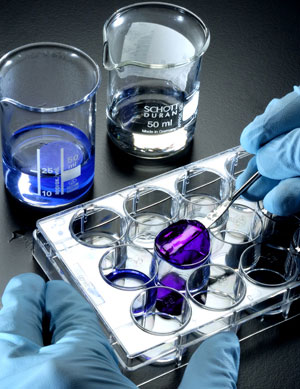
Finding the sweet spot for cartilage formation
A synthetic scaffold with fine-tuned physical properties helps cartilage regrowth at injury sites.
August 13, 2014 Read more
Synthetic molecule kills cancer cells with salt
Researchers have created a molecule that can cause cancer cells to self-destruct by carrying sodium and chloride ions into the cells.
August 12, 2014 Read more
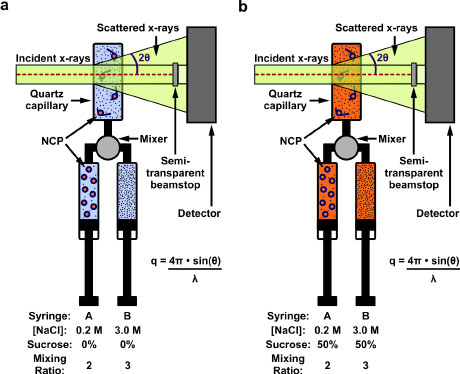
To watch DNA unwrap, blank out the proteins
Biophysics is a science of shapes - the shapes of molecules like DNA as they wrap and unwrap around protein cores, for instance. Researchers have unveiled a new method for observing such processes in real time.
August 12, 2014 Read more
Bioengineers make functional 3D brain-like tissue model
Model shows biochemical and electrophysiological responses; research offers new options for study of brain function, disease and trauma.
August 11, 2014 Read more
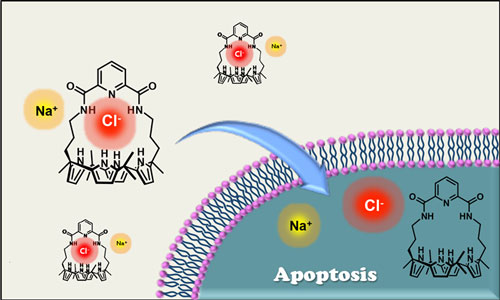
Synthetic molecule makes cancer self-destruct
Researchers have created a molecule that can cause cancer cells to self-destruct by ferrying sodium and chloride ions into the cancer cells. These synthetic ion transporters confirm a two-decades-old hypothesis that could point the way to new anticancer drugs while also benefitting patients with cystic fibrosis.
August 11, 2014 Read more
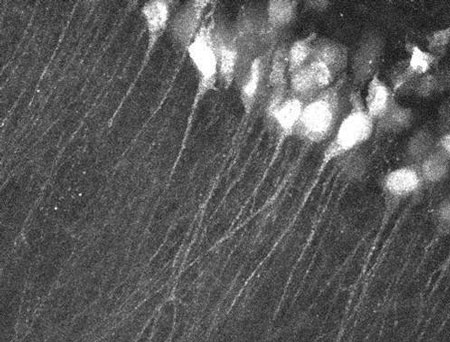
Manipulating molecules to make memories
Novel transgenic mouse allows visualization of memory formation.
August 11, 2014 Read more
Cryoprinting red blood cells
An innovative approach of cryopreserving red blood cells using vitrification in conjunction with bio-printing technologies has been described in a new collaborative study.
August 11, 2014 Read more
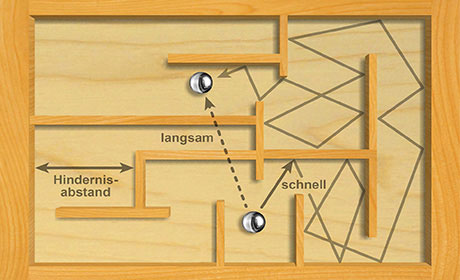
The interior of a cell from a moving protein's point of view
Numerous obstacles posed by cellular structures hinder protein movements within the cell. Researchers now have succeeded in mapping the intracellular topology by observing proteins in living cells on multiple time and length scales. By developing a new fluorescence microscopy-based technique, the researchers were able to measure how long it takes proteins to move over distances ranging from 0.2 to 3 micrometres in living cells.
August 11, 2014 Read more
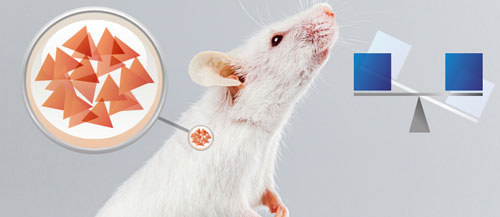
Sensitive acid sensor controls insulin production
Researchers have developed an implantable device that precisely monitors acid build-up in the body for people with diabetes and produces insulin if acidosis becomes a risk.
August 11, 2014 Read more
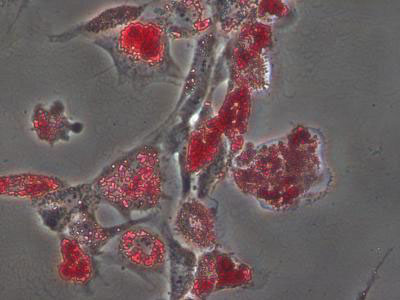
Bioengineers: Matrix stiffness is an essential tool in stem cell differentiation
Bioengineers have proven that when it comes to guiding stem cells into a specific cell type, the stiffness of the extracellular matrix used to culture them really does matter.
August 10, 2014 Read more
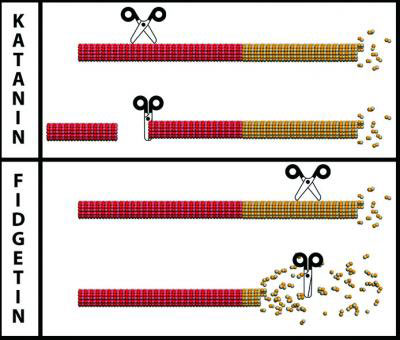
Microtubule-based strategies for promoting nerve regeneration after injury
Scientists focus on microtubules as among the most important factors in encouraging injured adult axons to regenerate. Microtubules are hollow polymeric filaments composed of tubulin subunits that provide structural support for the axon.
August 8, 2014 Read more
Antioxidant biomaterial promotes healing
Researchers have created a biodegradable biomaterial that is inherently antioxidant. The material can be used to create elastomers, liquids that turn into gels, or solids for building devices that are more compatible with cells and tissues.
August 8, 2014 Read more
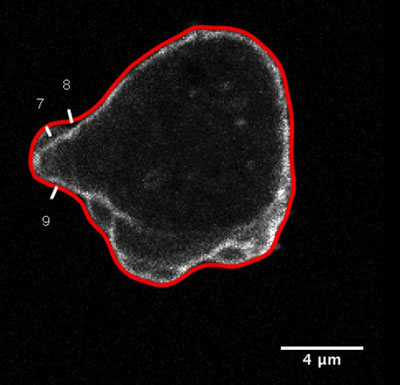
A hybrid-motor helps cells push their way through tissues
Research has uncovered how two cellular motors, previously thought to compete with each other, can actually work together to help cells squeezing through a crowded mass of cells.
August 8, 2014 Read more
Microfluidic single-cell analysis used to probe human brain development
Researchers have identified cells' unique features within the developing human brain, using the latest technologies for analyzing gene activity in individual cells, and have demonstrated that large-scale cell surveys can be done much more efficiently and cheaply than was previously thought possible.
August 8, 2014 Read more