

Biotechnology News – Latest Headlines
 Subscribe to our Biotechnology News feed
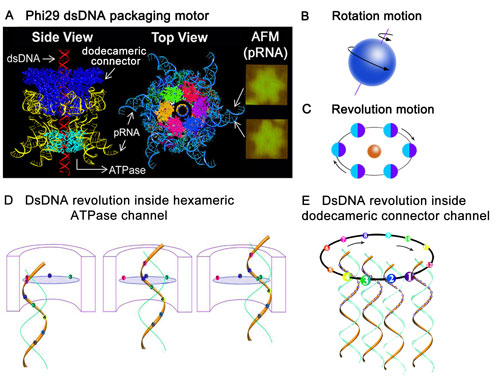
Revolution biomotor discovered in many bacteria and viruses
Greater understanding of molecular mechanism used in DNA packaging could prove useful in development of new treatments for cancer and other diseases.
August 6, 2014 Read more

Biology made simpler with clear tissues
Thanks to techniques developed at Caltech, scientists can see through tissues, organs, and even an entire body. The techniques offer new insight into the cell-by-cell makeup of organisms - and the promise of novel diagnostic medical applications.
August 5, 2014 Read more
Researchers uncover novel process for creation of fuel and chemical compounds
A team of researchers has identified the genes and enzymes that create a promising compound - the 19 carbon furan-containing fatty acid (19Fu-FA). The compound has a variety of potential uses as a biological alternative for compounds currently derived from fossil fuels.
August 5, 2014 Read more
New tools advance bio-logic
Researchers build more sophisticated synthetic gene circuits.
August 4, 2014 Read more
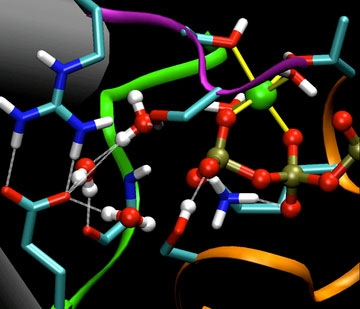
How the 'biological spark plug' in biomolecular motors works
Using high-performance computers and quantum mechanical methods, researchers have simulated processes that reveal how the 'biological spark plug' works in the biomolecular motors of cells.
August 4, 2014 Read more
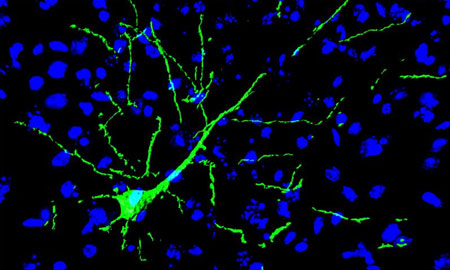
Implanted neurons become part of the brain
Scientists have grafted neurons reprogrammed from skin cells into the brains of mice for the first time with long-term stability. Six months after implantation, the neurons had become fully functionally integrated into the brain.
August 4, 2014 Read more
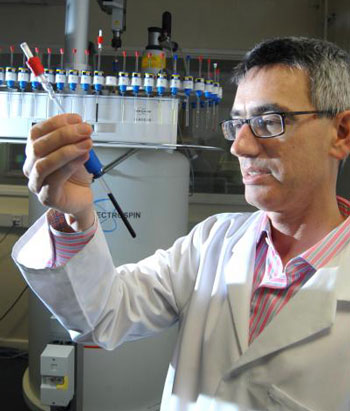
Self-assembling anti-cancer molecules created in minutes
Researchers have developed a simple and versatile method for making artificial anti-cancer molecules that mimic the properties of one of the body's natural defence systems.
August 3, 2014 Read more
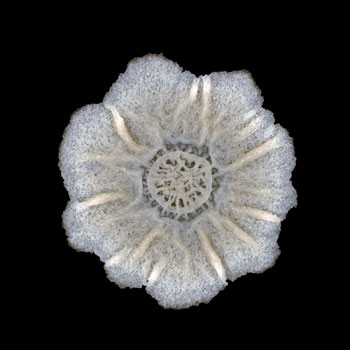
Reprogramming bacteria as an intriguing approach to desalination
Scientists are computationally investigating ways to rewire one of desalination's most useful tools: Bacteria.
August 3, 2014 Read more
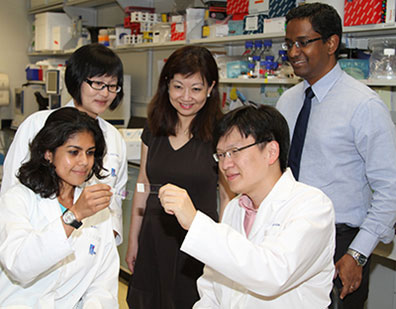
Taking the guesswork out of cancer therapy
New molecular test kit predicts patient"s survival and drug response.
August 1, 2014 Read more
Scientists shine bright new light on how living things capture energy from the sun
Scientists may have uncovered a new method of exploiting the power of sunlight by focusing on a naturally occurring combination of lipids that have been strikingly conserved throughout evolution.
July 31, 2014 Read more
Engineering a protein to prevent brain damage from toxic agents
Researchers advance the stability of a protein that neutralizes toxins in common pesticides and chemical weapons.
July 31, 2014 Read more
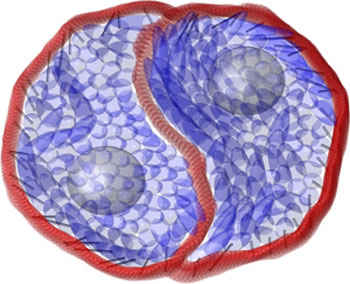
The yin and yang of 'moonwalking' cells (w/video)
A particle dynamics model may provide insight into diseases and deformities linked to disruptions in cell development.
July 30, 2014 Read more
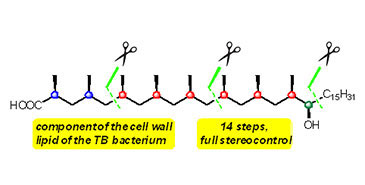
Scissoring the lipids
Scientists describe a new strategy which enables molecules to be disconnected essentially anywhere, even remote from functionality.
July 28, 2014 Read more
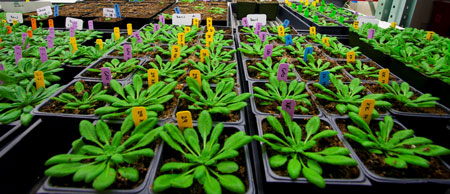
How sweet it is: New tool for characterizing plant sugar transporters
A powerful new tool that can help advance the genetic engineering of 'fuel' crops for clean, green and renewable bioenergy, has been developed by researchers with the U.S. Department of Energy's Joint BioEnergy Institute (JBEI). The JBEI researchers have developed an assay that enables scientists to identify and characterize the function of nucleotide sugar transporters, critical components in the biosynthesis of plant cell walls.
July 28, 2014 Read more

Stem cells from nerves form teeth
Scientists have discovered that stem cells inside the soft tissues of the tooth come from an unexpected source, namely nerves. These findings contribute to brand new knowledge of how teeth are formed, how they grow and how they are able to self-repair.
July 28, 2014 Read more
Junk DNA not as worthless as once thought
Around 75 per cent of the supposed functionless DNA in the human genome is transcribed into so-called non-coding RNAs (ribonucleic acid). To date, little is known about its function. Researchers have now been able to demonstrate that the production of non-coding RNAs is precisely regulated. They suspect that non-coding RNAs might play a role in regulating cellular processes or in the modified immune response following exposure to environmental toxicants.
July 23, 2014 Read more
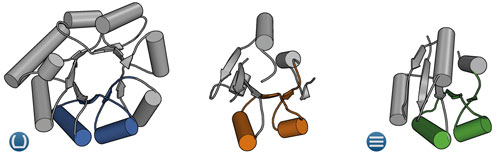
Protein evolution follows a modular principle
Similarities between proteins reveal that their great diversity has arisen from smaller building blocks.
July 22, 2014 Read more
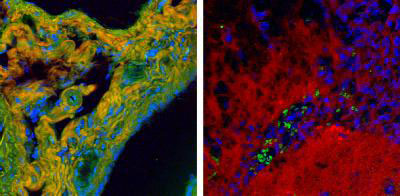
High-speed coherent Raman fingerprint imaging of biological tissues
Researchers have demonstrated a dramatically improved technique for analyzing biological cells and tissues based on characteristic molecular vibrations. The new technique is an advanced form of Raman spectroscopy that is fast and accurate enough to create high-resolution images of biological specimens, with detailed spatial information on specific biomolecules, at speeds fast enough to observe changes in living cells.
July 22, 2014 Read more