

Cleantech and Environmental News – Latest Headlines
 Subscribe to our Cleantech News feed
Microwaves make for faster, greener pharma manufacturing
Microwave radiation could provide a faster, greener way to manufacture drugs, according to researchers at the University of Bradford.
May 30, 2013 Read more

CO2 removal can lower costs of climate protection
Directly removing CO2 from the air has the potential to alter the costs of climate change mitigation. It could allow prolonging greenhouse-gas emissions from sectors like transport that are difficult, thus expensive, to turn away from using fossil fuels. And it may help to constrain the financial burden on future generations.
May 30, 2013 Read more
Self-powered wireless sensors and network for smarter, greener buildings
The TIBUCON project has developed a new-generation integrated heating, ventilation and air conditioning (HVAC) system suitable for larger multi-tenant buildings in particular.
May 29, 2013 Read more

Organic polymers show sunny potential
A new version of solar cells created by laboratories at Rice and Pennsylvania State universities could open the door to research on a new class of solar energy devices.
May 29, 2013 Read more

New CO2 sequestration technique produces 'supergreen' hydrogen fuel, offsets ocean acidification
Lawrence Livermore scientists have discovered and demonstrated a new technique to remove and store atmospheric carbon dioxide while generating carbon-negative hydrogen and producing alkalinity, which can be used to offset ocean acidification.
May 28, 2013 Read more
Key hydrogen report now available on Openenergyinfo wiki site
As part of the Open Government initiative launched by the Obama Administration, Sandia National Laboratories' Technical Reference on Hydrogen Compatibility of Materials has made its debut on the Energy Dataset of OpenEnergyInfo, or OpenEI.
May 28, 2013 Read more
Cold climate wind energy showing huge potential
Wind energy capacity is growing rapidly in the cold climates of the world. According to the latest forecasts, between 45 and 50 gigawatts of wind energy will be built in cold climates by 2017, which would mean an increase of as much as 72 per cent since the end of 2012 and investments amounting to approximately EUR 75 billion.
May 28, 2013 Read more
First world conference on climate impacts: Painting the big picture
Droughts, floods, crop failures, invading species and diseases - climate change impacts of today and tomorrow come with a raft of buzz words. But the science behind our understanding of the potential consequences of global warming is both much broader and much more fragmented.
May 27, 2013 Read more
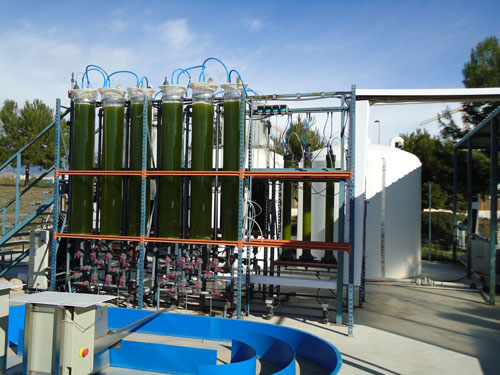
Researchers design a photobioreactor to produce biofuel from algae
Researchers at the University of Alicante have patented a new device that allows more efficiently to cultivate microalgae and can be used as raw material for biofuel or for other valuable substances in the agri-food or pharmaceutical industry.
May 24, 2013 Read more
A global drilling fund could solve geothermal's catch-22
The mature and zero-carbon technology of geothermal power is being held back by the cost and uncertainty of drilling wells, but new research suggests a possible answer.
May 24, 2013 Read more
Pakistan: Confronting vulnerability by building national climate research capacities
Pakistan is one of the countries most vulnerable to climate change - risks range from the disastrous 2010 floodings that acted as a wake-up call to retreating glaciers impacting freshwater supply. To confront this challenge, the new Centre for Climate Research and Development (CCRD) took up its work this month - a substantial effort to build up indigenous scientific capacities in a place where substantial climate change impacts are actually happening.
May 24, 2013 Read more
The long road to the 2000-watt society - How sustainable is Switzerland?
The vision of a society in which each inhabitant of the earth manages to consume only 2000 watts has already been around for 15 years. During this time, there has been a steady increase in environmental awareness in the West. Technology has become more efficient and there appears to be very little standing in the way of a sustainable lifestyle. However, as a study by Empa and the Federal Institute of Technology (ETH) Zurich now shows, Mr and Mrs Swiss are still a long way from achieving this.
May 24, 2013 Read more

Biofilms move electrons long distances across two distinct layers
Bacteria can move electrons at least half a millimeter across a scaffolding made by themselves, of themselves, even under starving conditions. This new finding challenges conventional wisdom, which held that electrical resistance within bacterial biofilms - robust structures held together by a strong matrix - would restrict long-range electron transfer.
May 23, 2013 Read more
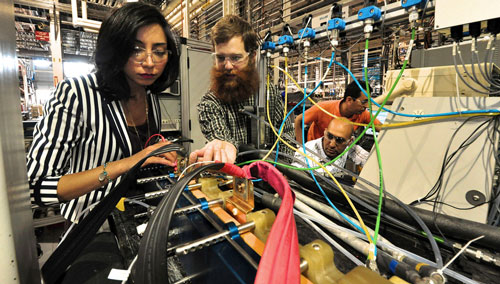
Tests lead to doubling of fuel cell life
Researchers working to improve durability in fuel cell powered buses have discovered links between electrode degradation processes and bus membrane durability. The team is quantifying the effects of electrode degradation stressors in the operating cycle of the bus on the membrane lifetime.
May 22, 2013 Read more
More emphasis needed on recycling and reuse of Li-ion batteries
The discovery of potential environmental and human health effects from disposal of millions of rechargeable lithium-ion batteries each year has led scientists to recommend stronger government policies to encourage recovery, recycling and reuse of lithium-ion (Li-ion) battery materials.
May 22, 2013 Read more
Ground-breaking study benchmarks biofuel pricing
Ground-breaking Australian research on the viability of aviation biofuels has today been released, at the culmination of almost three years of work.
May 22, 2013 Read more
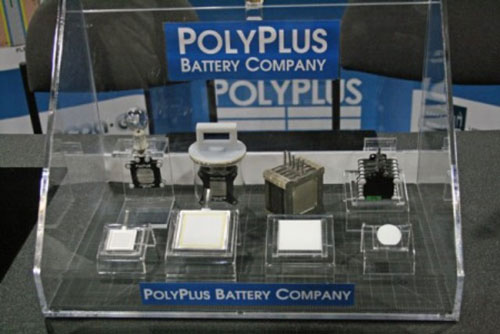
Research opportunities plentiful for next-generation batteries
Berkeley Lab spin-off company PolyPlus has created an entire line of lithium-metal batteries using their PLE technology.
May 22, 2013 Read more
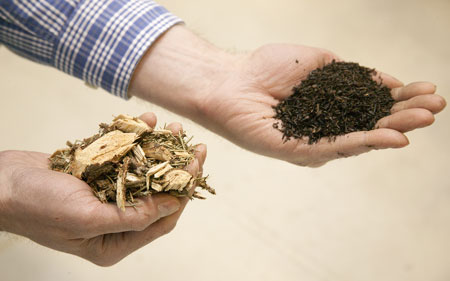
Top-class biofuel from the depths of the forest
Tops and branches from tree-felling sites are reborn in the laboratory as compact pellets. However, the energy industry will not act until the price is right.
May 22, 2013 Read more