

Cleantech and Environmental News – Latest Headlines
 Subscribe to our Cleantech News feed

Carbon capture: Making use of minerals
Ammonium salts could provide a viable way of removing carbon dioxide from the atmosphere via carbon mineralization.
May 22, 2013 Read more

Solar and lithium ion car race winners announced
Ninety-seven teams from 28 Colorado schools participated in today's car competitions hosted by the US Department of Energy's National Renewable Energy Laboratory. The student teams raced solar and lithium ion powered vehicles they designed and built themselves.
May 21, 2013 Read more

U.S. equipped to grow serious amounts of pond scum for fuel
A new analysis shows that the nation's land and water resources could likely support the growth of enough algae to produce up to 25 billion gallons of algae-based fuel a year in the United States, one-twelfth of the country's yearly needs.
May 21, 2013 Read more
New method for producing clean hydrogen
Duke University engineers have developed a novel method for producing clean hydrogen, which could prove essential to weaning society off of fossil fuels and their environmental implications.
May 21, 2013 Read more

Enhanced solar power by dry-cooled energy generation
A cutting edge system is being developed to deploy more solar-based energy plants, enabling the delivery of cleaner power more efficiently, while keeping Europe at the leading edge of energy technologies.
May 21, 2013 Read more
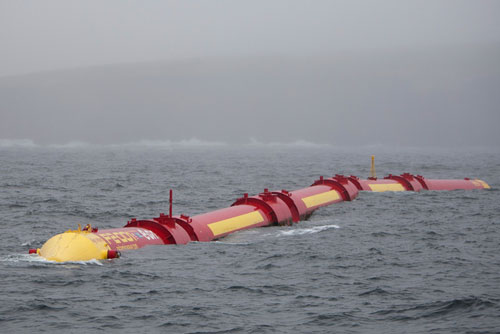
Explainer: what is ocean energy?
Renewable ocean energy harnesses the power of the oceans to produce electricity. This can be done in several ways.
May 21, 2013 Read more
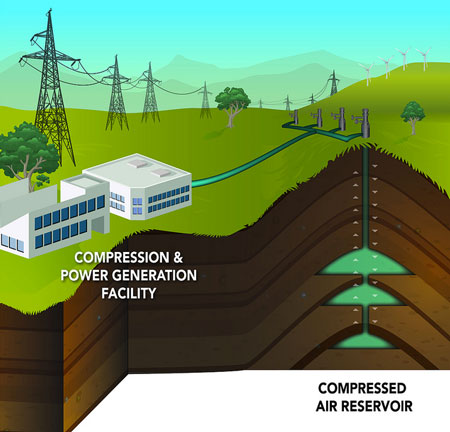
Not just blowing in the wind: Compressing air for renewable energy storage
Enough Northwest wind energy to power about 85,000 homes each month could be stored in porous rocks deep underground for later use, according to a new, comprehensive study.
May 20, 2013 Read more

No matter how strong the evidence on climate change, deniers will keep denying
Underscoring the consensus in public communication of climate science is an important tool to counter the disinformation that suffuses the media and the internet.
May 20, 2013 Read more
Bacteria use hydrogen, carbon dioxide to produce electricity
Researchers have engineered a strain of electricity-producing bacteria that can grow using hydrogen gas as its sole electron donor and carbon dioxide as its sole source of carbon.
May 20, 2013 Read more
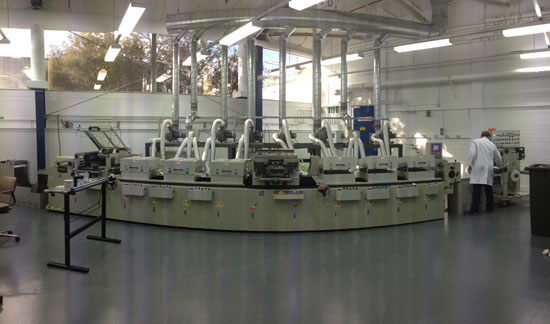
Printing Australia's largest solar cells (w/video)
Scientists have produced the largest flexible, plastic solar cells in Australia - 10 times the size of what they were previously able to - thanks to a new solar cell printer that has been installed at CSIRO.
May 16, 2013 Read more

Turning up the heat on biofuels
The production of biofuels from lignocellulosic biomass would benefit on several levels if carried out at temperatures between 65 and 70 degrees Celsius. Researchers with the Energy Biosciences Institute (EBI) have employed a promising technique for improving the ability of enzymes that break cellulose down into fermentable sugars to operate in this temperature range.
May 15, 2013 Read more
X-48 project completes flight research for cleaner, quieter aircraft (w/video)
NASA's remotely piloted X-48C hybrid-wing-body subscale aircraft, which demonstrates technology concepts for cleaner and quieter commercial air travel, completed an eight-month flight research campaign on April 9.
May 15, 2013 Read more

Researchers demonstrate significant improvement in the performance of solar-powered hydrogen generation
Using a powerful combination of microanalytic techniques that simultaneously image photoelectric current and chemical reaction rates across a surface on a micrometer scale, researchers at the National Institute of Standards and Technology (NIST) have shed new light on what may become a cost-effective way to generate hydrogen gas directly from water and sunlight.
May 15, 2013 Read more

New report identifies strategies to achieve net-zero energy homes
Chances are you know how many miles your car logs for each gallon or tankful of gas, but you probably have only a foggy idea of how much energy your house consumes, even though home energy expenditures often account for a larger share of the household budget.
May 15, 2013 Read more
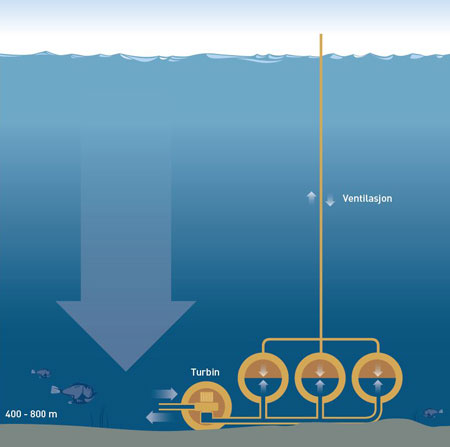
A novel concept to store electricity at the bottom of the sea
Norwegian research scientists will contribute to realising the concept of storing electricity at the bottom of the sea. The energy will be stored with the help of high water pressure.
May 15, 2013 Read more
Reducing the environmental impacts of fertiliser use
Scientists have demonstrated how improvements in nitrogen fertiliser manufacture and their application could help reduce China's agricultural greenhouse gas emissions by around 60%, by 2030, compared to the current business as usual approach. This emissions reduction represents a 2 to 6% reduction in China's overall greenhouse gas emissions and therefore could be significant in the global battle on climate change.
May 15, 2013 Read more
Pollution from shipping making ocean more acidic
Shipping pollution along major trade lanes can rival carbon emissions in contributing to the increased acidity of the ocean, according to a new study by an international team, including researchers from the University of Gothenburg, Chalmers University of Technology, the University of Delaware, and the Institute for Advanced Sustainability Studies. The research is the first global analysis that shows that acidification from shipping can during the summer months equal that from carbon dioxide.
May 15, 2013 Read more

Innovation in spectroscopy could improve greenhouse gas detection
Detecting greenhouse gases in the atmosphere could soon become far easier with the help of an innovative technique developed by a team at the National Institute of Standards and Technology (NIST), where scientists have overcome an issue preventing the effective use of lasers to rapidly scan samples.
May 15, 2013 Read more