

Nanotechnology News – Latest Headlines
Informatics is the foundation of research into biomedicine and nanomedicine
In the future, explained Peter Ghazal, Chair of Edinburgh University?s Department of Molecular Genetics and Biomedicine, biological sensors, the product of the integration of biology and electronics will be used to detect infections and prescribe personalized treatments.
April 15, 2009 Read more

University-military partnership advances research opportunities in life sciences and physics
Indiana University and Crane Naval Surface Warfare Center recognized the success of an ongoing partnership to enhance national security and advance research opportunities in life sciences, physics and other fields during a ceremony at IU's Cyclotron Facility.
April 15, 2009 Read more
Chinese Academy of Sciences makes scientific facilities available to companies for free
The Chinese Academy of Sciences launched a website to help enterprises use its large-scale scientific facilities for free.
April 15, 2009 Read more
New nano-imaging technology simultaneously measures over 100 distinct cell features
A new imaging technology could give scientists the ability to simultaneously measure as many as 100 or more distinct features in or on a single cell. In a disease such as cancer, that capability would provide a much better picture of what?s going on in individual tumor cells.
April 14, 2009 Read more
European Technology Platform on Nanomedicine General Assembly 2009
The General Assembly of the European Technology Platform (ETP) on Nanomedicine will be held in Munster, Germany, on 11-12 May.
April 14, 2009 Read more
Researchers create next generation nanofilms
An international team of scientists has developed a way to train such molecules to line up neatly on the surface of water in thin, tissue-like layers called nanofilms. This technique should allow biochemists to better see and study the molecules and may lead to a new generation of molecular electronics and ultra-thin materials only one molecule thick.
April 14, 2009 Read more
Former EPA official calls for new nanotechnology regulatory agency
A landmark report by J. Clarence Davies, Oversight of Next Generation Nanotechnology, describes how existing health and safety agencies are unable to cope with the risk assessment, standard setting and oversight challenges of 21st century technology.
April 14, 2009 Read more
At the nanoscale, home tooth bleaching reduces enamel strength
New research shows that human teeth lost some enamel hardness after the application of several different products used in the home to whiten teeth. The study suggests that future generations of such products might be reformulated in an effort to reduce these side effects.
April 14, 2009 Read more
SAFENANO team completes global review of nanomaterial EHS research
EMERGNANO - the first global review of active research into the environment, health and safety risks of nanotechnology has been published today by Defra, the UK Government Department for Food and Rural Affairs.
April 14, 2009 Read more
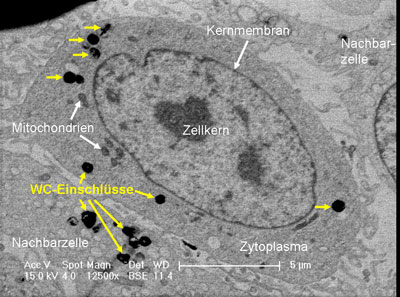
Are tungsten carbide cobalt nanoparticles harmful to health?
Nanoparticles of tungsten carbide and tungsten carbide cobalt can enter cultured mammalian cells. These are the findings of a study conducted by researchers from the University of Dresden, the Leipzig-based Helmholtz Centre for Environmental Research and the Fraunhofer Institute for Ceramic Technologies and Systems in Dresden.
April 14, 2009 Read more
Andre Geim receives 2009 Koerber European Science Award
On Friday, April 17, 2009, the Koerber Foundation will present the Koerber European Science Award for 2009, worth 750,000 euros in prize money, to Andre Geim
April 14, 2009 Read more
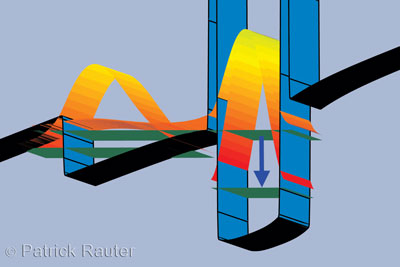
Scientists manage for the first time to measure and controll the lifetime of quantum states
For the first time, scientists have succeeded in measuring and controlling the lifetime of quantum states with potential use in optoelectronic chips. This achievement is highly significant for the ongoing development of this cutting-edge technology.
April 14, 2009 Read more
Large-scale simulations in nanotechnology benefit from supercomputer power
Global supercomputer leader Cray Inc. today announced that the Japan Advanced Institute of Science and Technology (JAIST) has put the country's first Cray XT5 supercomputer into production.
April 14, 2009 Read more
Unions in Australia demand urgent nanotechnology regulation
The rapidly growing nanotechnology market in Australia requires urgent regulation to protect the health and safety of workers and consumers, say unions.
April 14, 2009 Read more
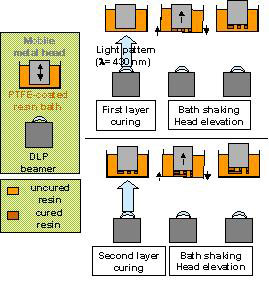
Biocompatible materials for rapid prototyping of prosthetic implants
The Custom-fit project has been developing during the last 4 years new bio-compatible materials which can be used for rapid prototyping of implants.
April 14, 2009 Read more
Stuttgarter Physiker minimieren Verunreinigungsgrad von Diamanten
Wissenschaftler des 3. Physikalischen Instituts der Uni Stuttgart haben in Zusammenarbeit mit der britischen Firma element6 Diamanten hergestellt, die 10.000-mal reiner sind als alle bisher bekannten Diamanten.
April 14, 2009 Read more
 Subscribe to our Nanotechnology News feed